Winter weather
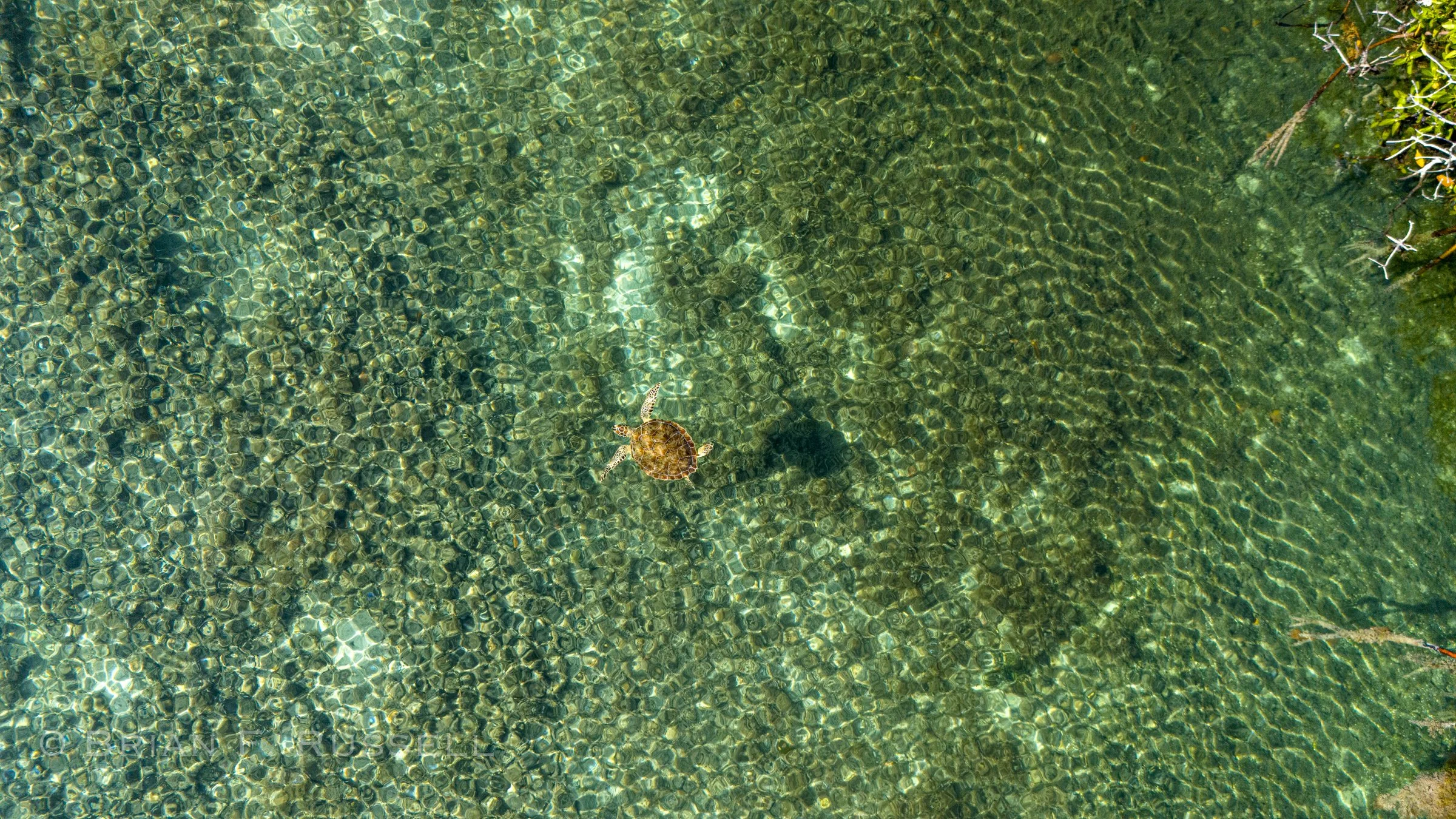
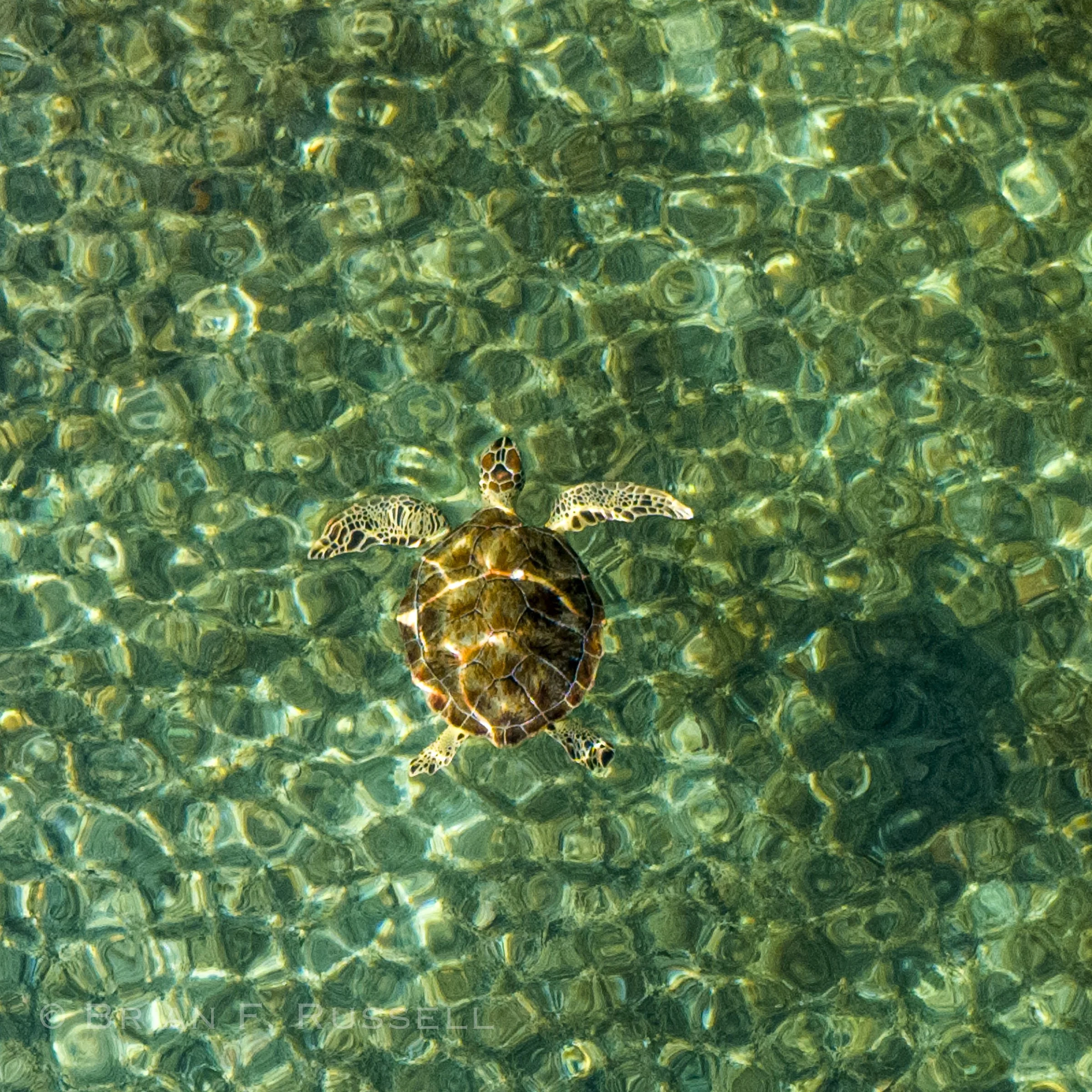
Turtle in the shallows of Manjack Cay.
We came to Bahamas, planning to relax and enjoy warm weather after our busy summer in the arctic. Someone did not get the memo. Since arriving here, we have dashed from one secure anchorage to another, sheltering in place from the lows that have been passing through every 3-4 days. It is unfair to complain too much as we watch the news of record snow and ice storms in the US, and gales across the UK.
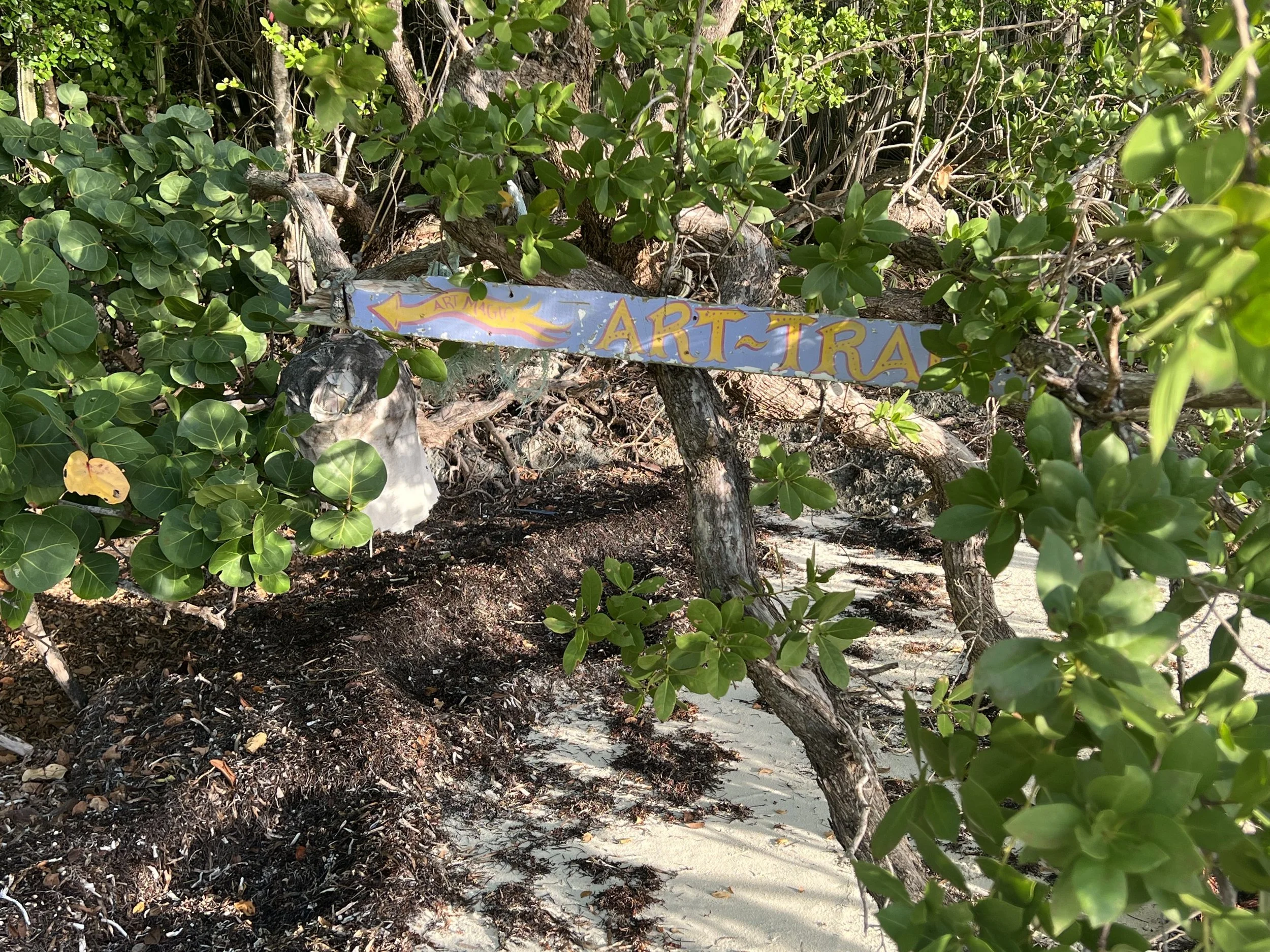
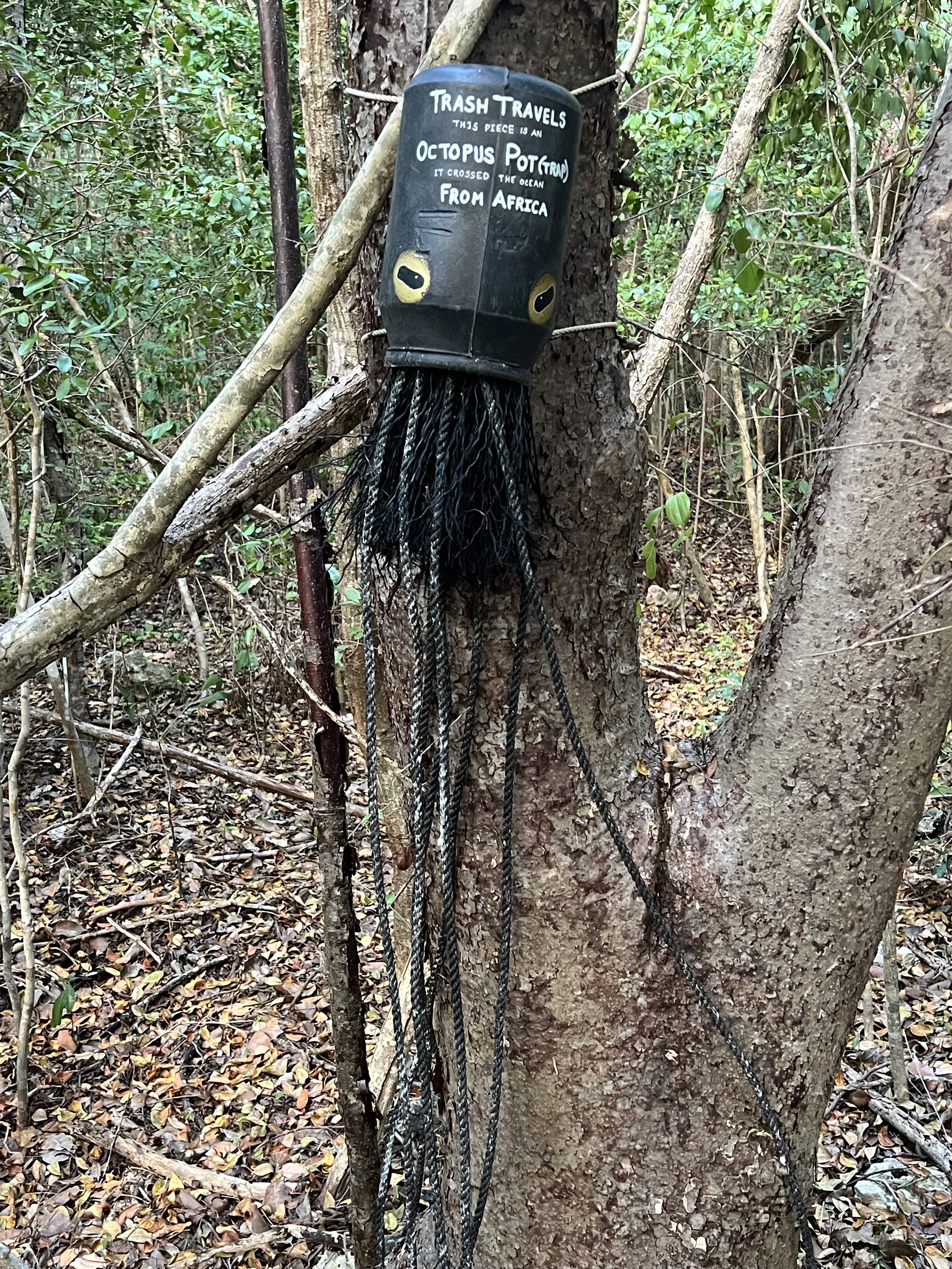
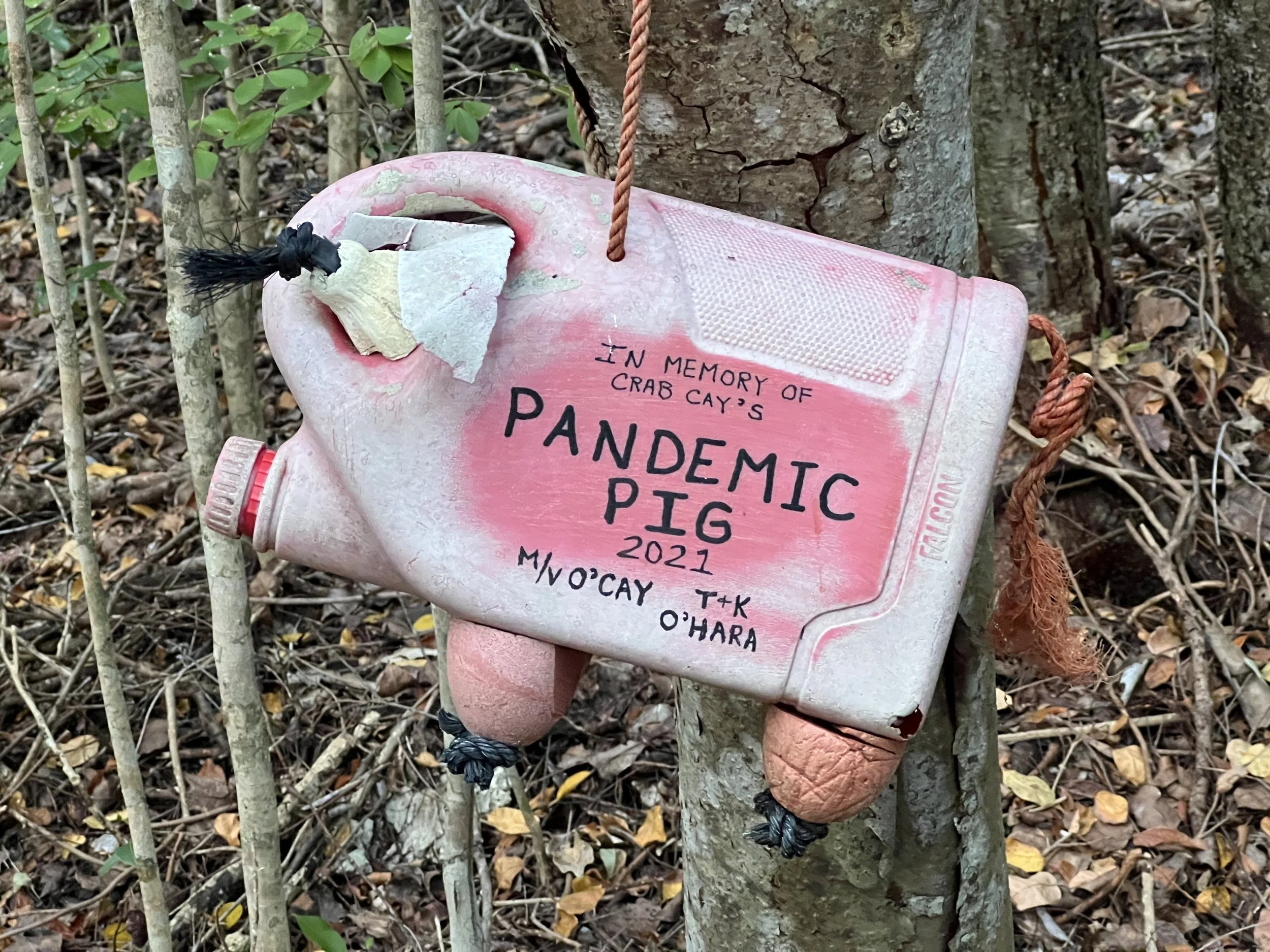
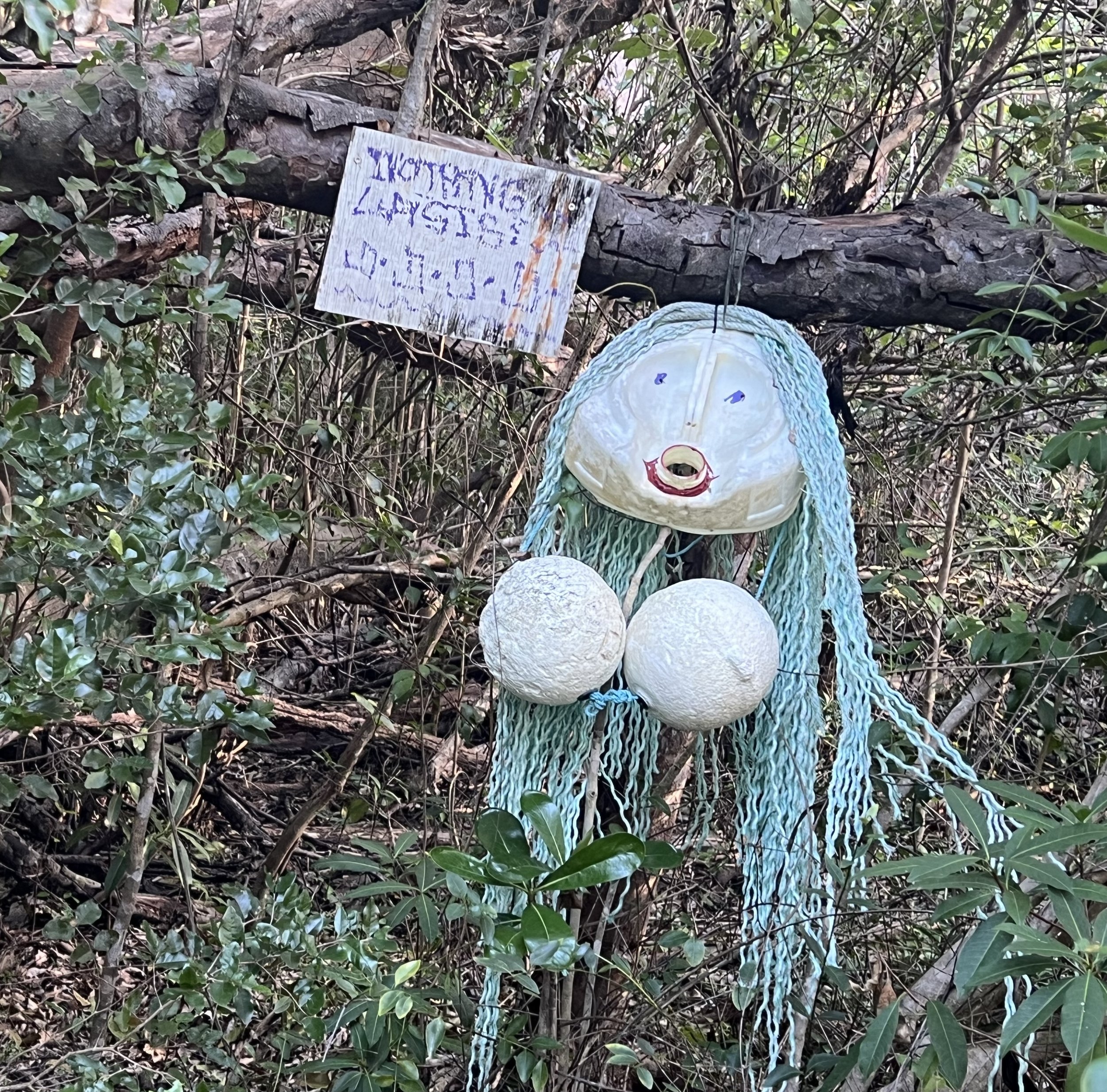
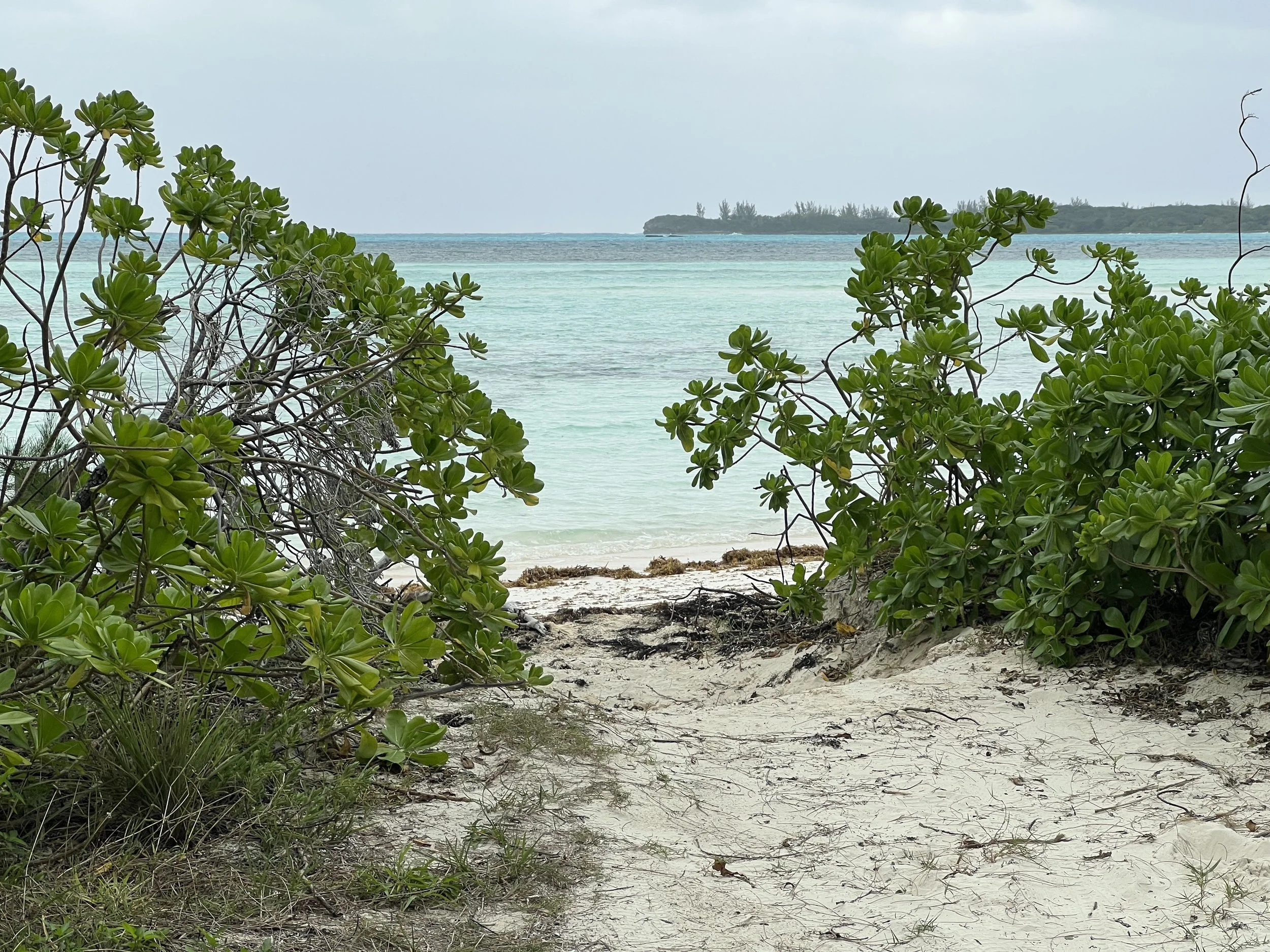
After checking in at Grand Cay, we sailed south down the Sea of Abaco. We stopped at Allans Pensacola for a couple of nights, before moving south to Manjack Cay. This spot was recommended by the crew of SV Quinn; we always welcome suggestions. The anchorage was nice and roomy, there was a lovely sandy beach to land the dinghy, and an “art walk” through the bushes and along the shore. There are many of these trails throughout the Bahamas, the trail indicated by collected beach trash; a flip flop, maybe a fishing float or some netting. This one was more curated, more effort was made on each piece. Some were quite ingenious.
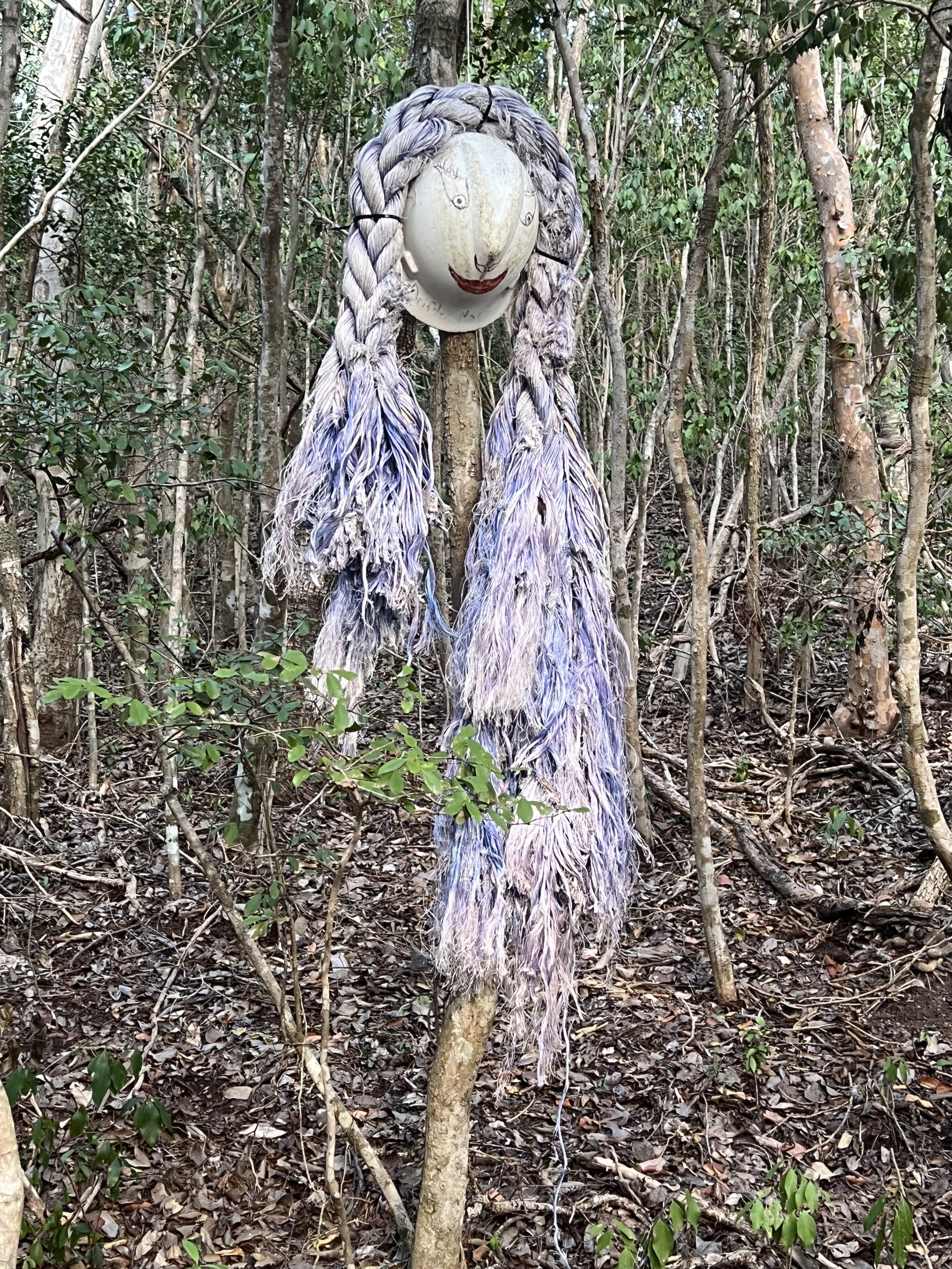
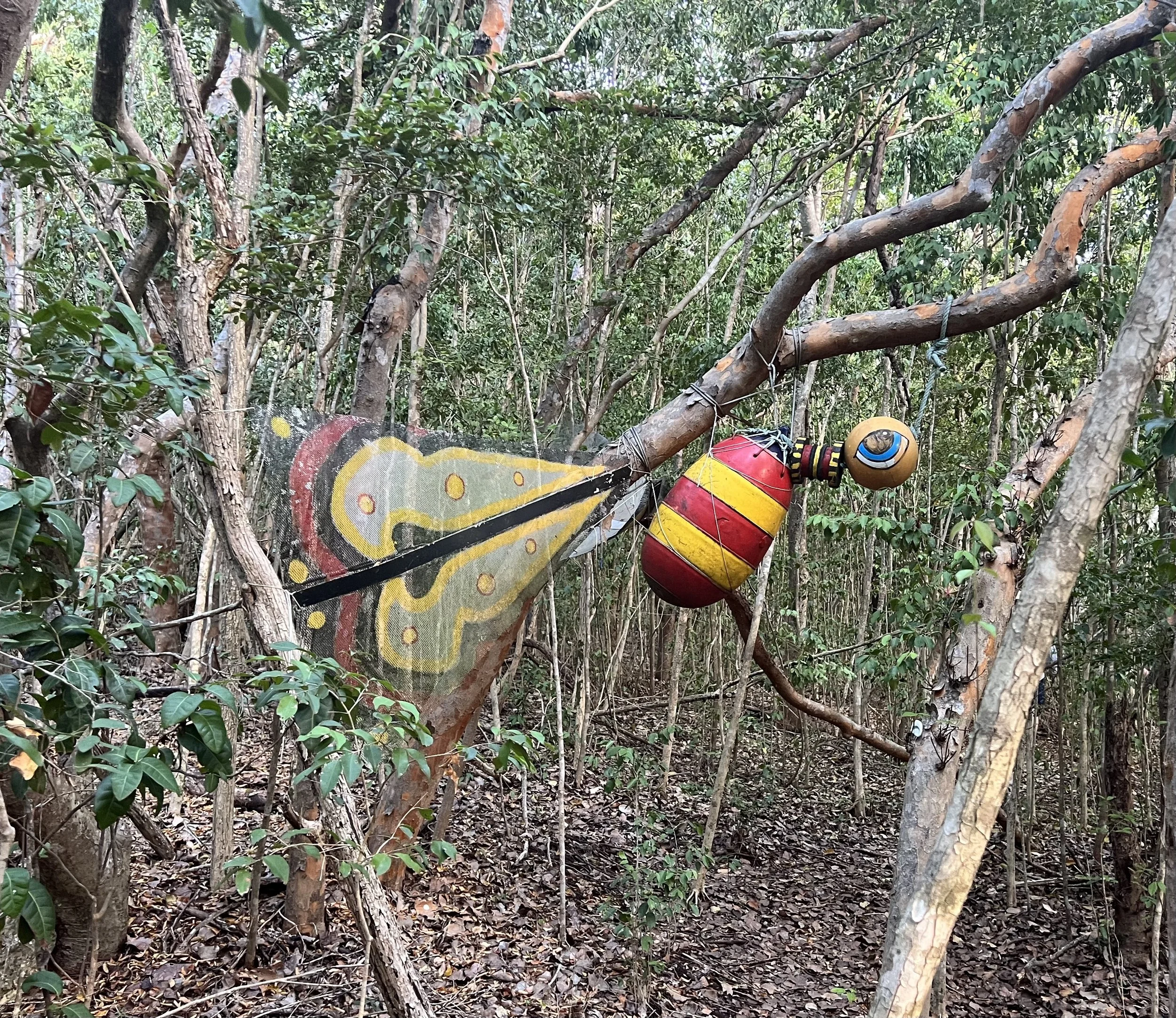
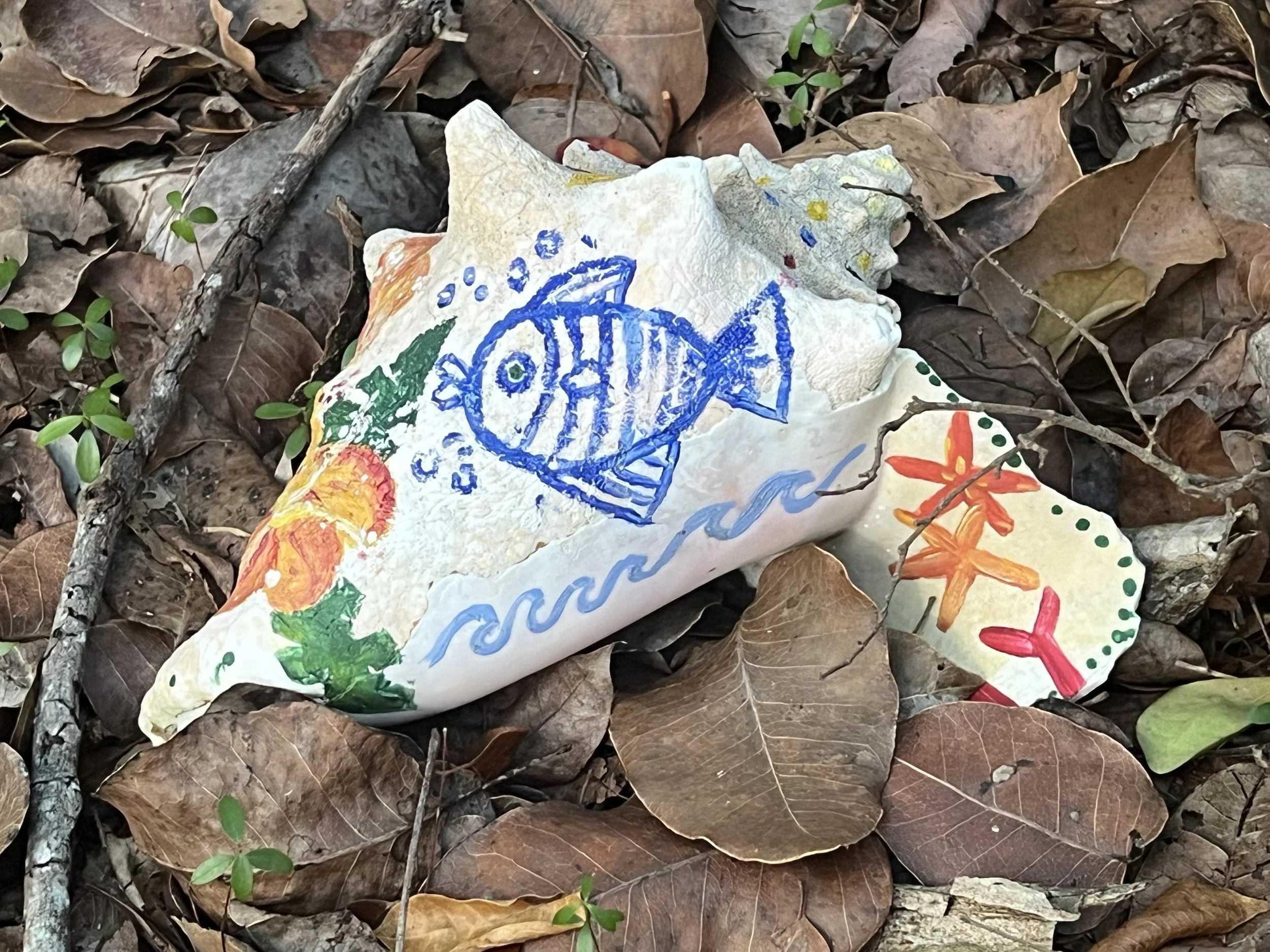
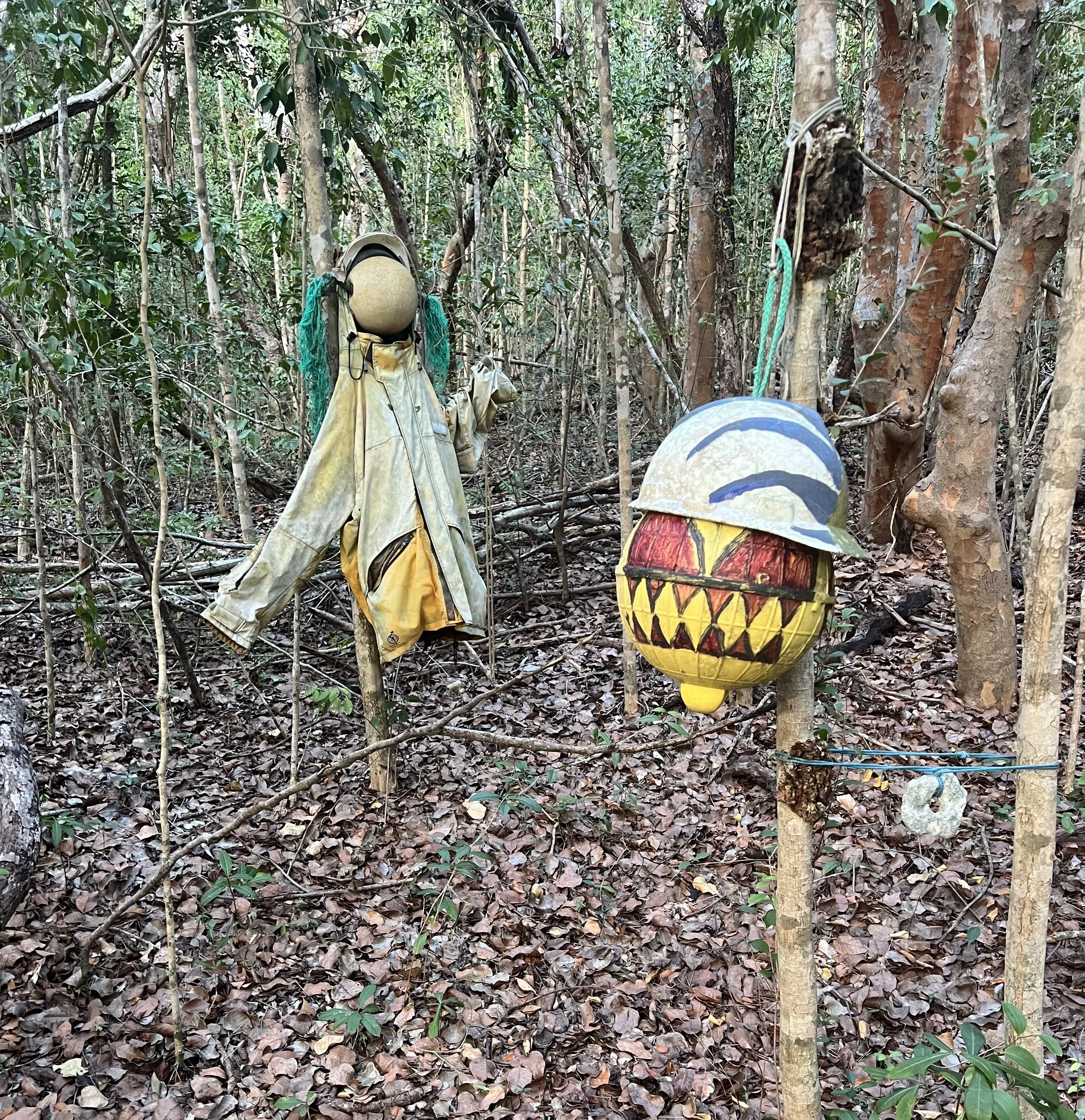
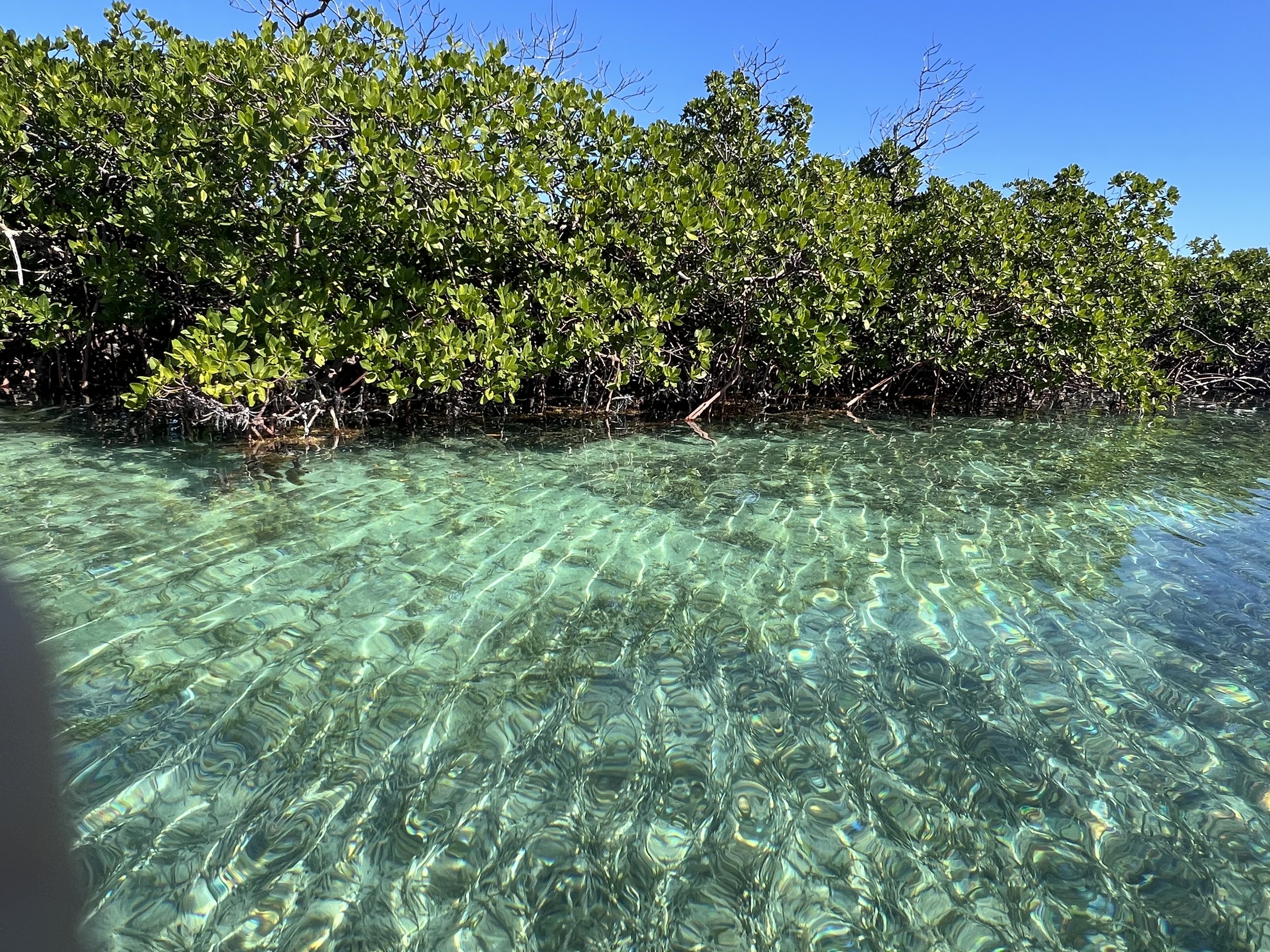
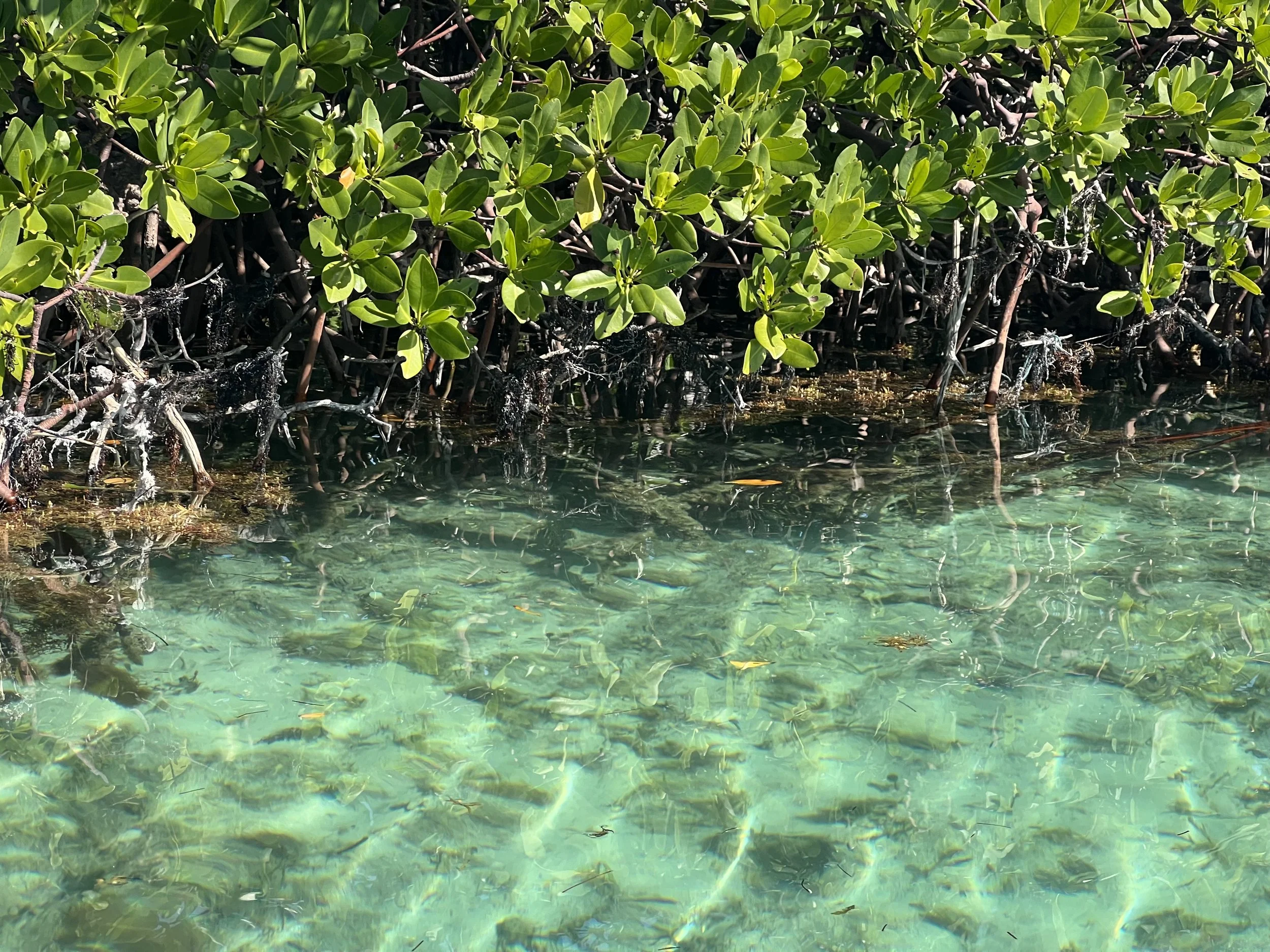
The best thing about Manjack Cay were the mangroves. Just to the east of the anchorage was a shallow tidal inlet which dried out at low water, but was navigable half way in the dinghy at the top of the tide.
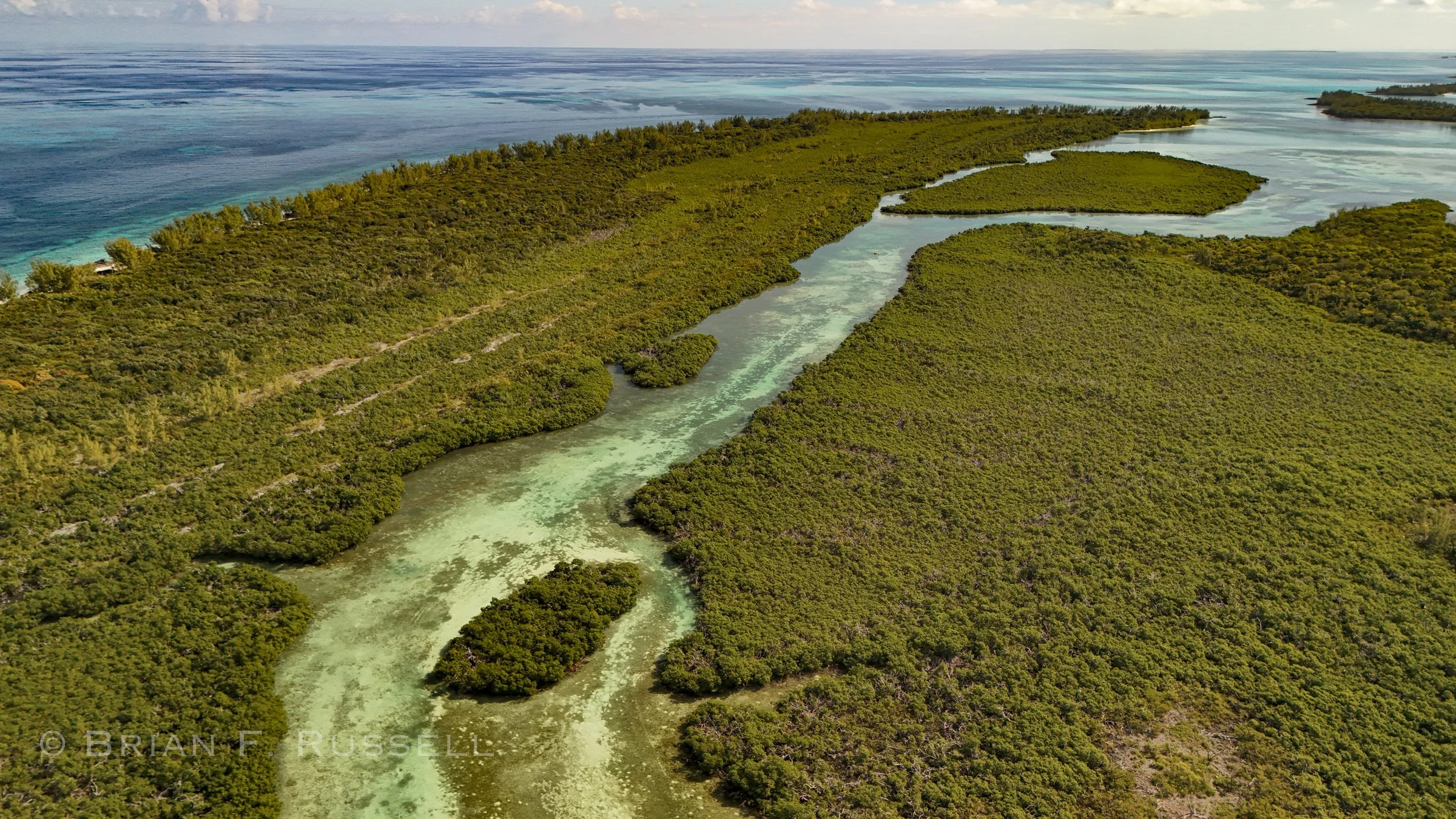
Mangroves of Manjack Cay.
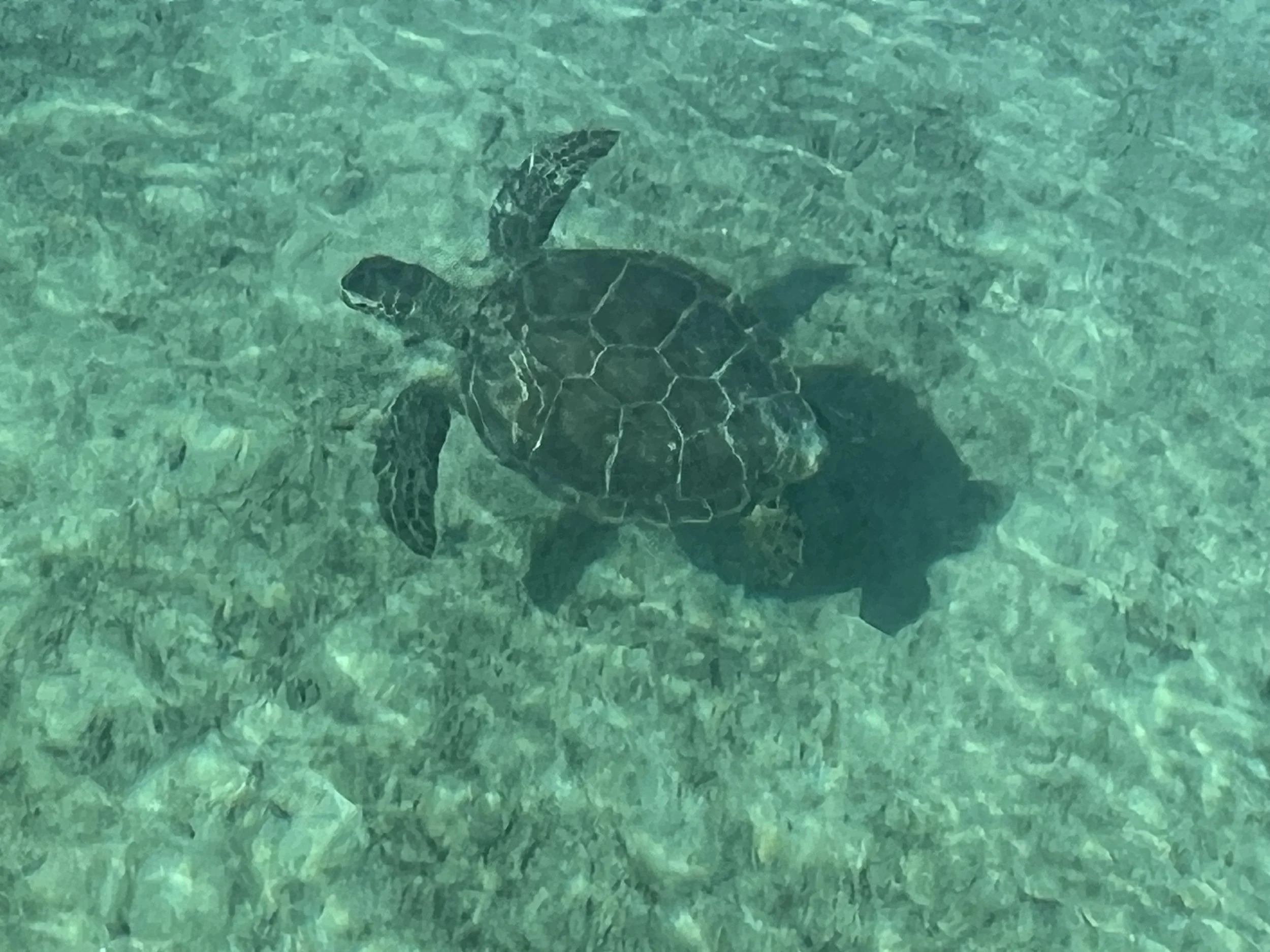
We explored, spotting many turtles, rays and fish. We expected to see some small sharks as well, the mangroves act as a nursery for many species, but not this time.
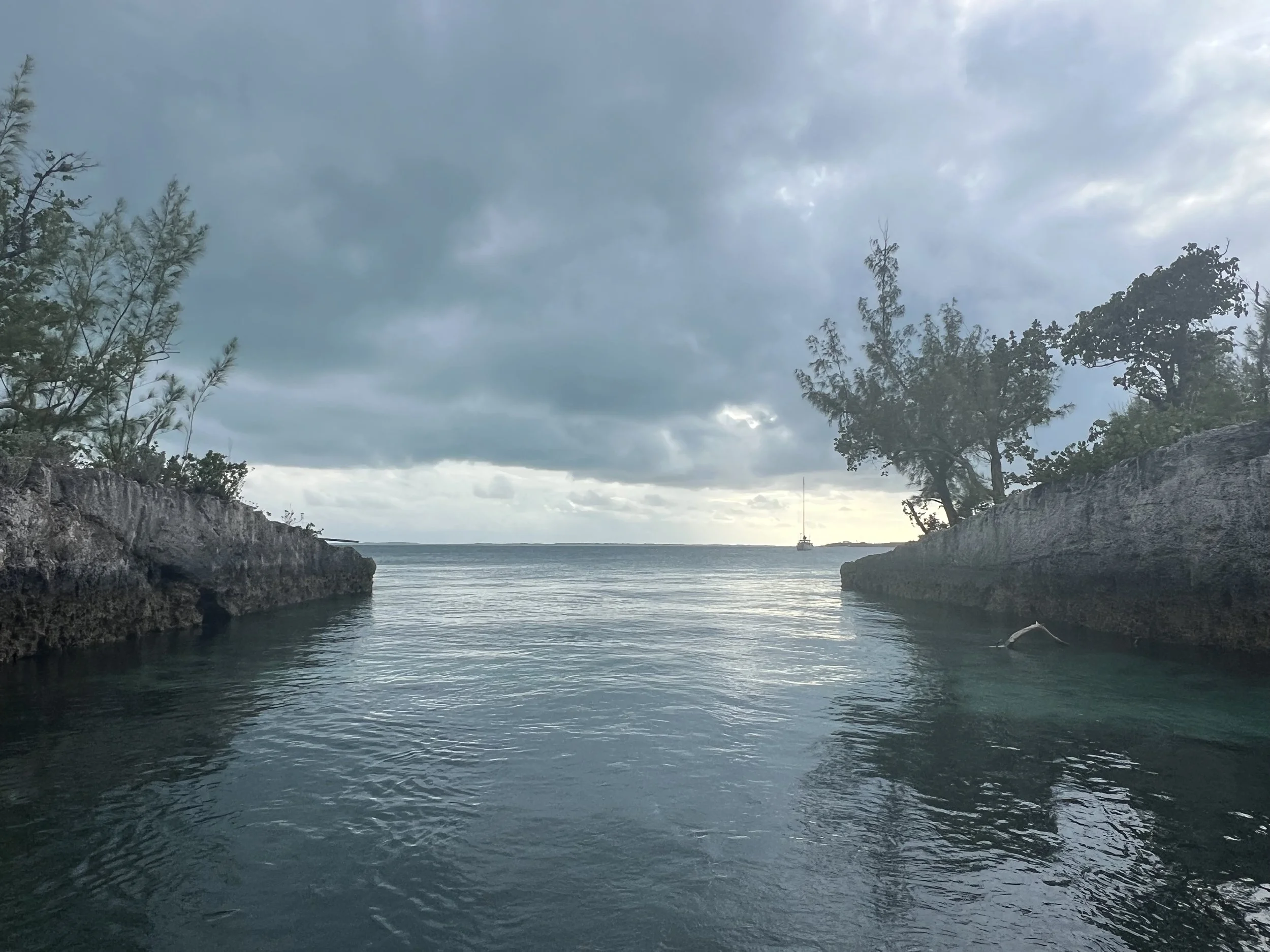
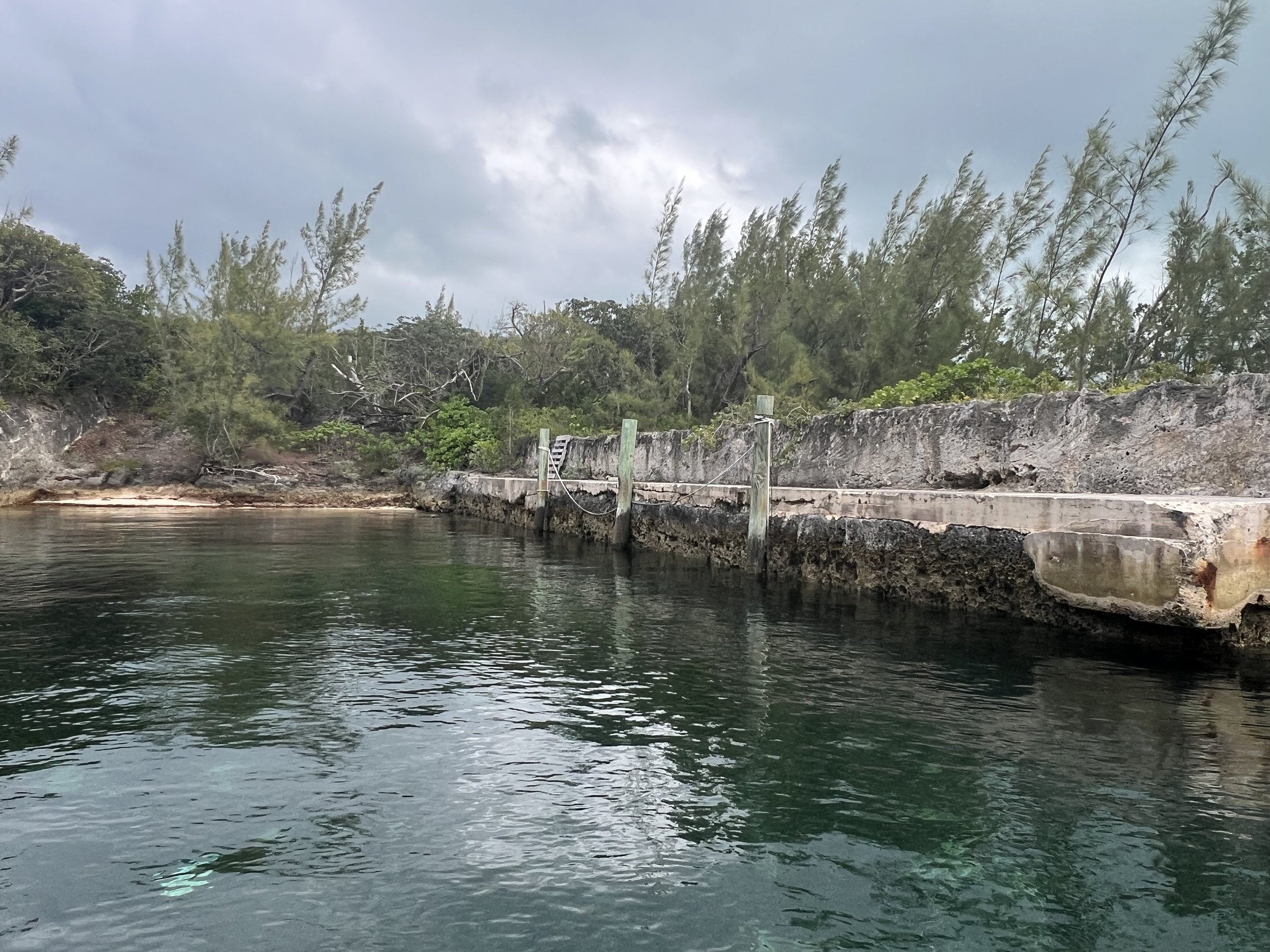
We moved south around the infamous Whale Cut, leaving the protected but shallow waters of the Sea of Abaco for a brief jaunt in the swell of the Atlantic, and anchored off Great Guana Cay. There was a small unfinished harbor cut into the rocky shoreline, with a few pilings we could tie the dinghy to. It gave us an opportunity to have a walk onshore and stretch our legs before the next big low was due to arrive, and we would be trapped onboard for a few days.
The southern side of Marsh Harbor was our next stop, not particularly scenic, but close to a boatyard where we had read we could leave our dinghy securely for a $10 fee and was a short walk to the grocery store to top up the ship’s supplies. After the storm passed we went in to check it out. Well, inflation is seriously out of hand here, the dinghy docking fee was $27.50. We paid up, but grumbled a good bit. No returning just to take a walk or sightsee.
And then the weather took a turn for the worse. We were on the boat for nearly a week before setting foot on land.
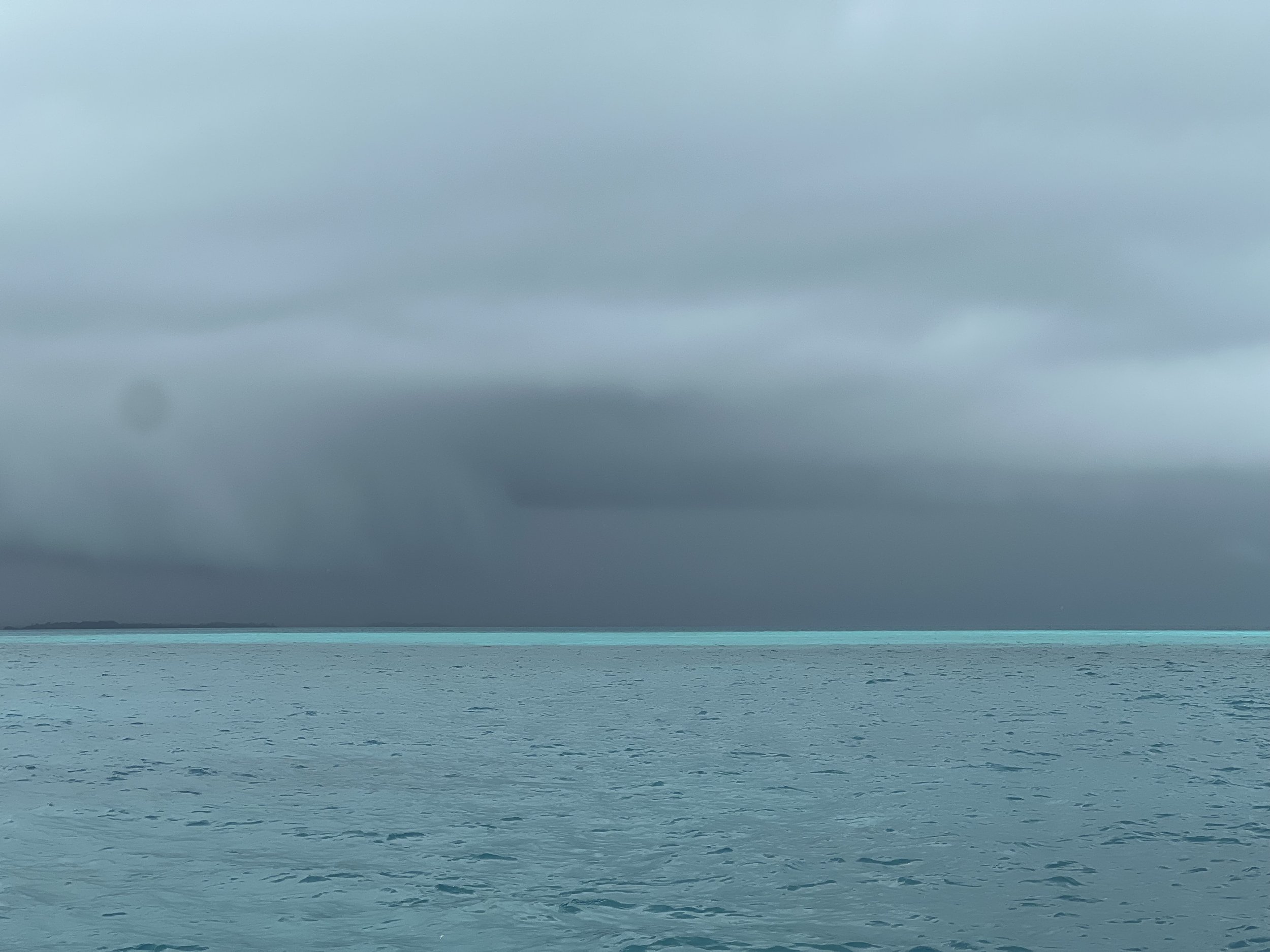
It is not all sunny skies in paradise.
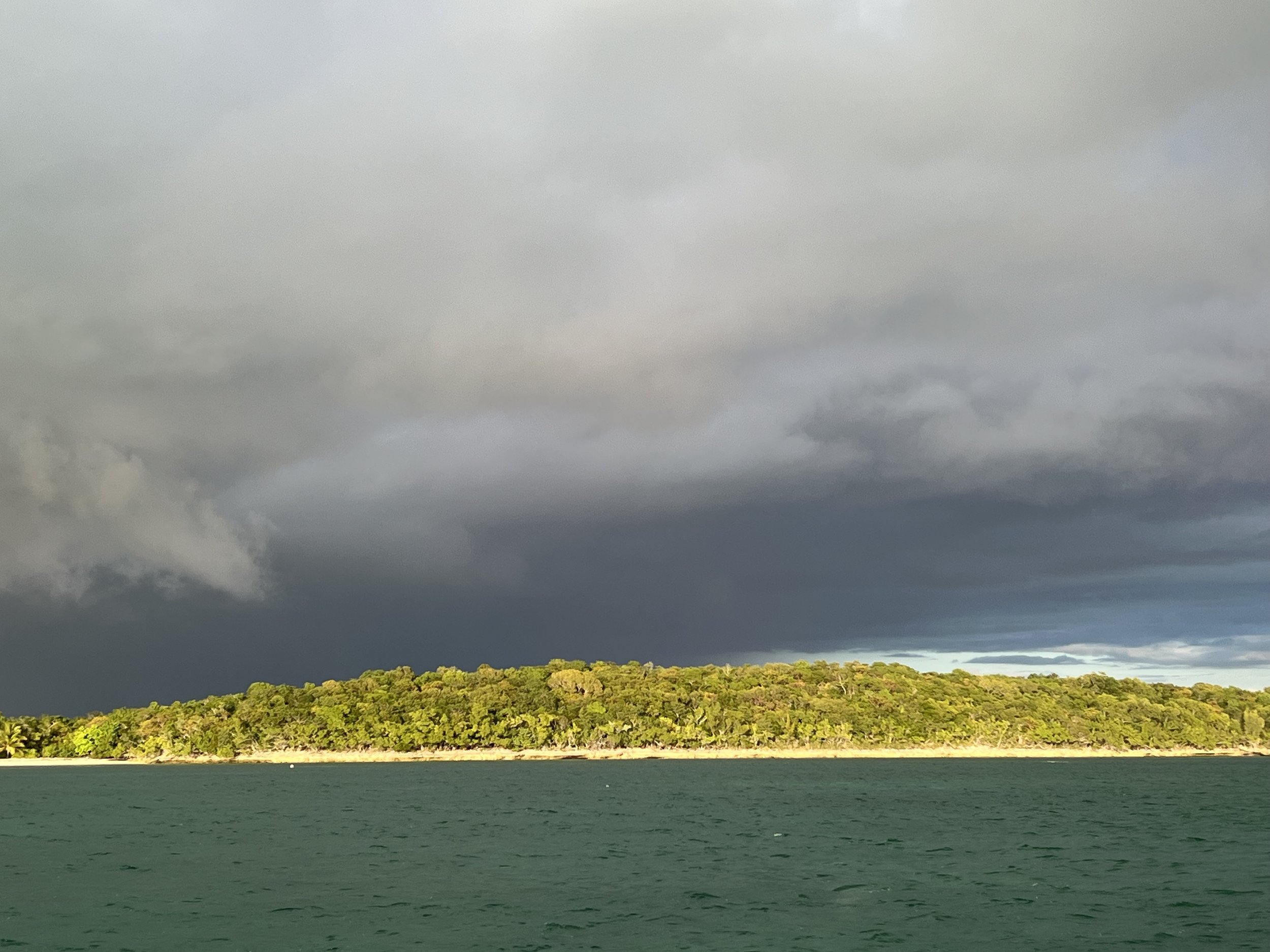
As soon as we could, we moved on south, through the shallow banks of the southern Sea of Abaco. We passed many fine spots we had previously visited in 2020, however the weather was not quite warm enough for snorkelling and the seas had been churned up quite a bit with the storm. Visibility at the lovely snorkelling spot of Coral Gardens would have been poor.
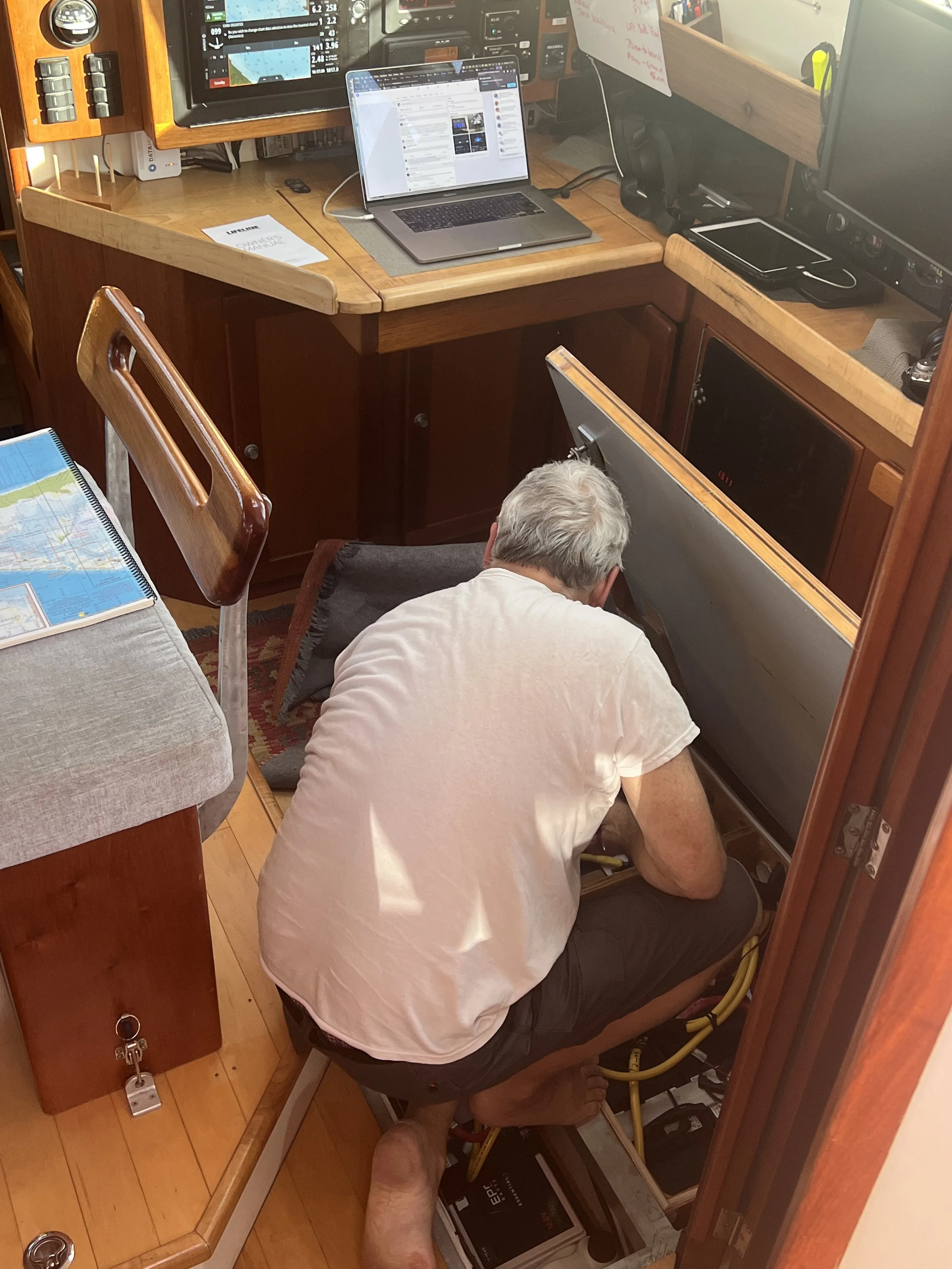
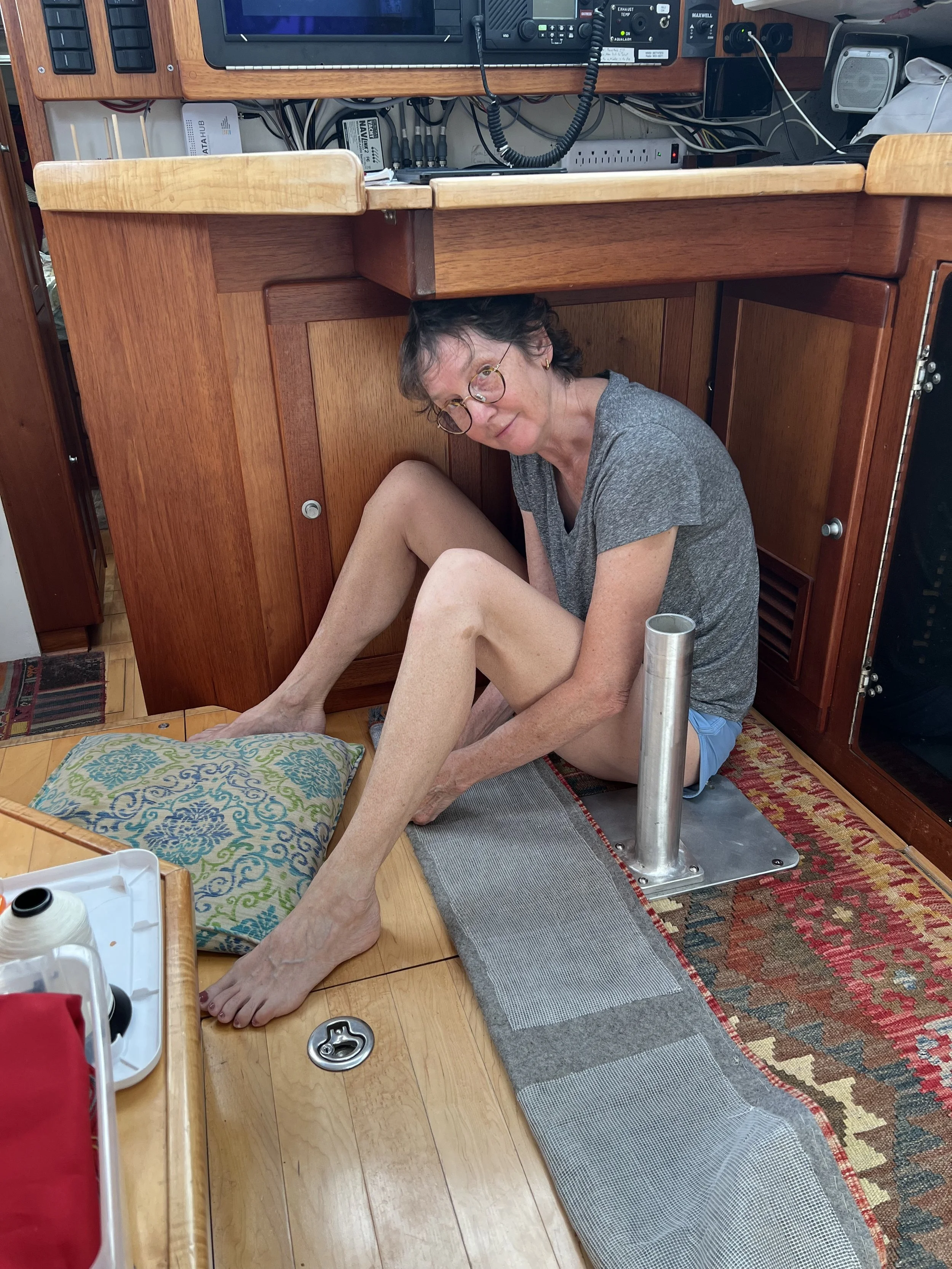
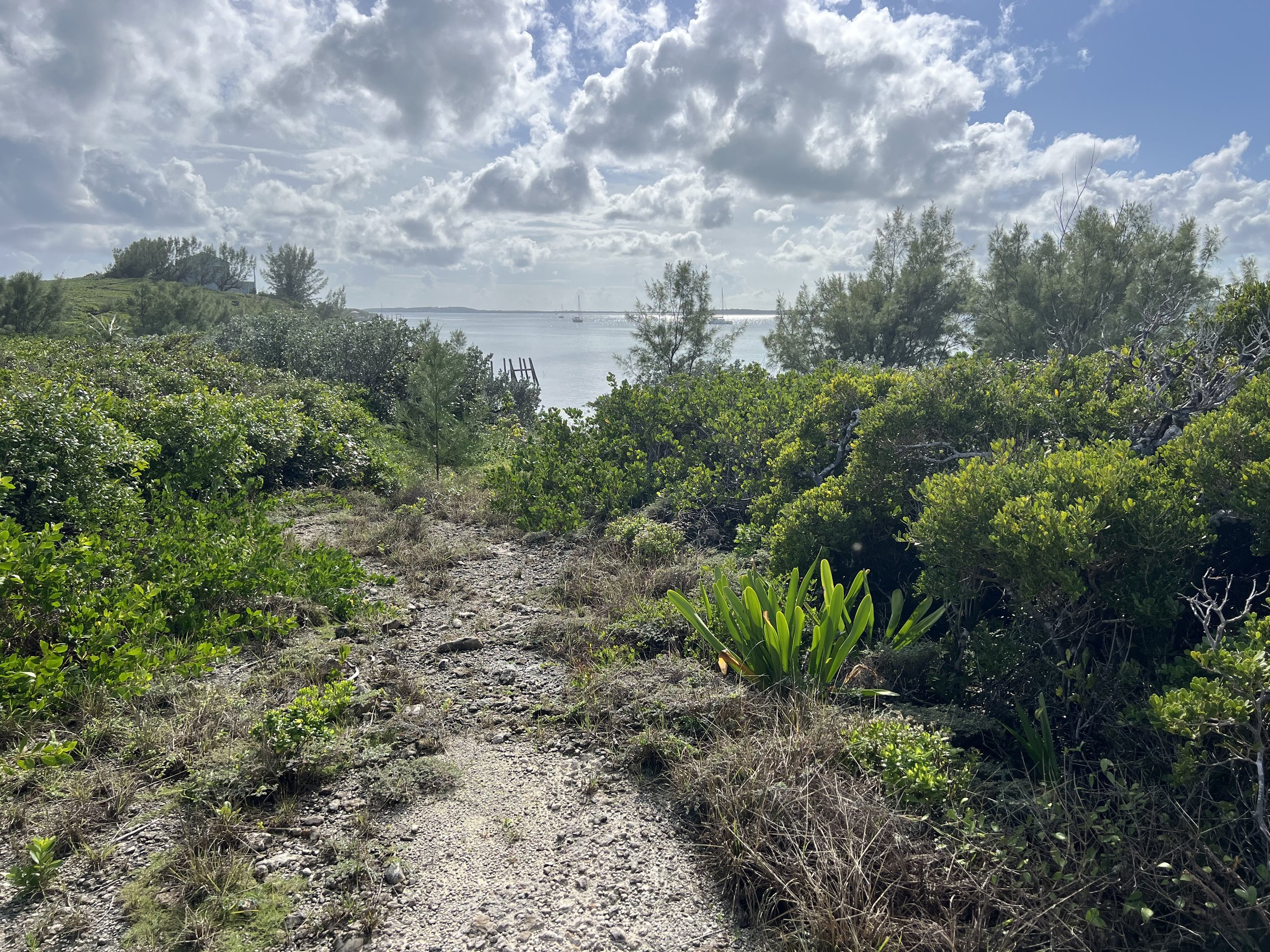
We anchored off Tilloo Cay and Lynyard Cay, completing a couple of boat projects. Batteries for Brian, and non-skid on the rug for Helen. Lynyard Cay was a lovely spot, well protected with a nice trail to the windward side of the island to enjoy the breakers, left over from the previous storm, crashing on the coral reefs along the shore.
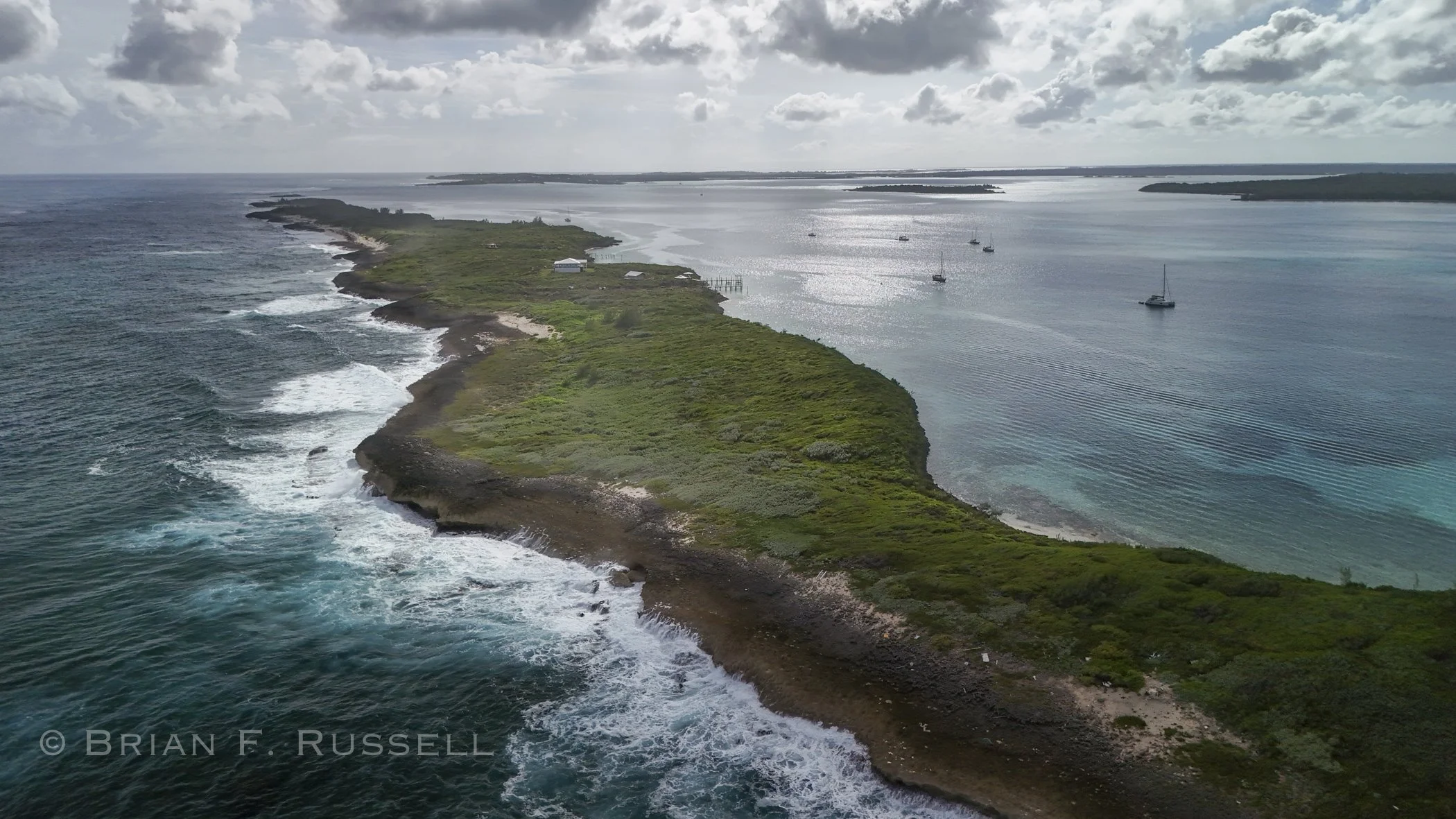
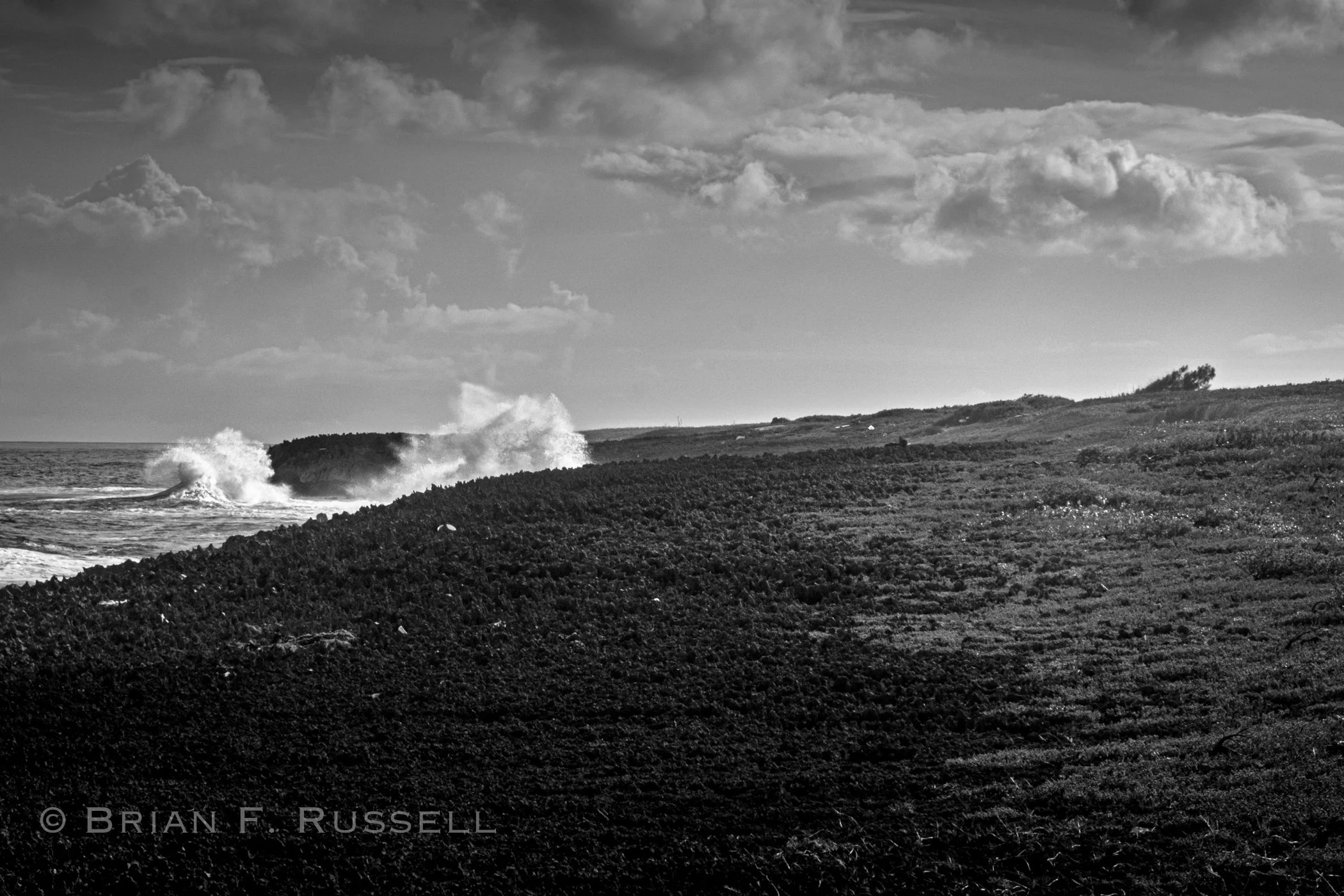
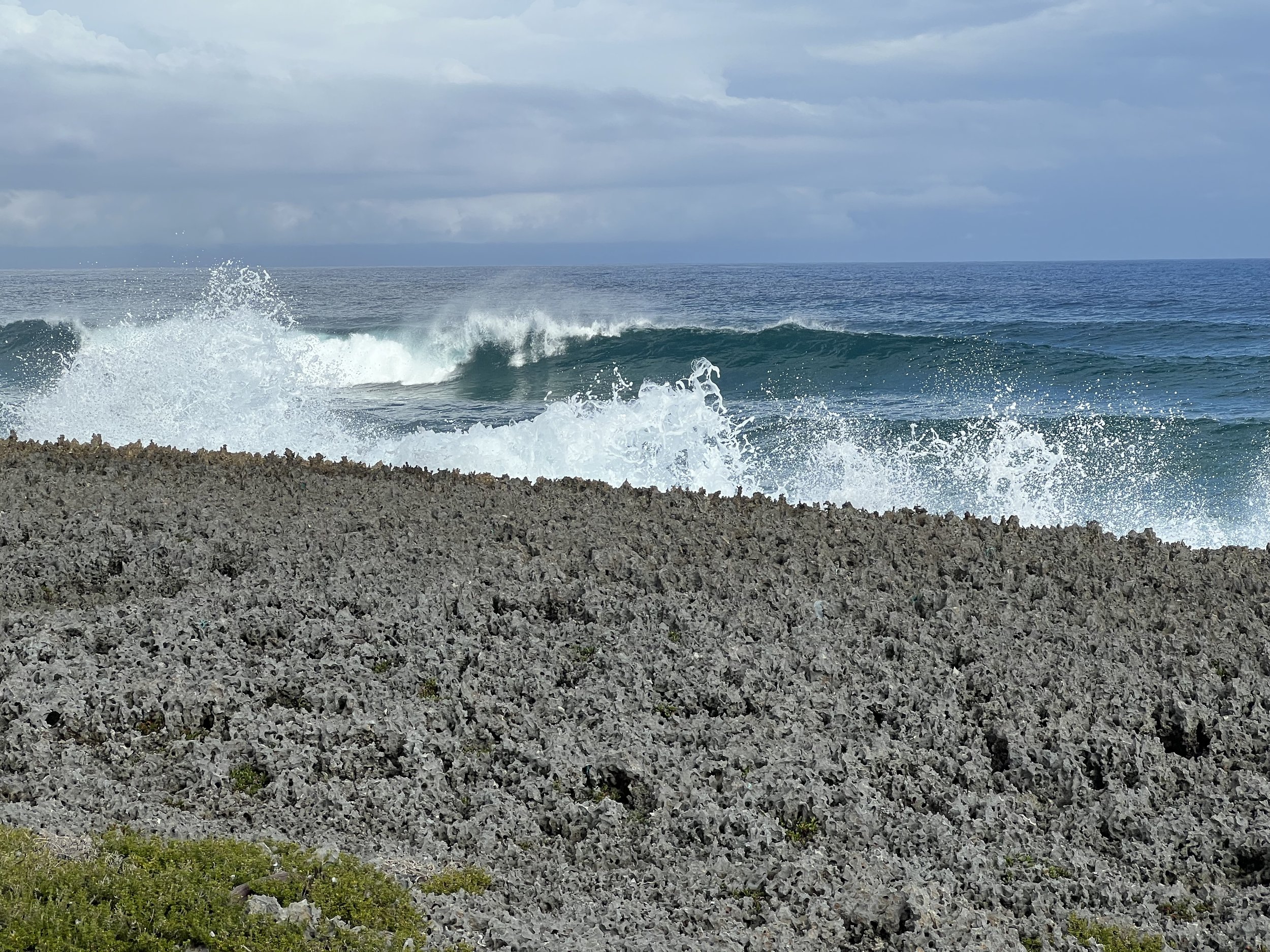
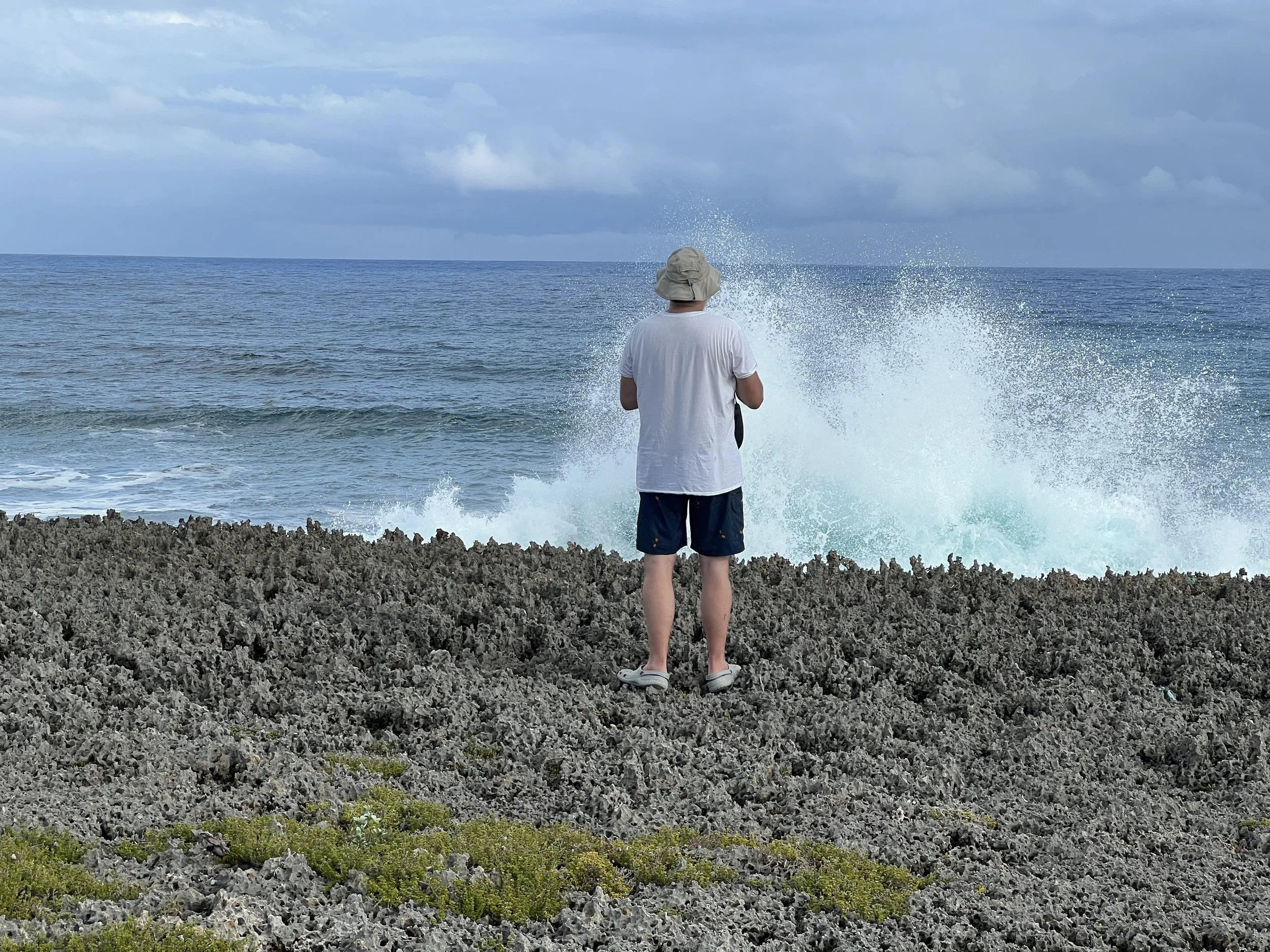
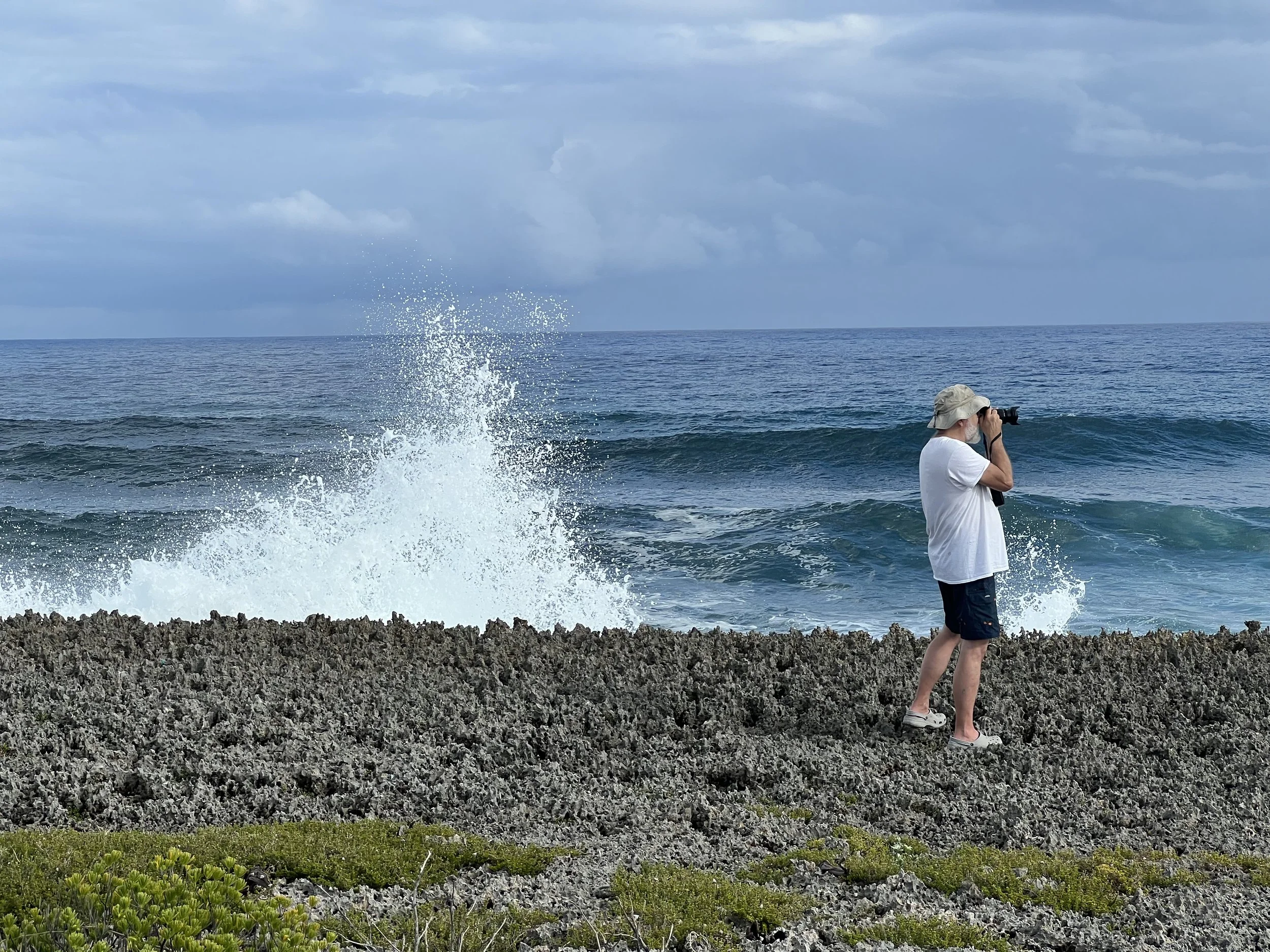
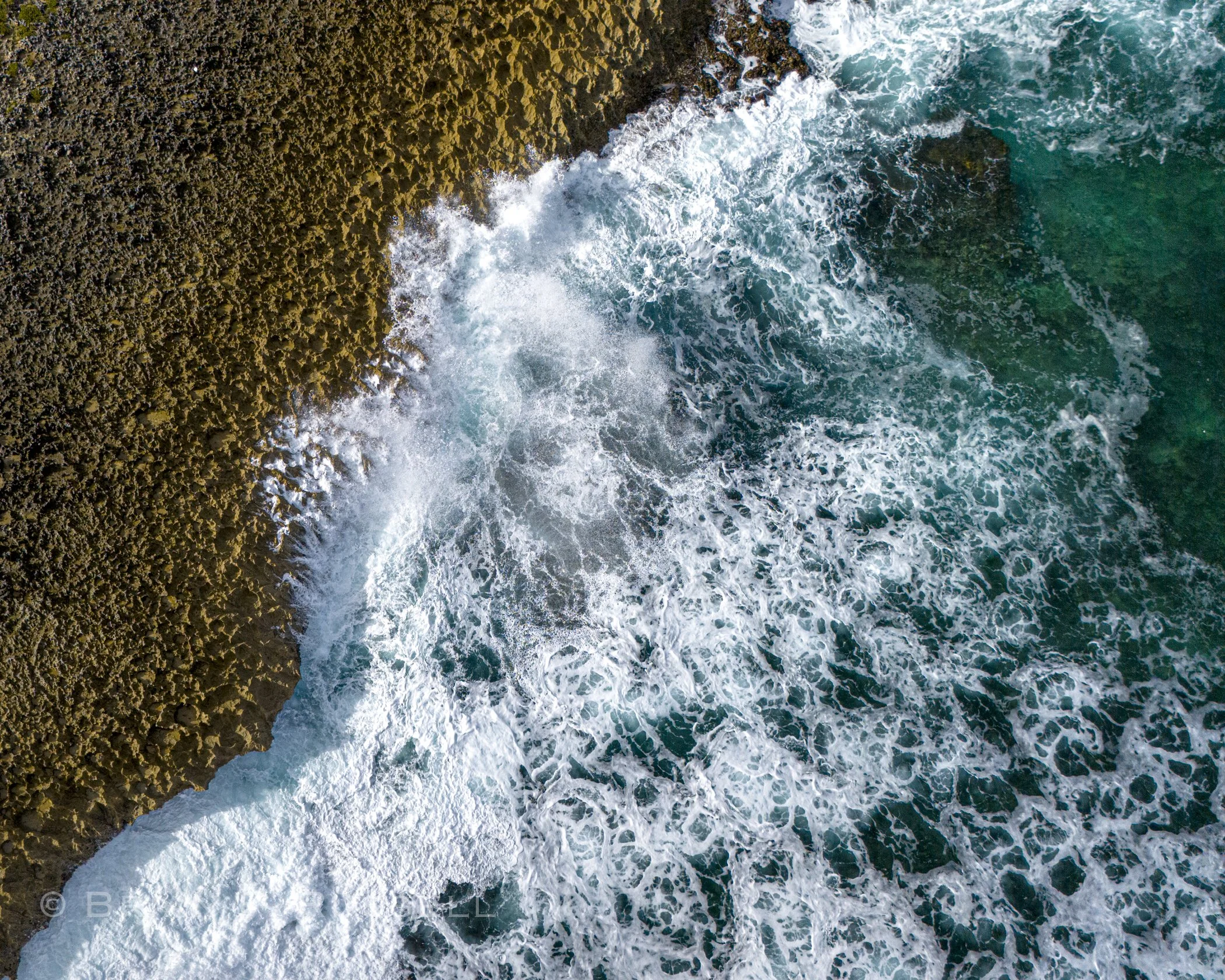
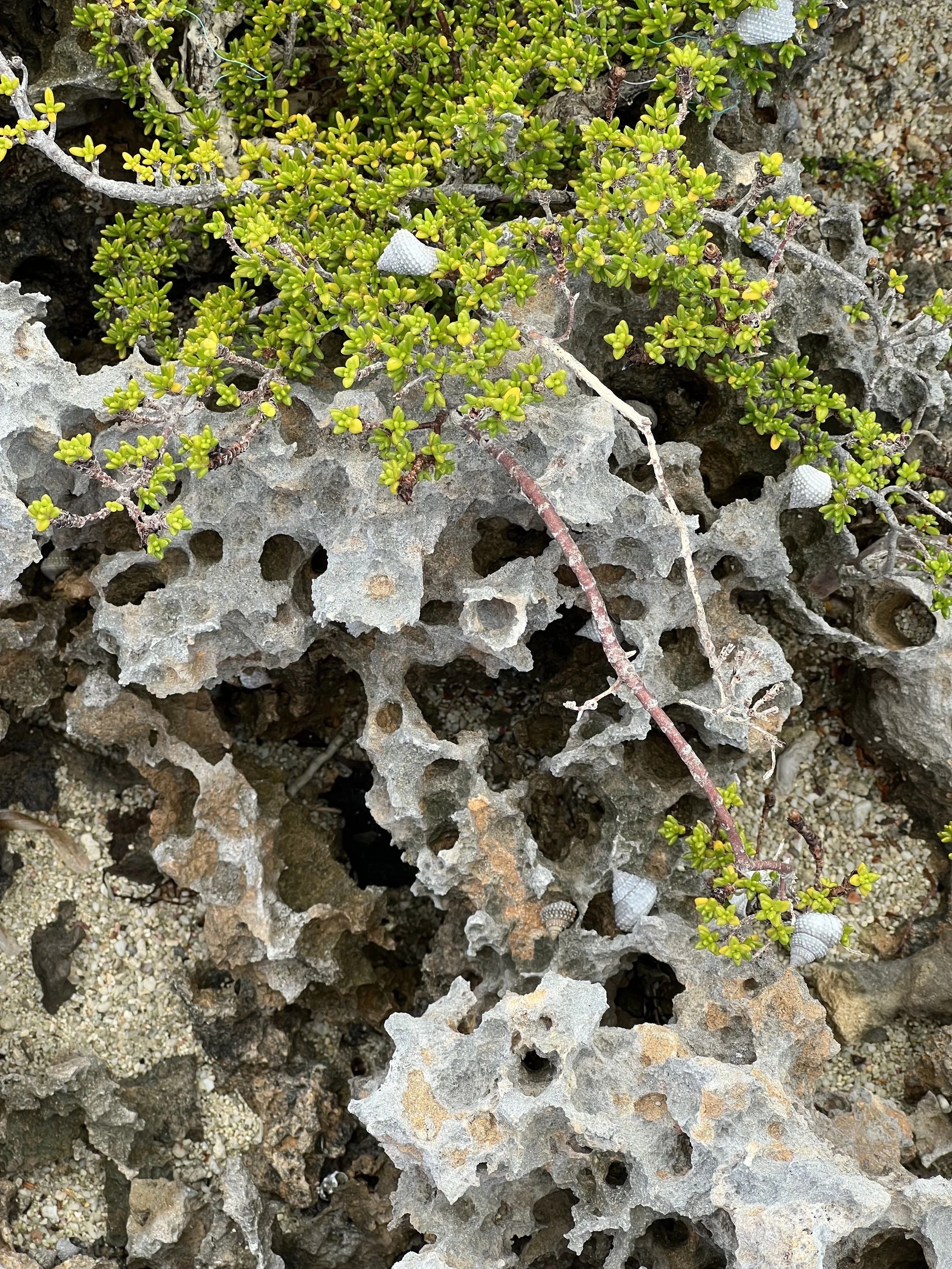
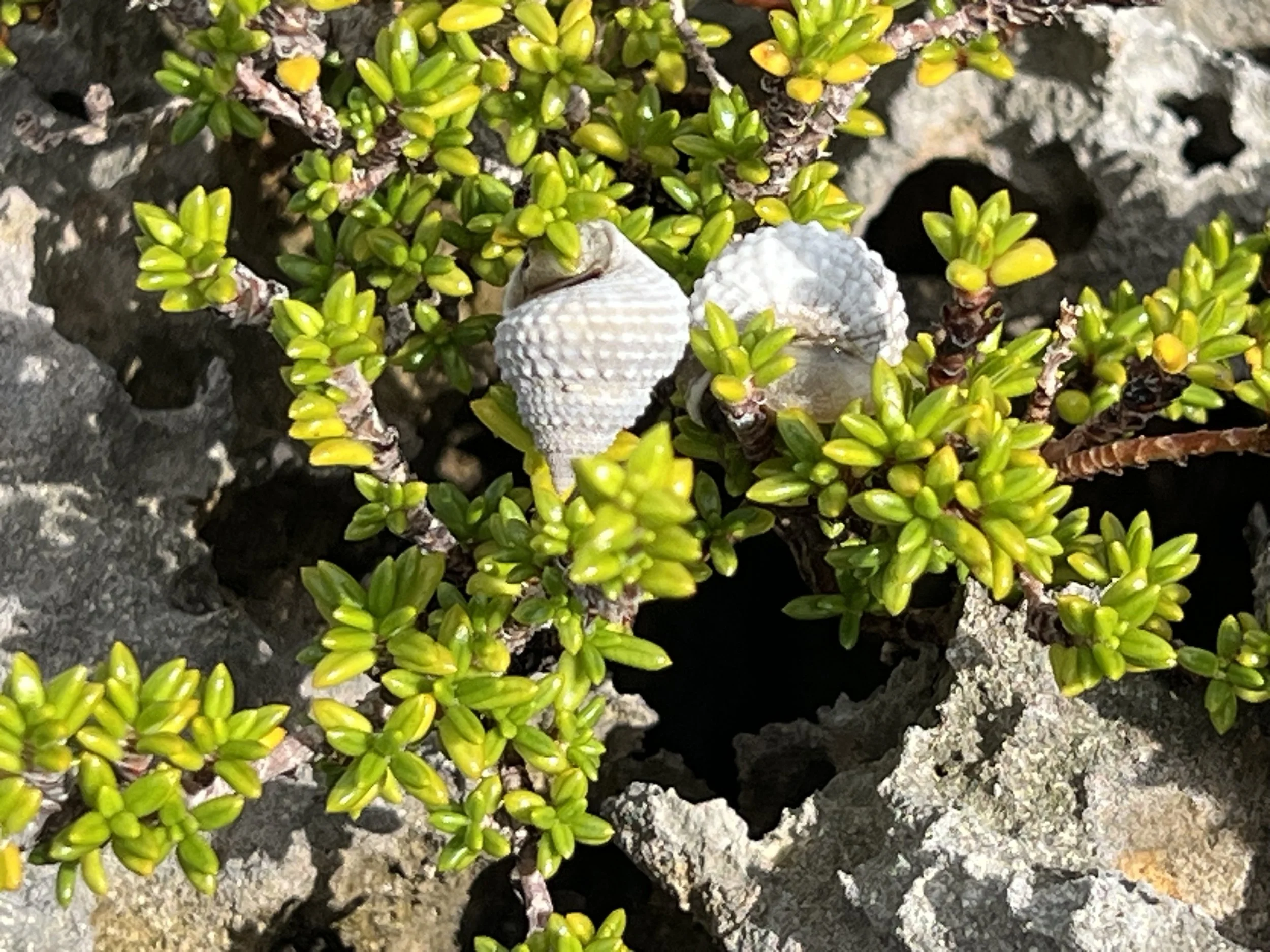
The shoreline on the windward beaches of these Cays are made from wickedly sharp eroded limestone. Almost impossible to walk on and the thought of being shipwrecked and tossed onto them after a storm is frankly terrifying. Here the few scraps of vegetation were covered in small whelks.
The following day, in the predawn glow, we pulled up the anchor and made our way out to the pass by Little Harbor, and sailed south to Eleuthera.
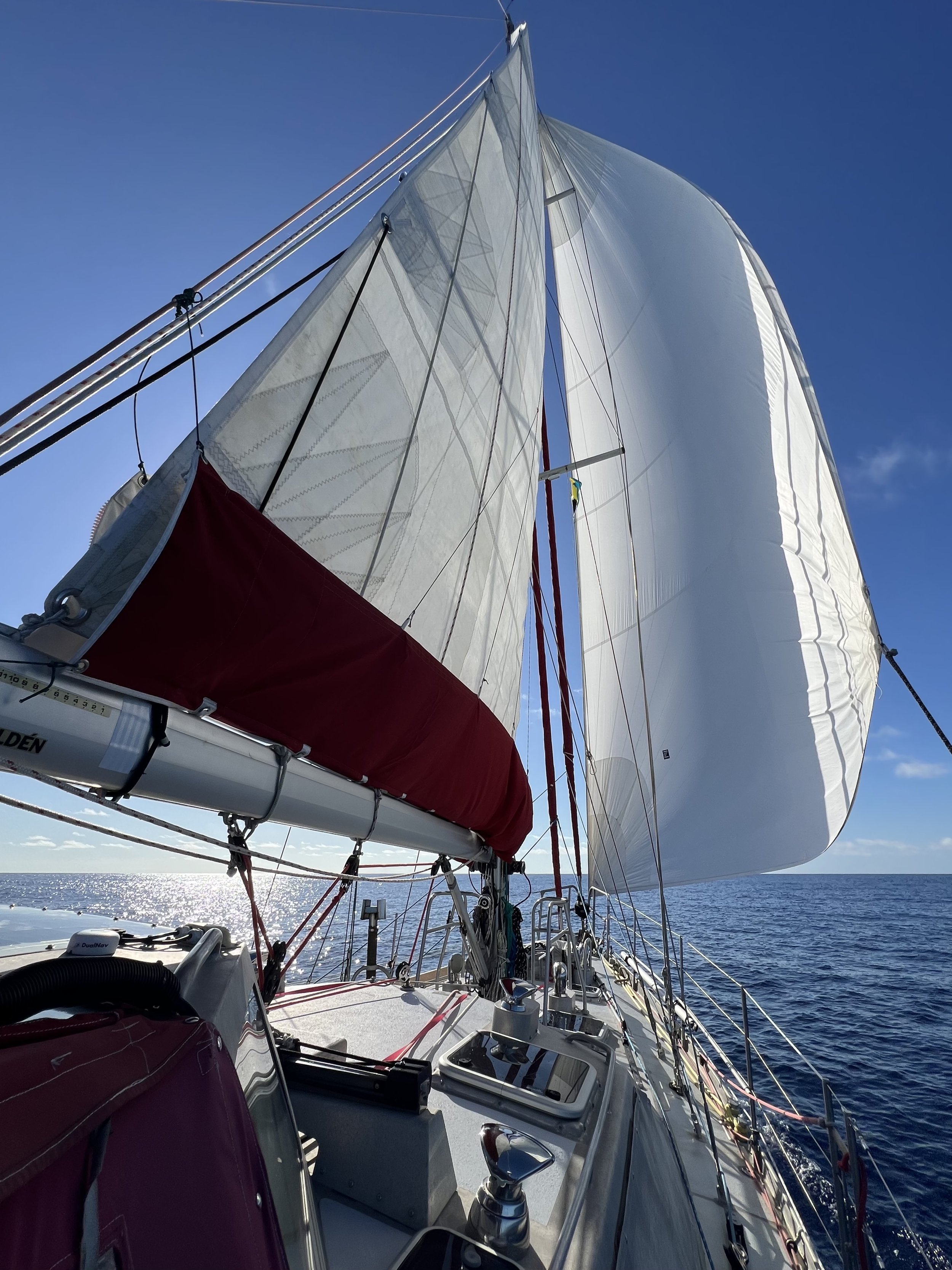
Sailing south in light winds with the Code Zero.
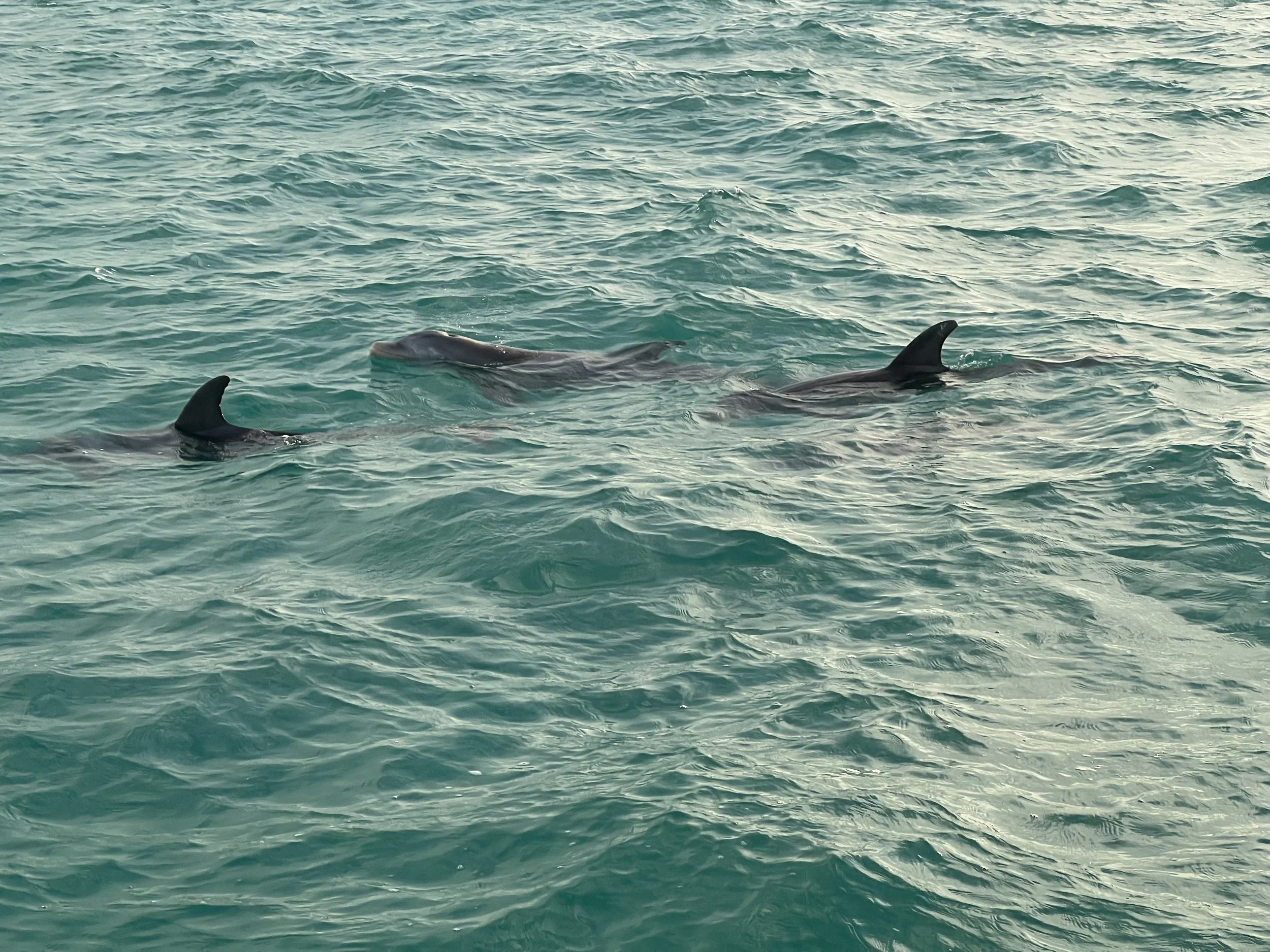
Spanish Wells in Eleuthera is one of our favorite spots in the Bahamas. A picturesque town with many thriving businesses. A few delicious restaurants, lovely soft sand beaches and most importantly, friends. We anchored off Meeks Patch, moving from west side to east side as the temperamental winds clocked around. Then we moved just off the main channel into Spanish Wells, where we were welcomed by a pod of dolphins. We drove the dinghy into town.
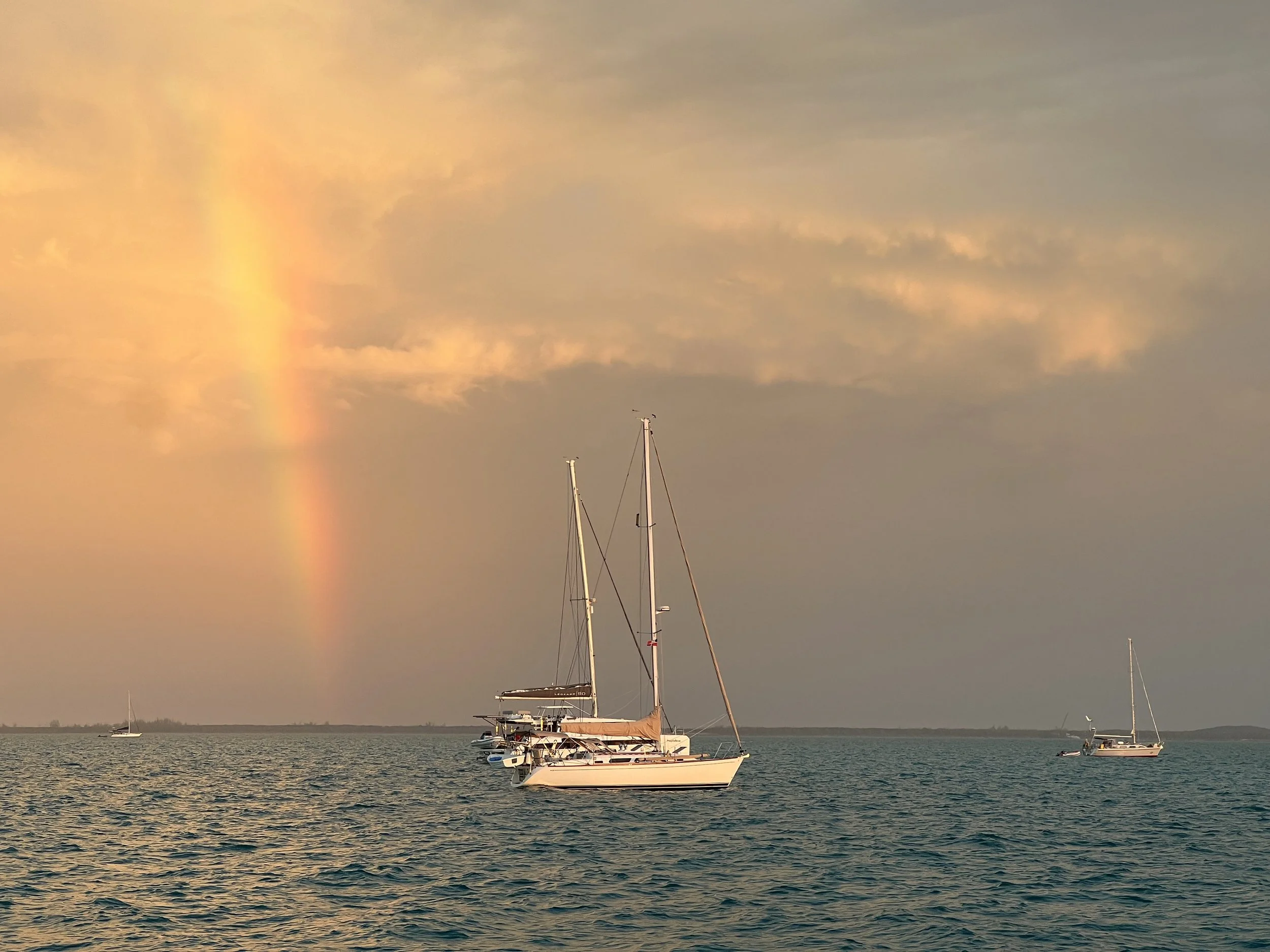
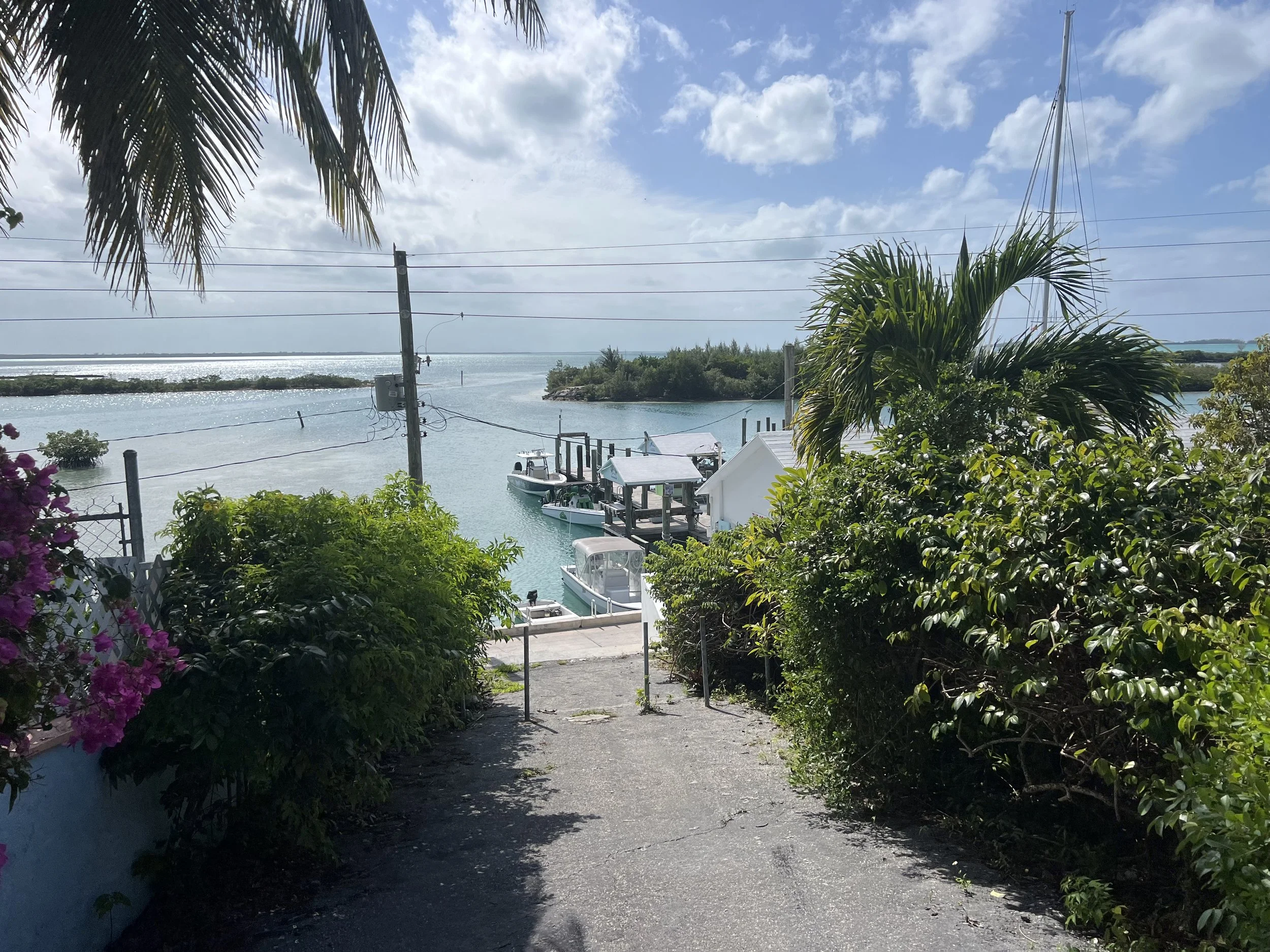
The narrow channel into Spanish Wells.
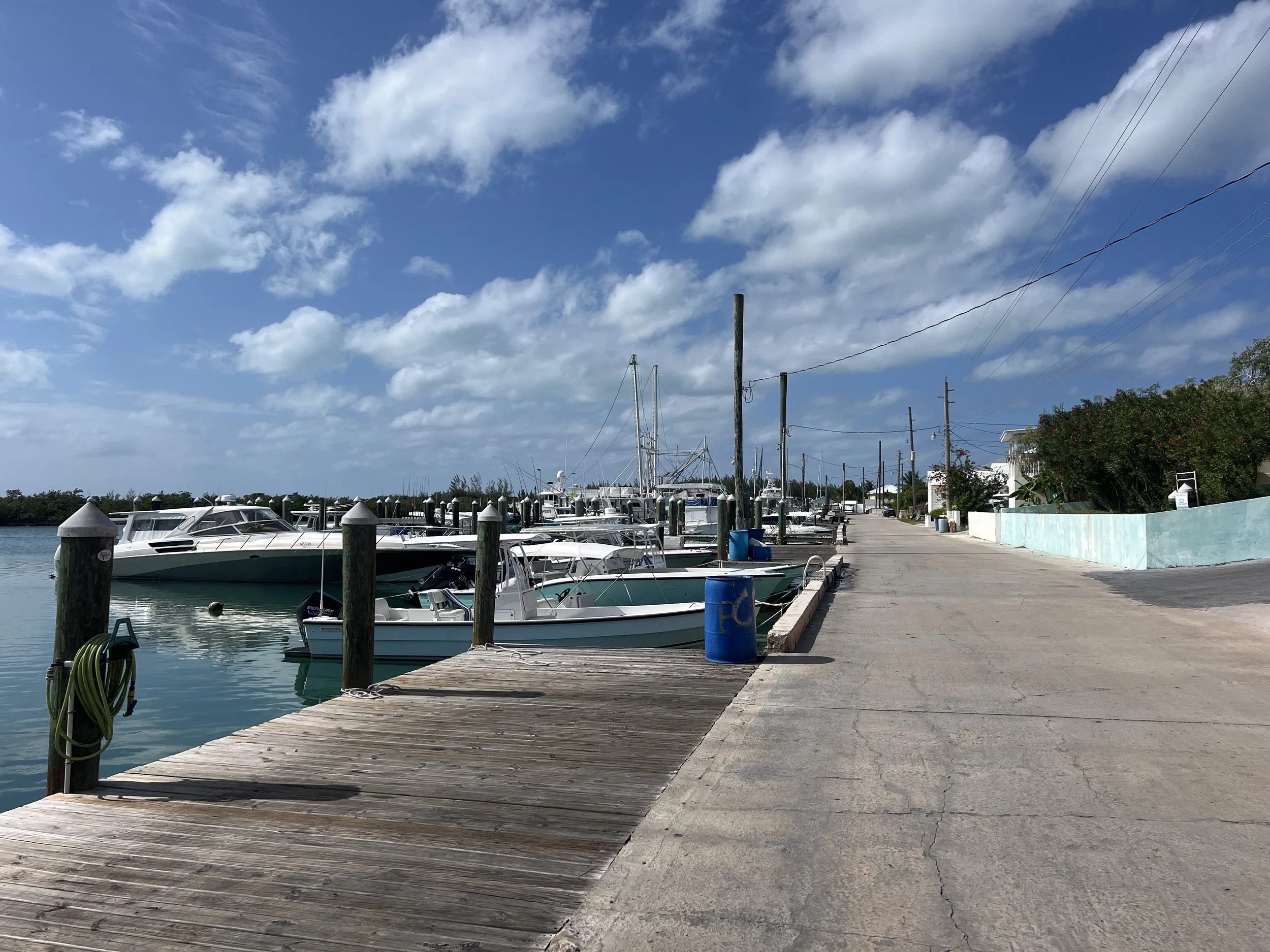
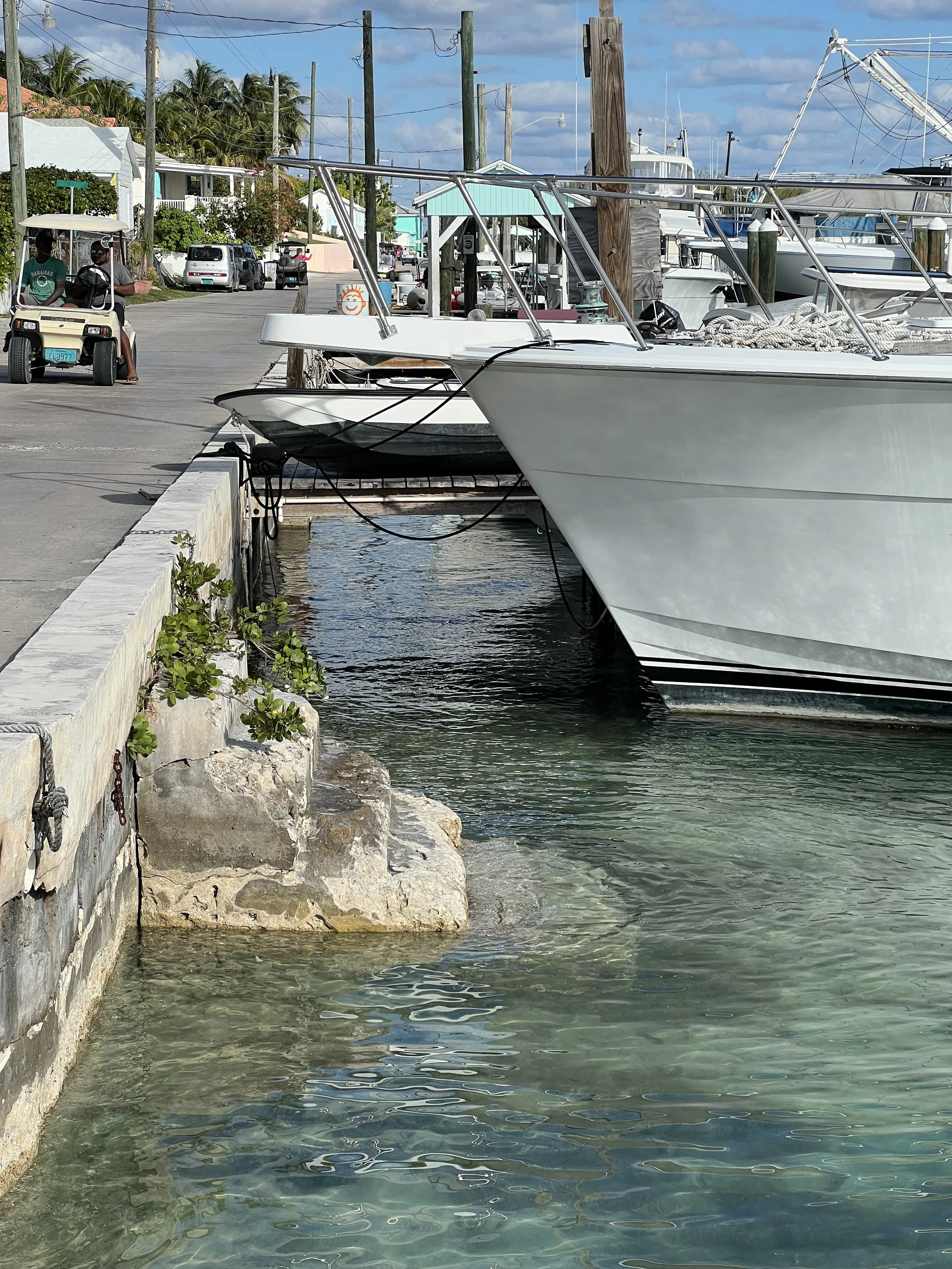
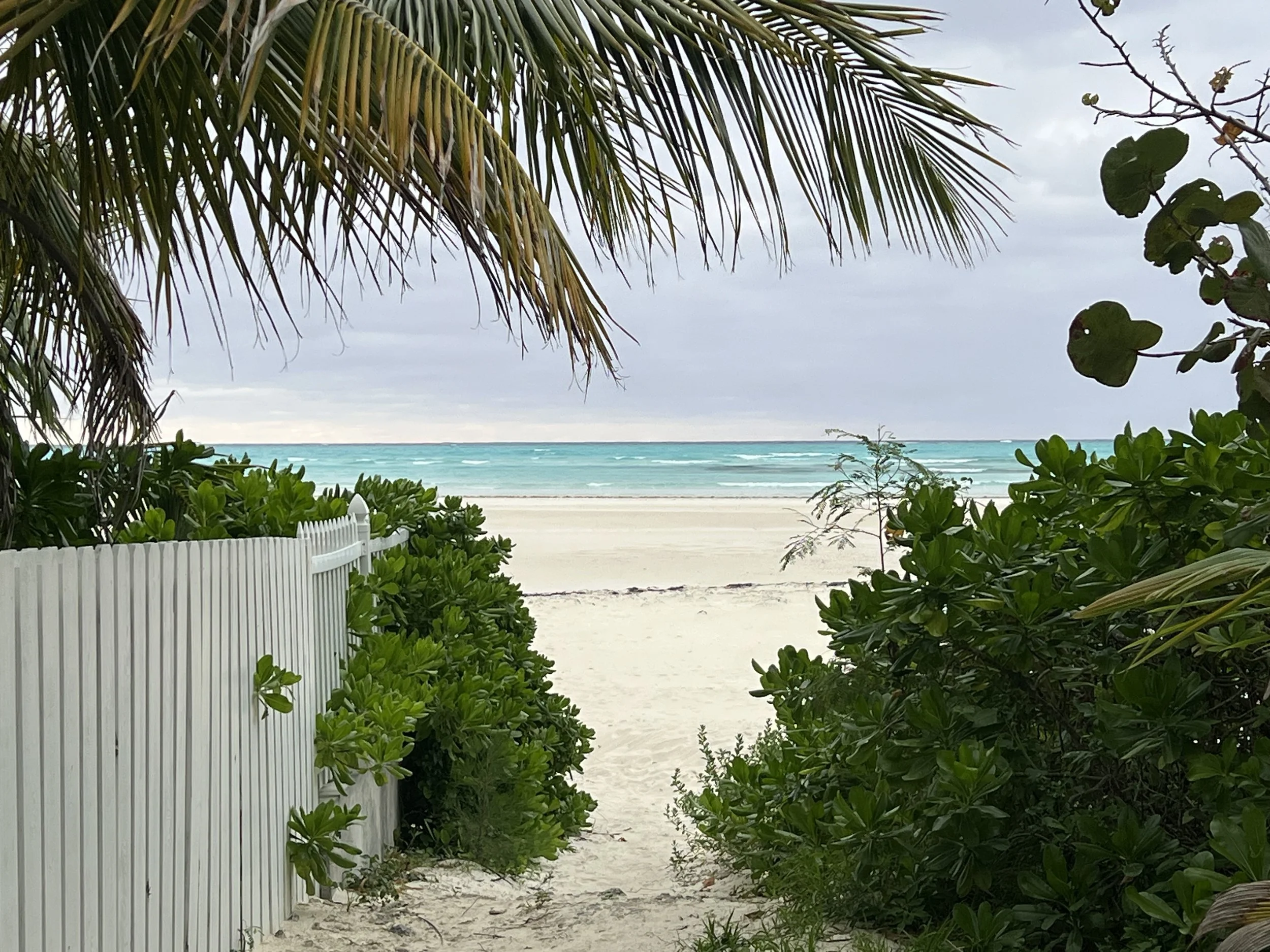
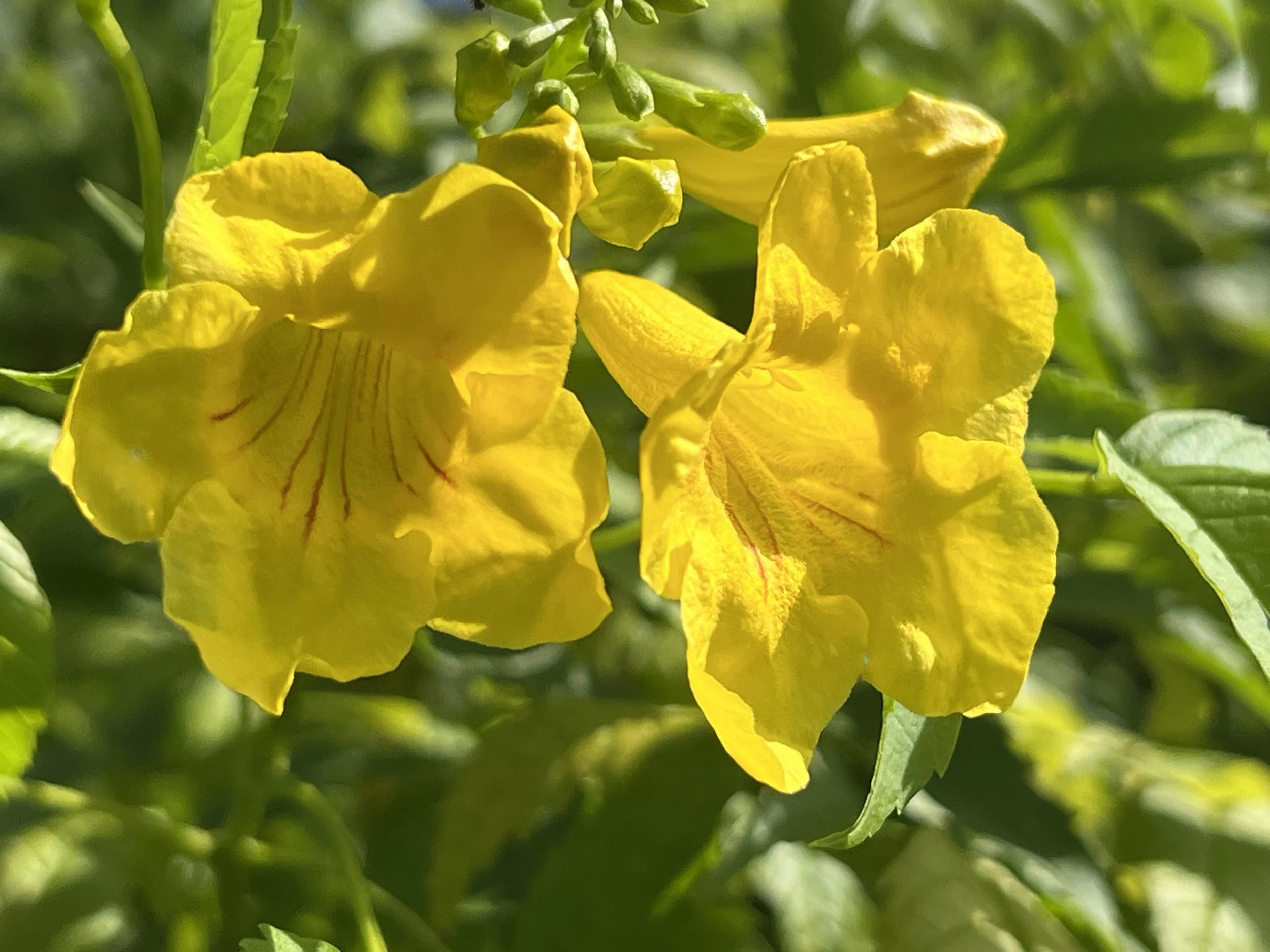
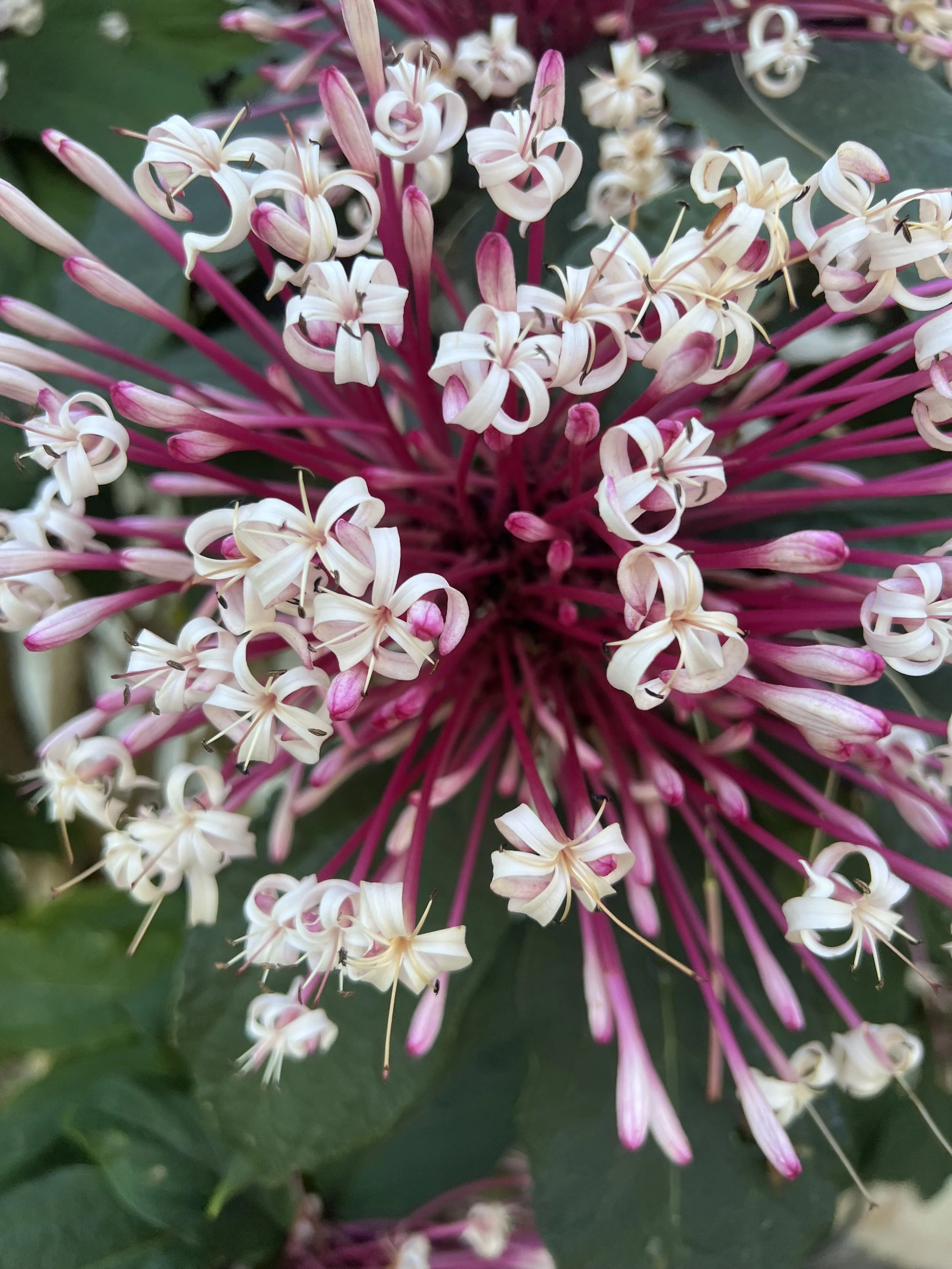
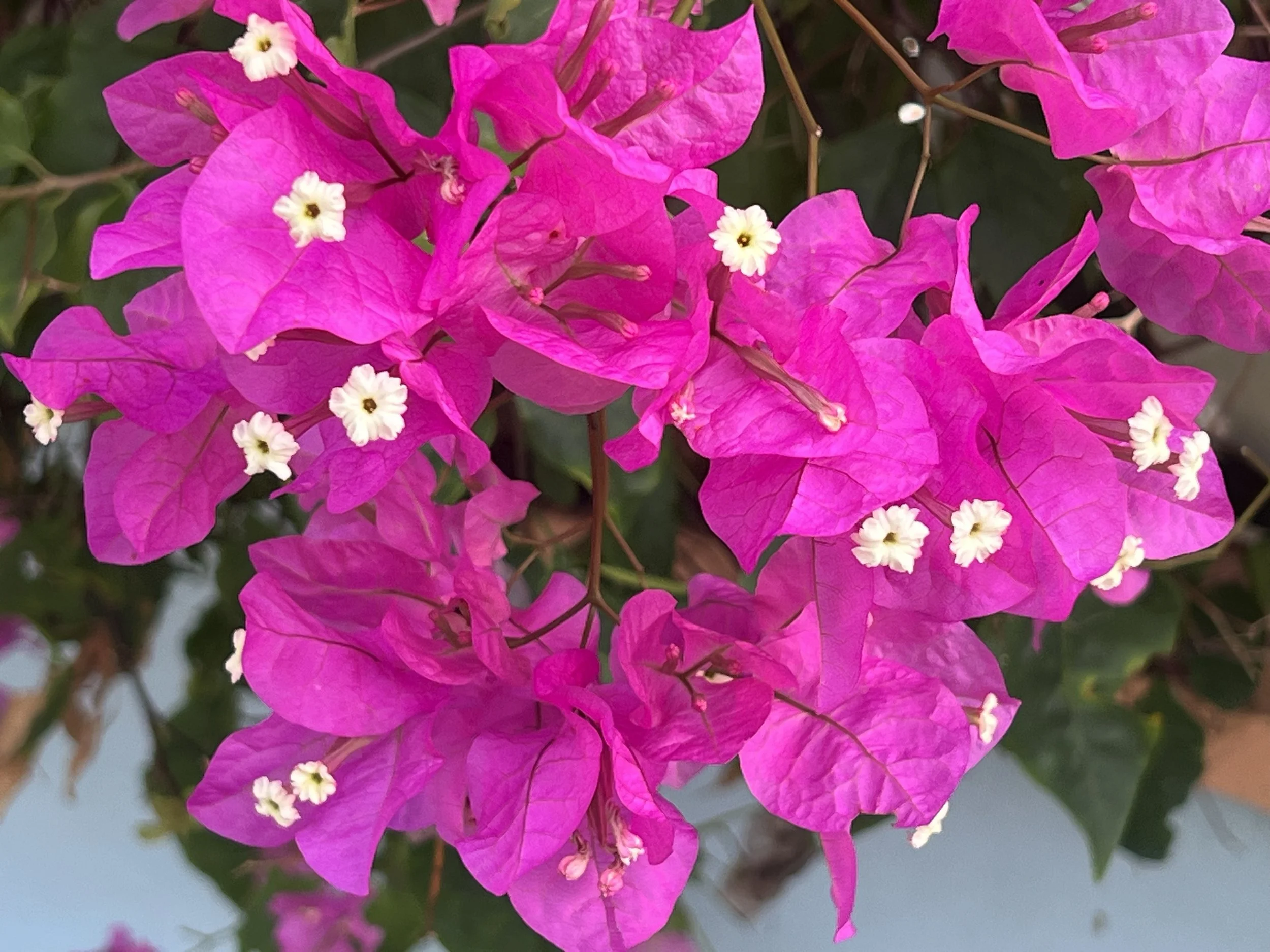
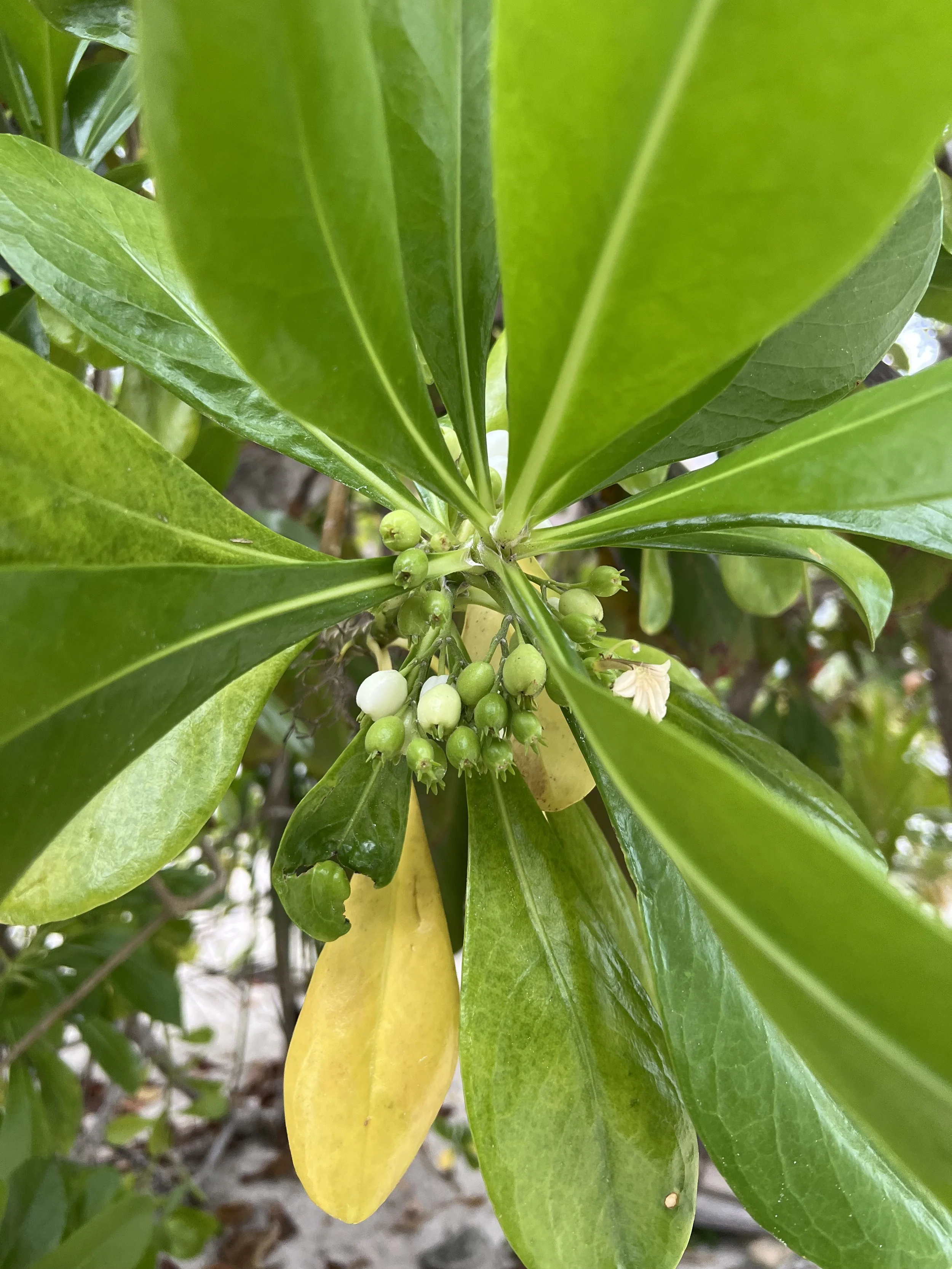
The flowers were in full bloom and the houses colorful. We met up with GraceAnn and Benny for a delicious lunch.
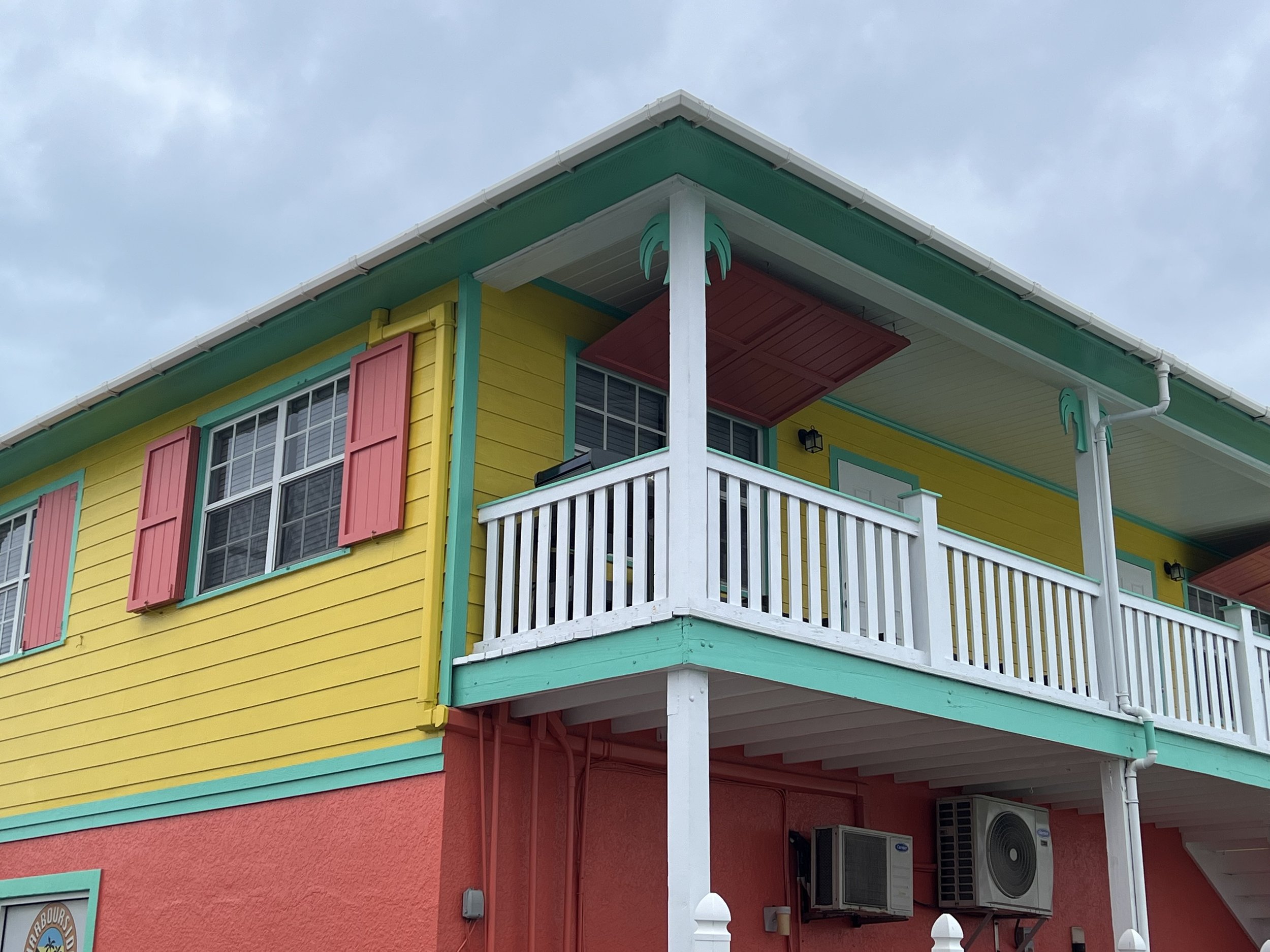
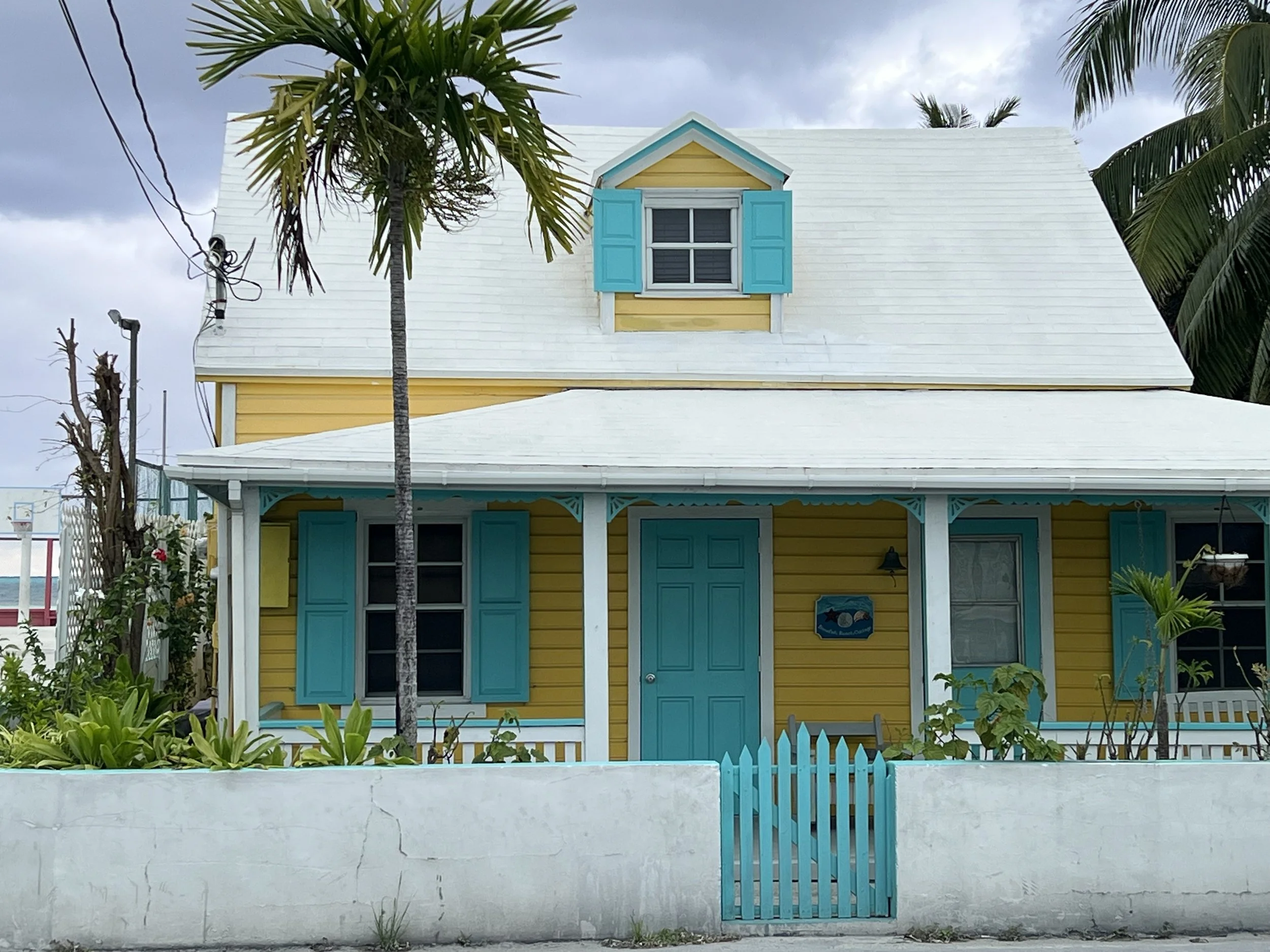
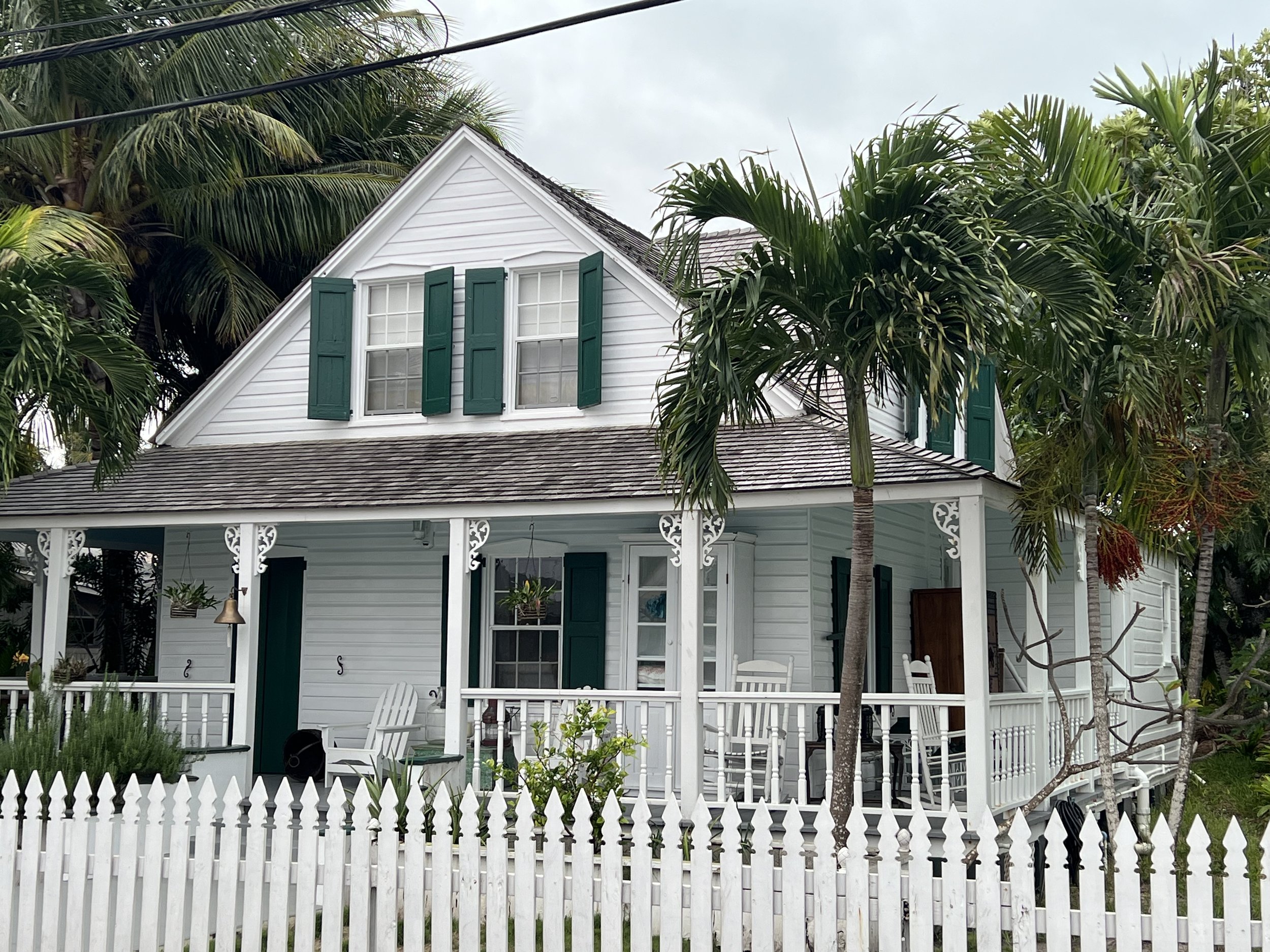
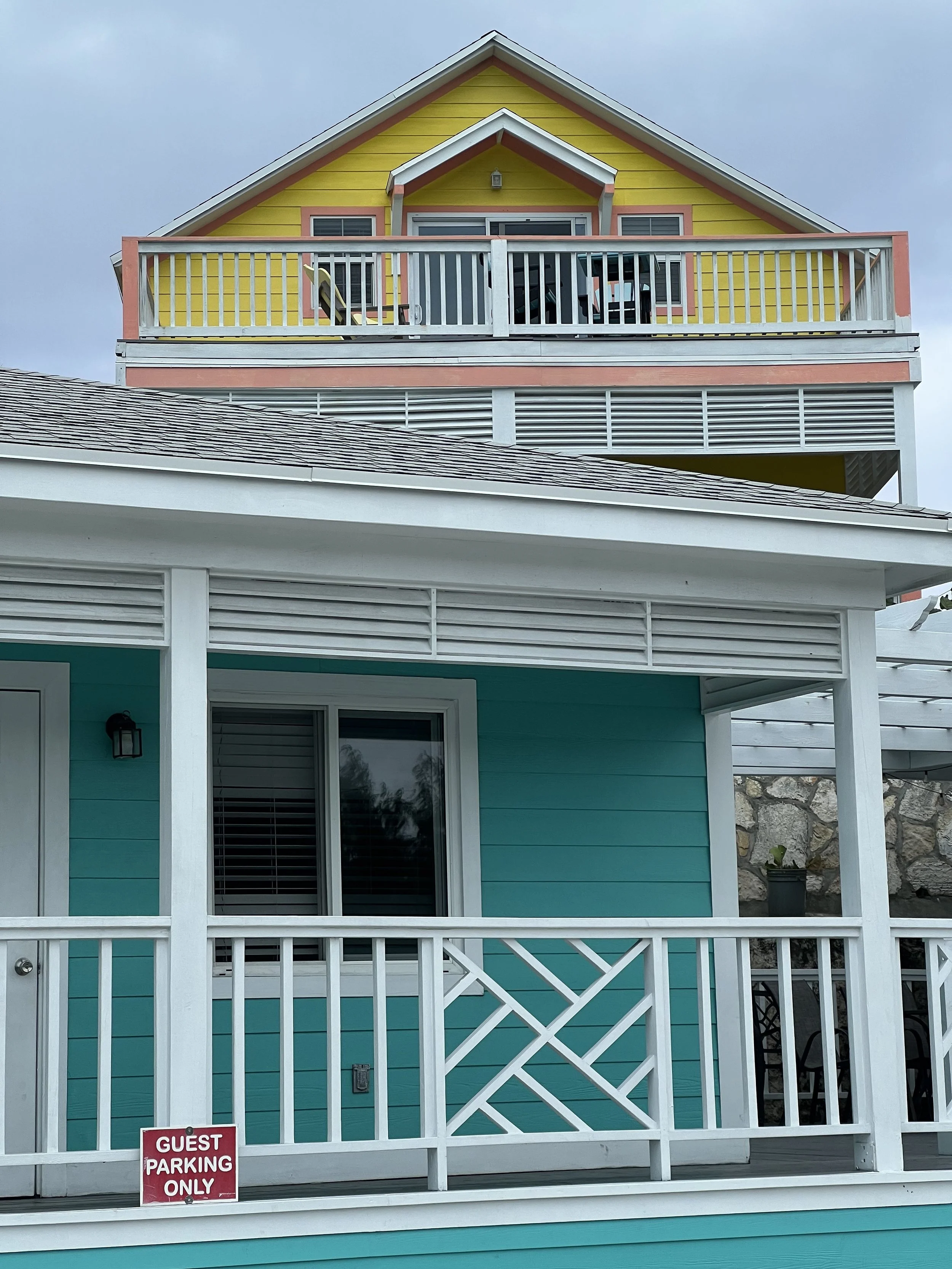
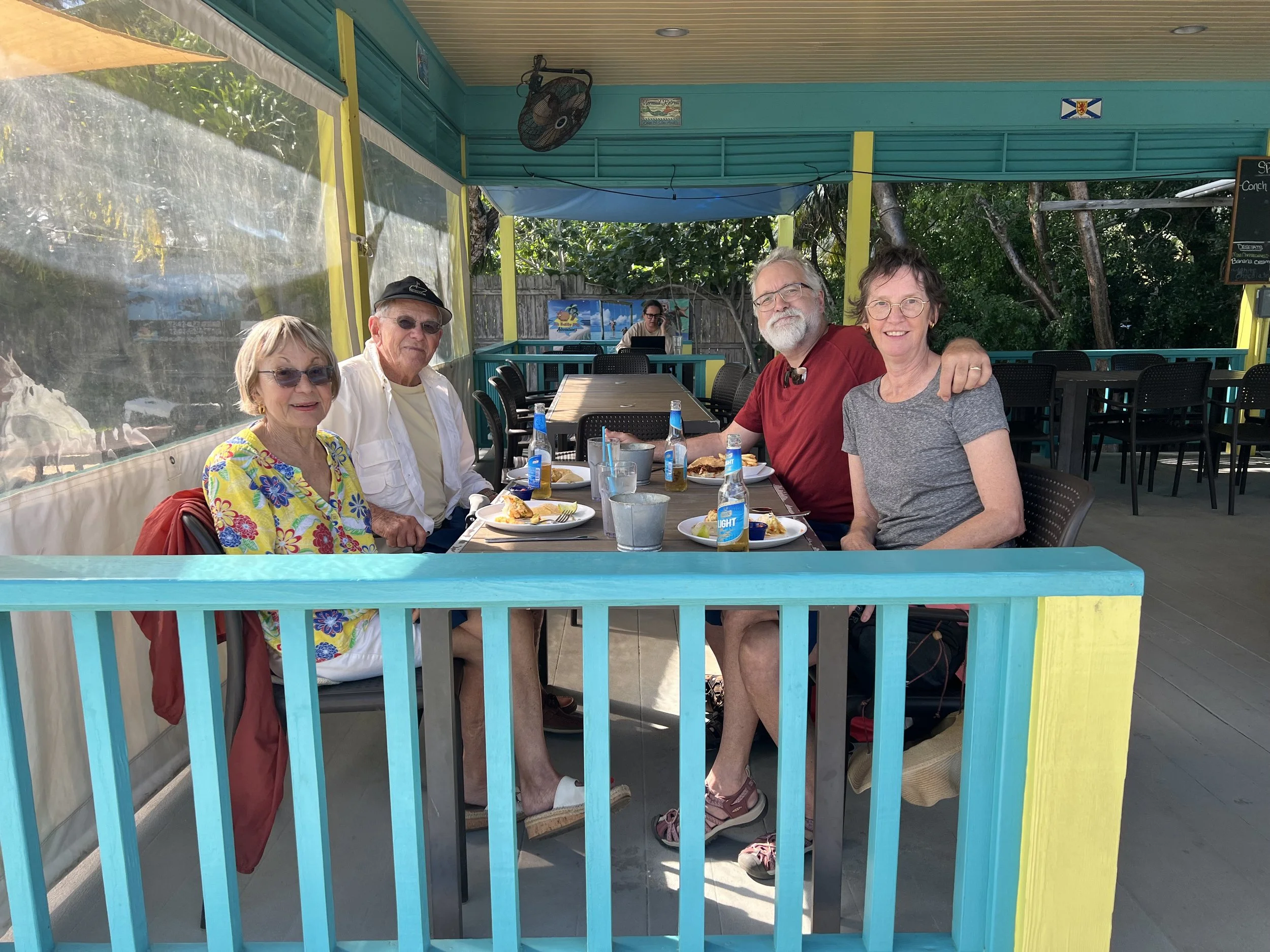
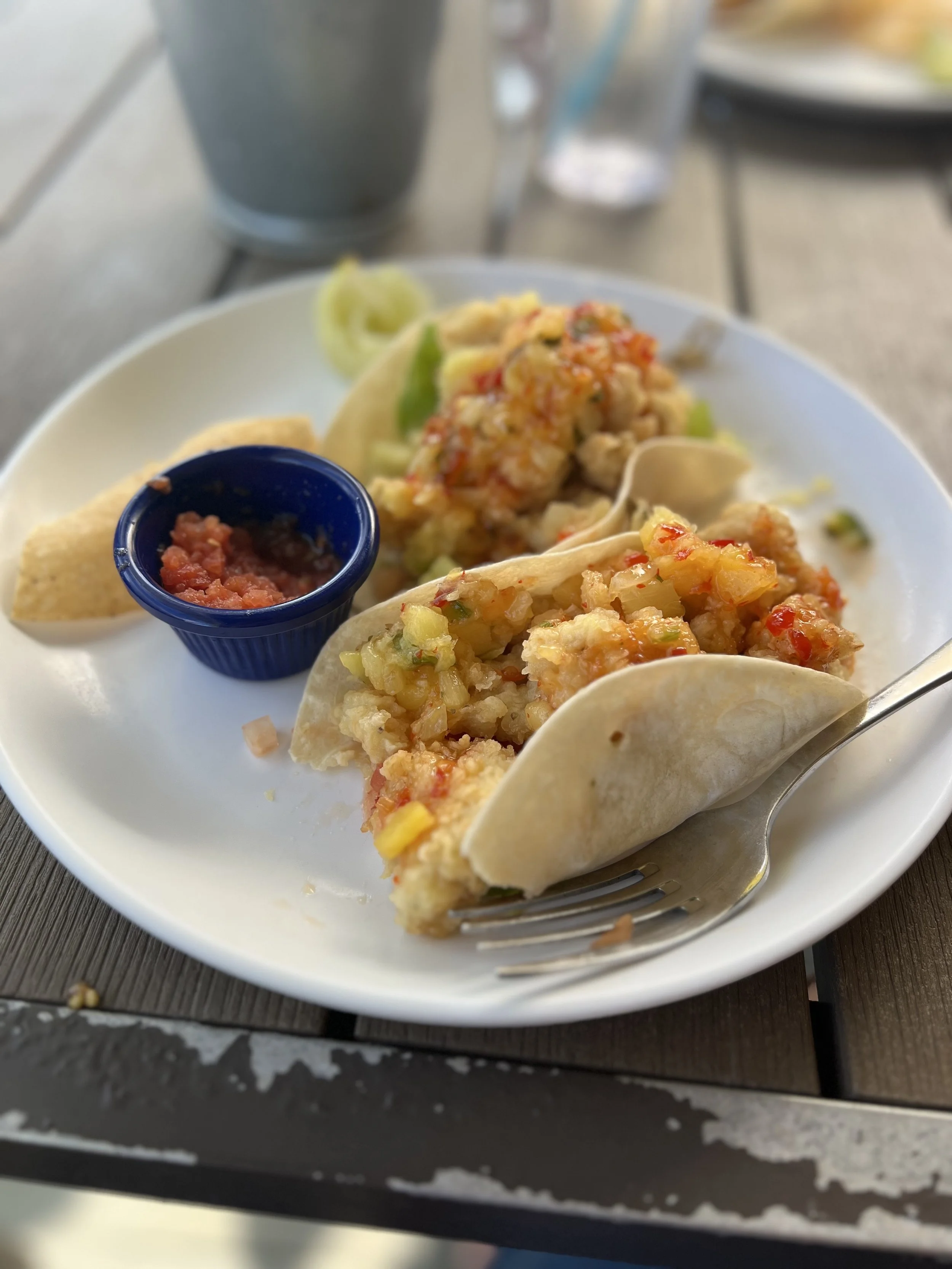
While the folks in the US suffered from record breaking snow storms, we smirked a little as we paddled along the beach and had cocktails in the evening on the patio. But then it was payback. A huge weather system was heading our way, expected to encompass the whole Bahama chain of islands, winds forecast to be from the west at 50kt and above, with temperatures plunging to record lows. From the Abacos to Georgetown, there was no escape.
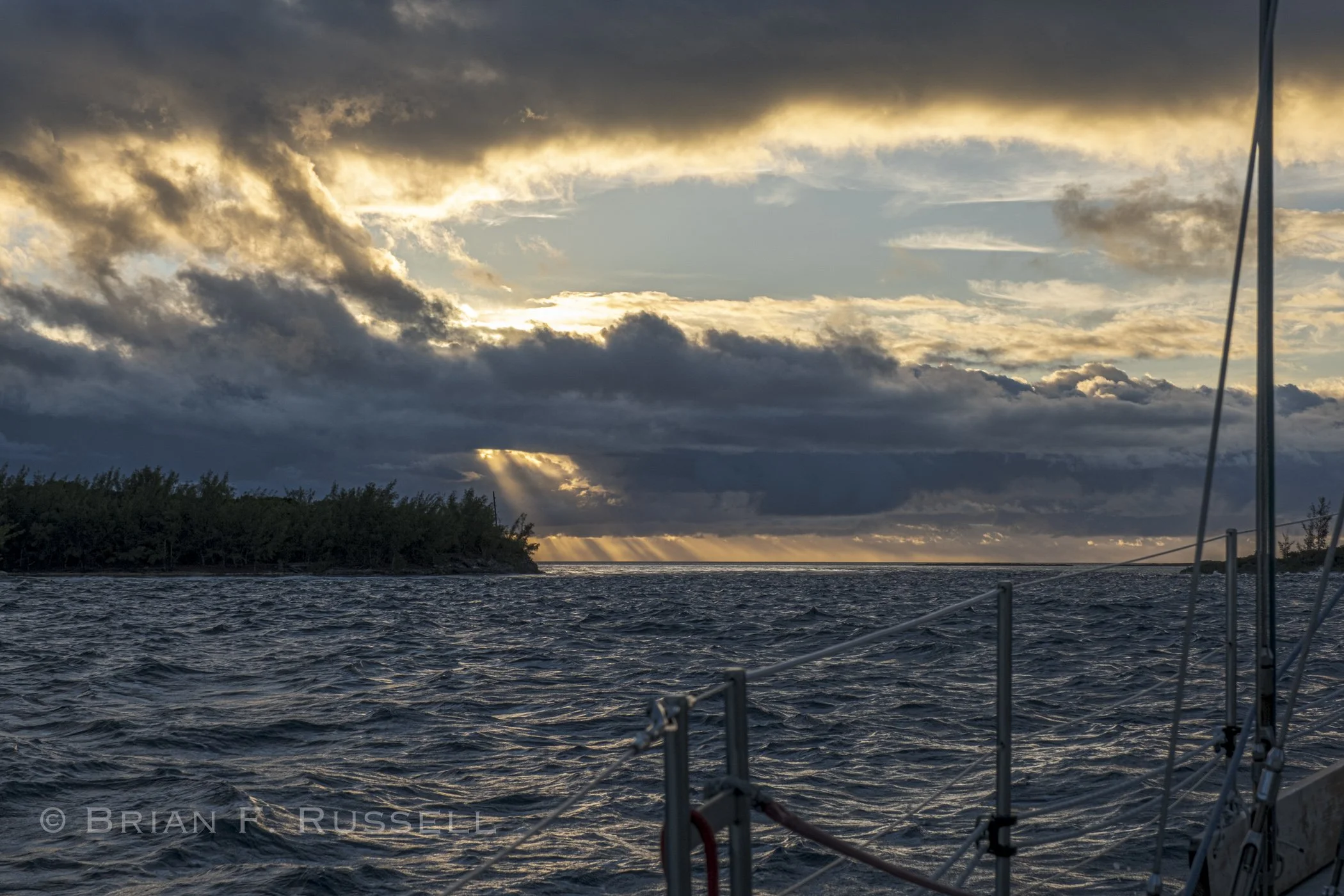
Passing through Current Cut in the early morning. Strong currents made for choppy water.
We left Spanish Wells and headed south, timing our passage through Current Cut at the end of the flood. Even then we raced through with the current assist at 9.5kt. Just south of the cut is Current Island, a decent sized mass of land, with a small bluff we could tuck in behind. The water, unlike most of the Bahamas, was of good depth close to the shore, so we could anchor without a long fetch in front of us, reducing the chance of waves building up. It was the perfect spot, or so we hoped. We were in company, not surprisingly, as there are not many places to shelter from a west wind, but the anchorage was far from crowded and everyone had plenty of breathing room. And then we waited for the winds to arrive.
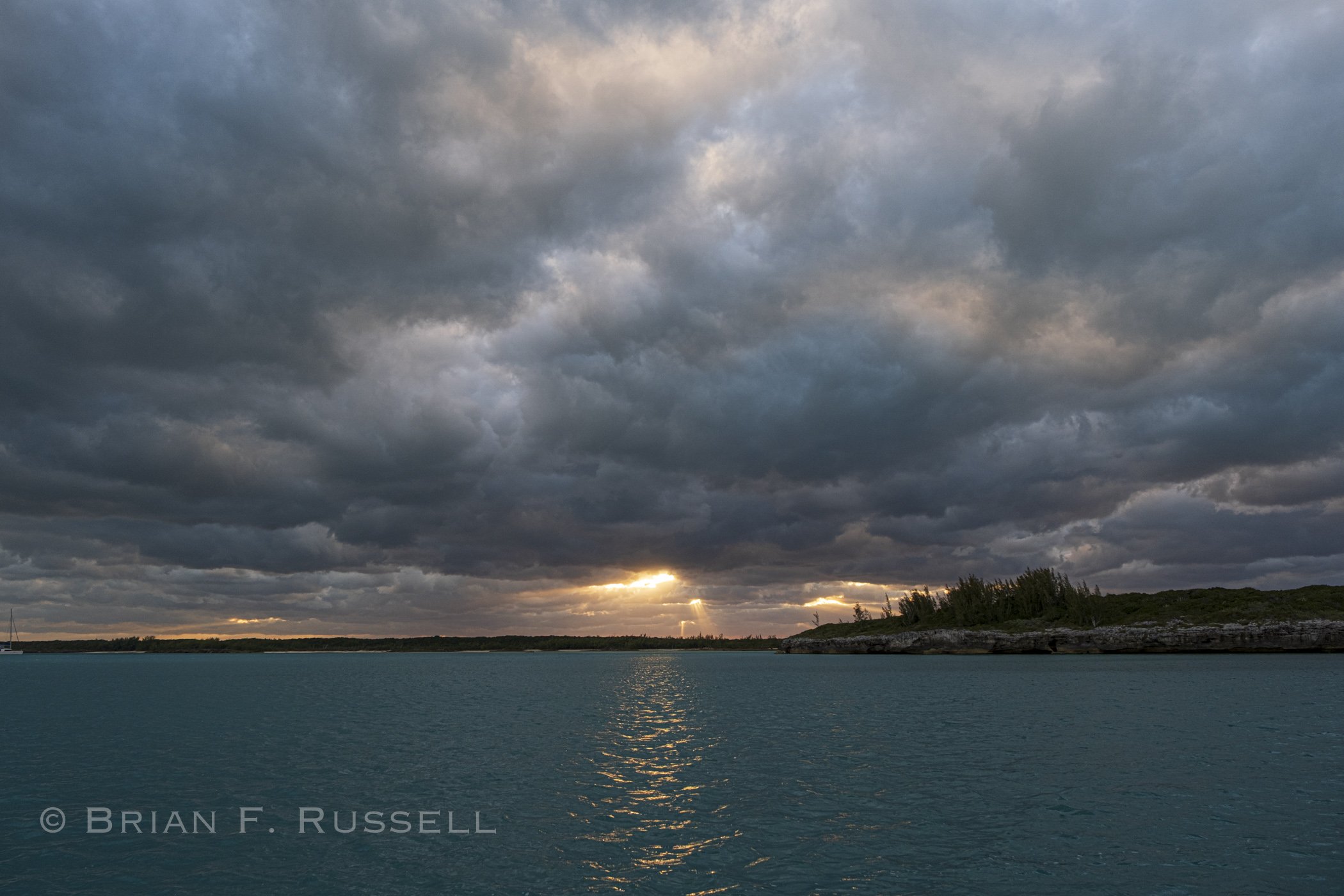
Waiting for the storm.
Well, we survived. It was not as bad as it could have been, I think partly our spot gave us some protection from both the high winds and storm surge. We read of other boats getting much more severe conditions. Maybe this marks the end of winter in the Bahamas and we can now look forward to more predictable easterly trade winds and warmer water. I do hope so.