Sailing the English Channel
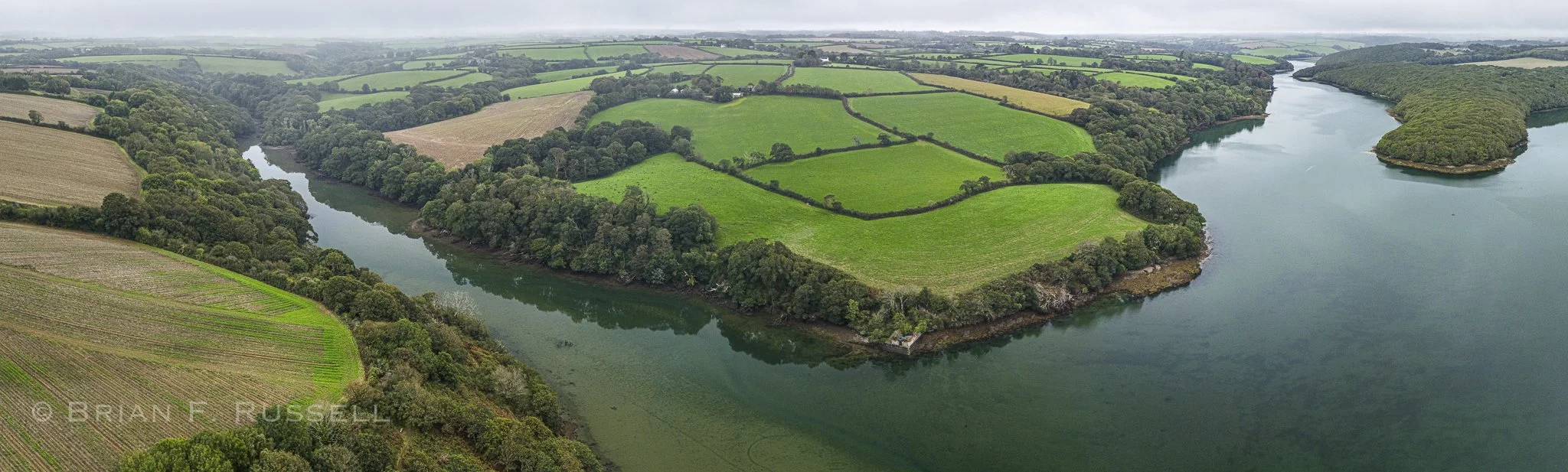
Helford River and Frenchman’s Creek (L), Cornwall.
The passage south from Dublin was not particularly memorable; I guess that is a good thing. We managed to time the strong tides at the choke point between the south east corner of Ireland and the coast of Wales, negotiated the traffic separation schemes and dropped the anchor on the eastern side of St Martin’s, Scilly Isles, amongst the rocks as the sun was setting. We then stayed on the boat as we were rocked gently all next day and night by the swell and winds that wrapped around the low islands. It would have been hard to land the dinghy on the beach in those conditions.
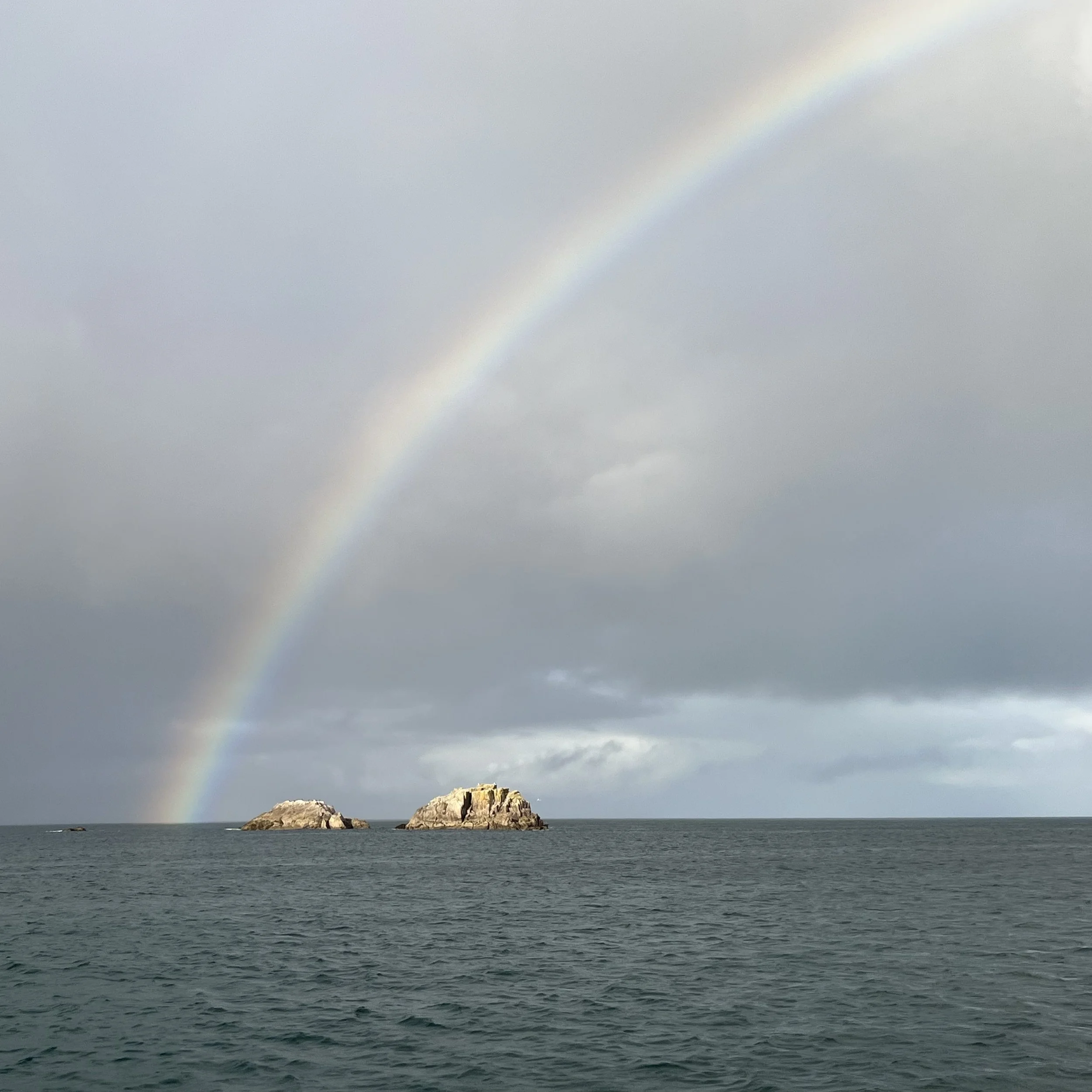
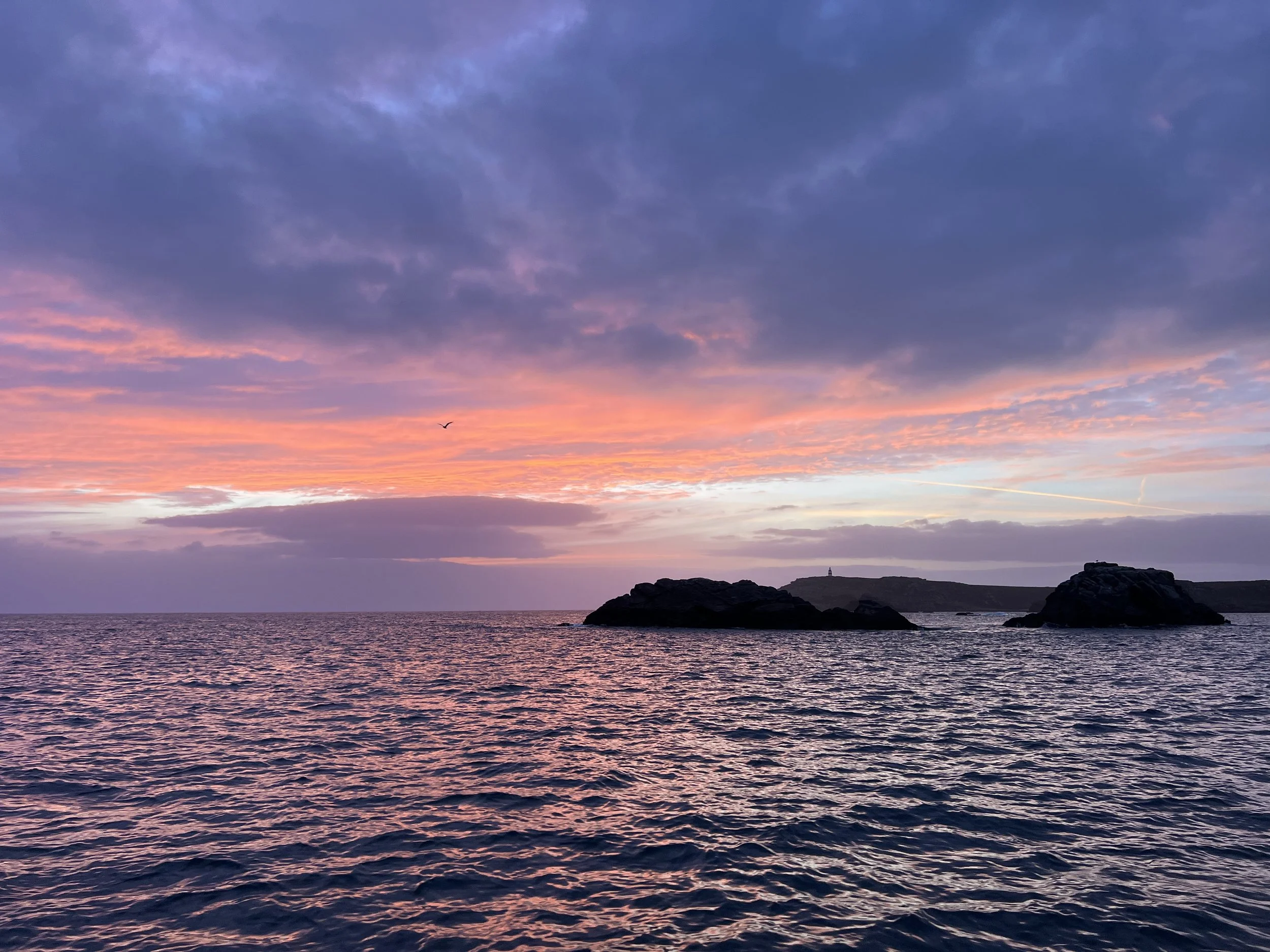
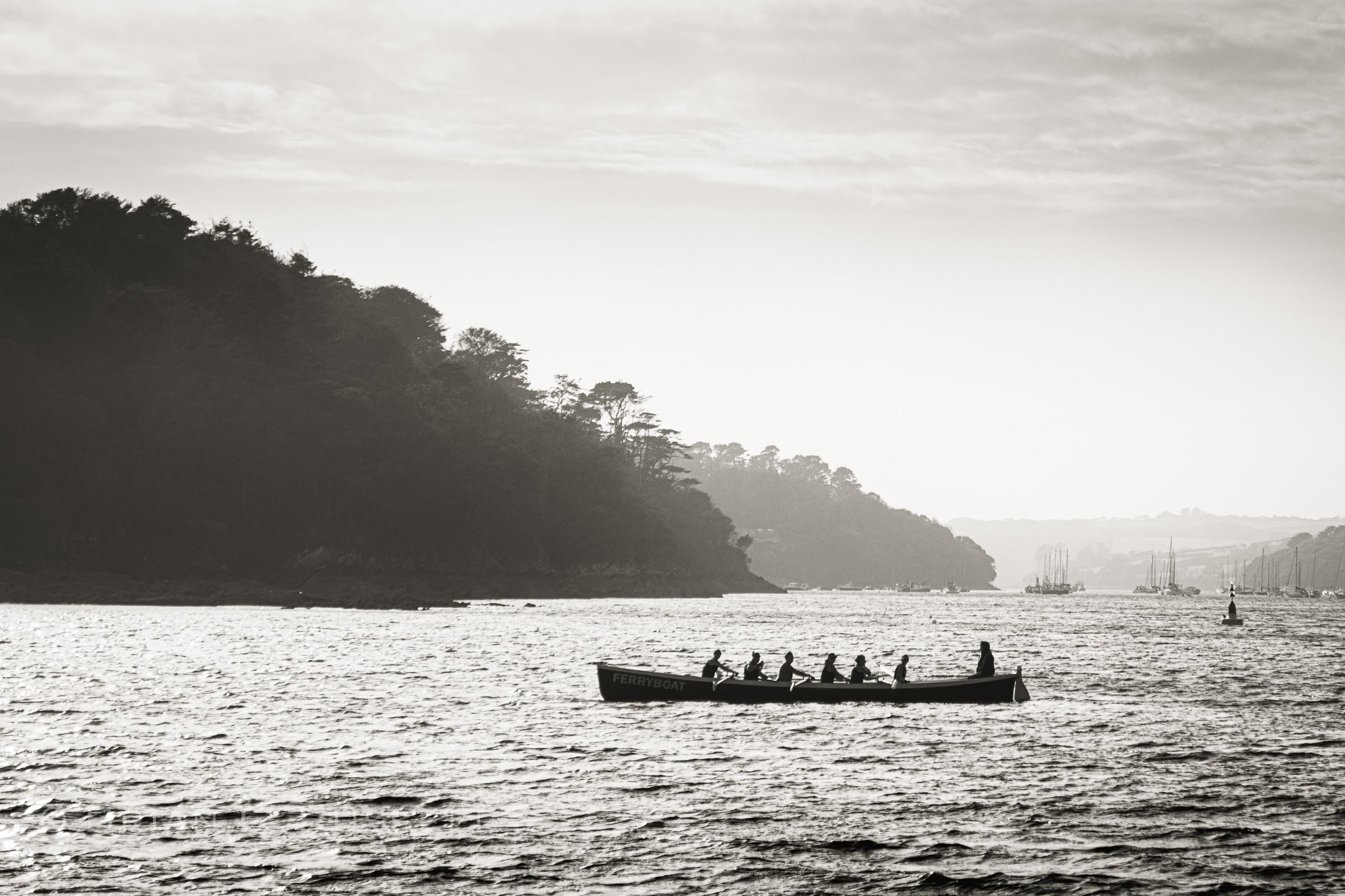
Gig rowers on Helford River as we arrived.
When the weather abated and the wind shifted we set off and sailed to the Helford river on the southwestern tip of Cornwall. This was an anchorage we had visited before, a good place to be sheltered from the strong winds forecast for the next couple of days, with nice walks through the fields and woods along Frenchman’s Creek, and past some lovely homes.
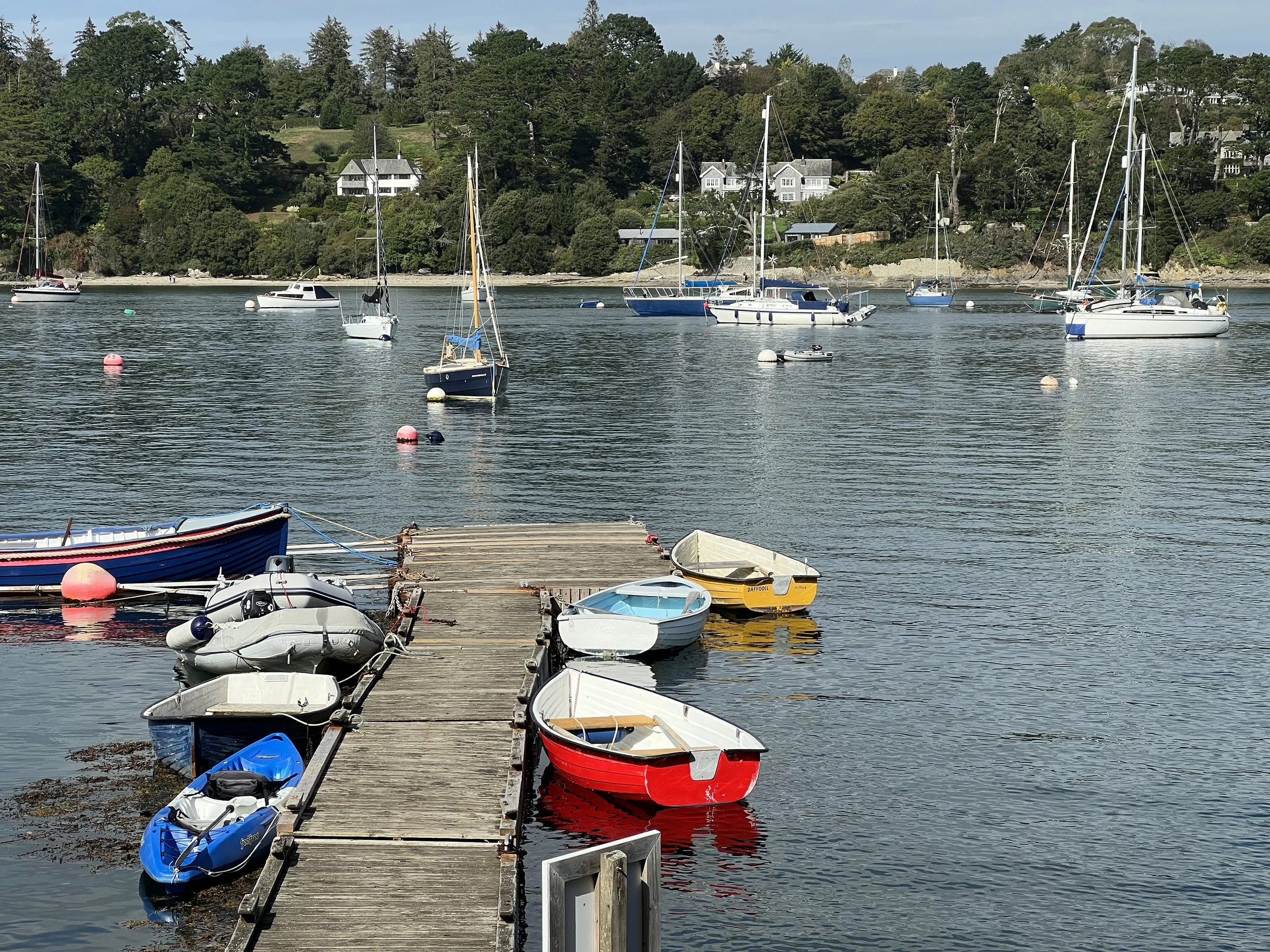
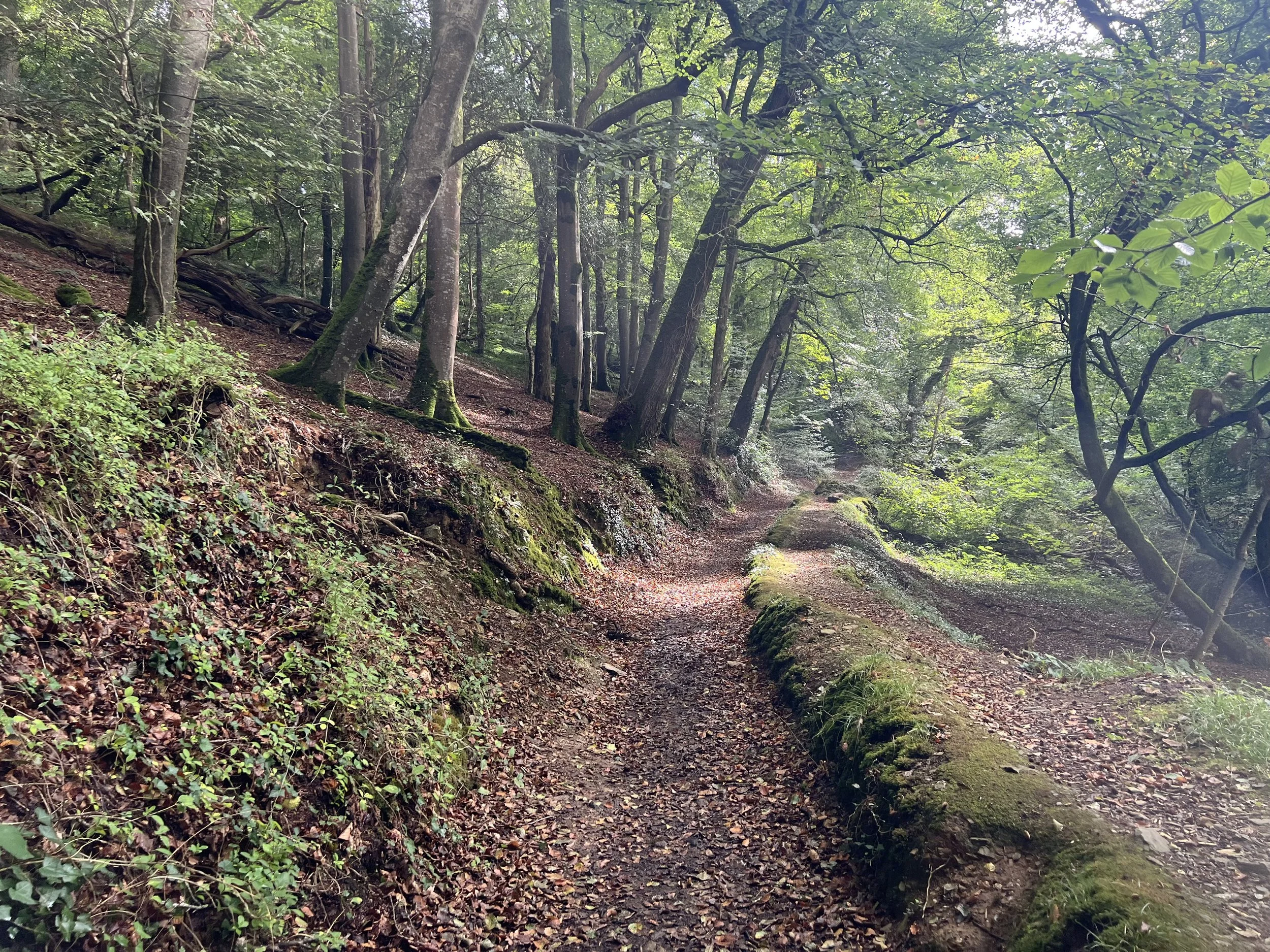
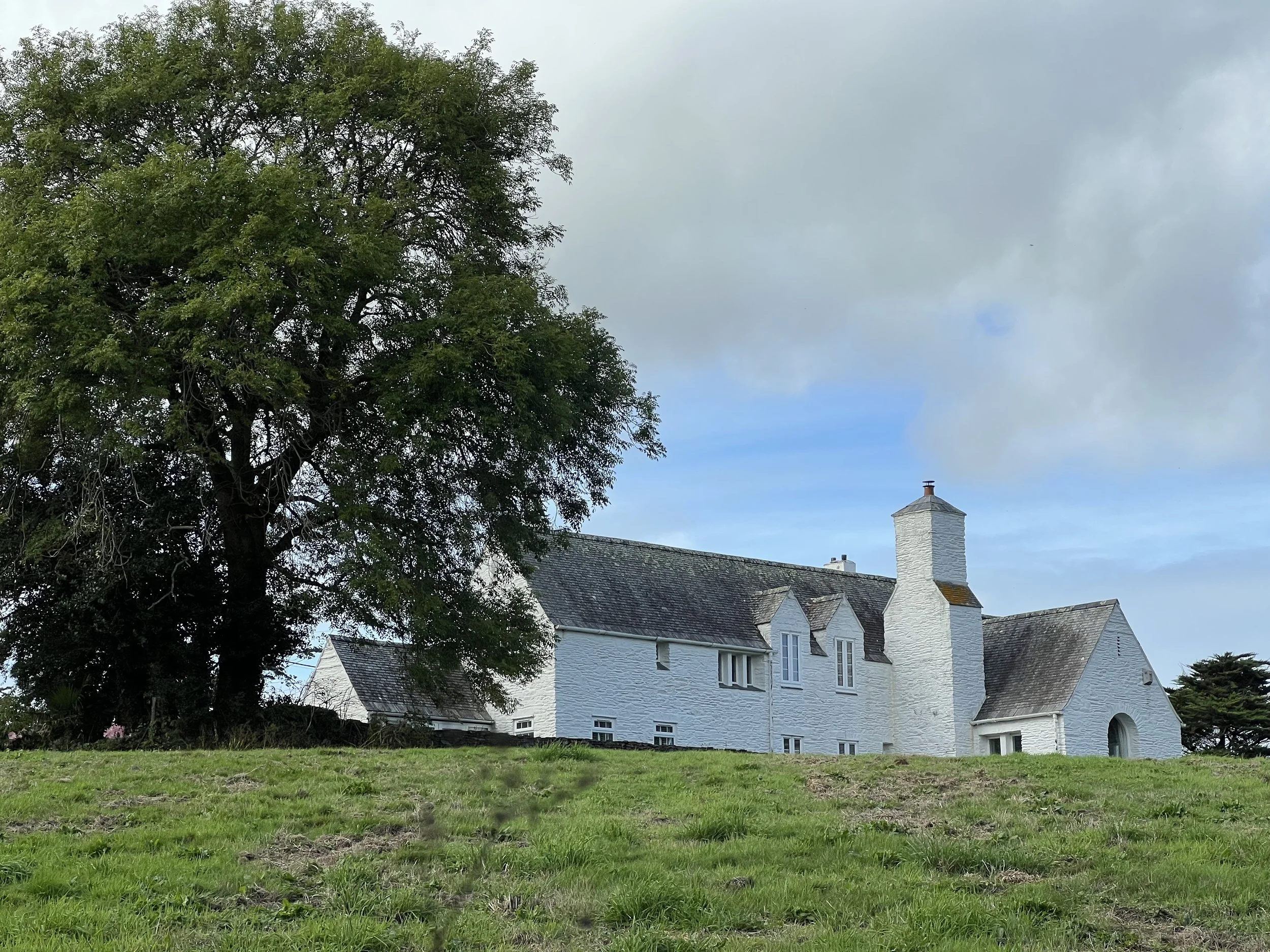
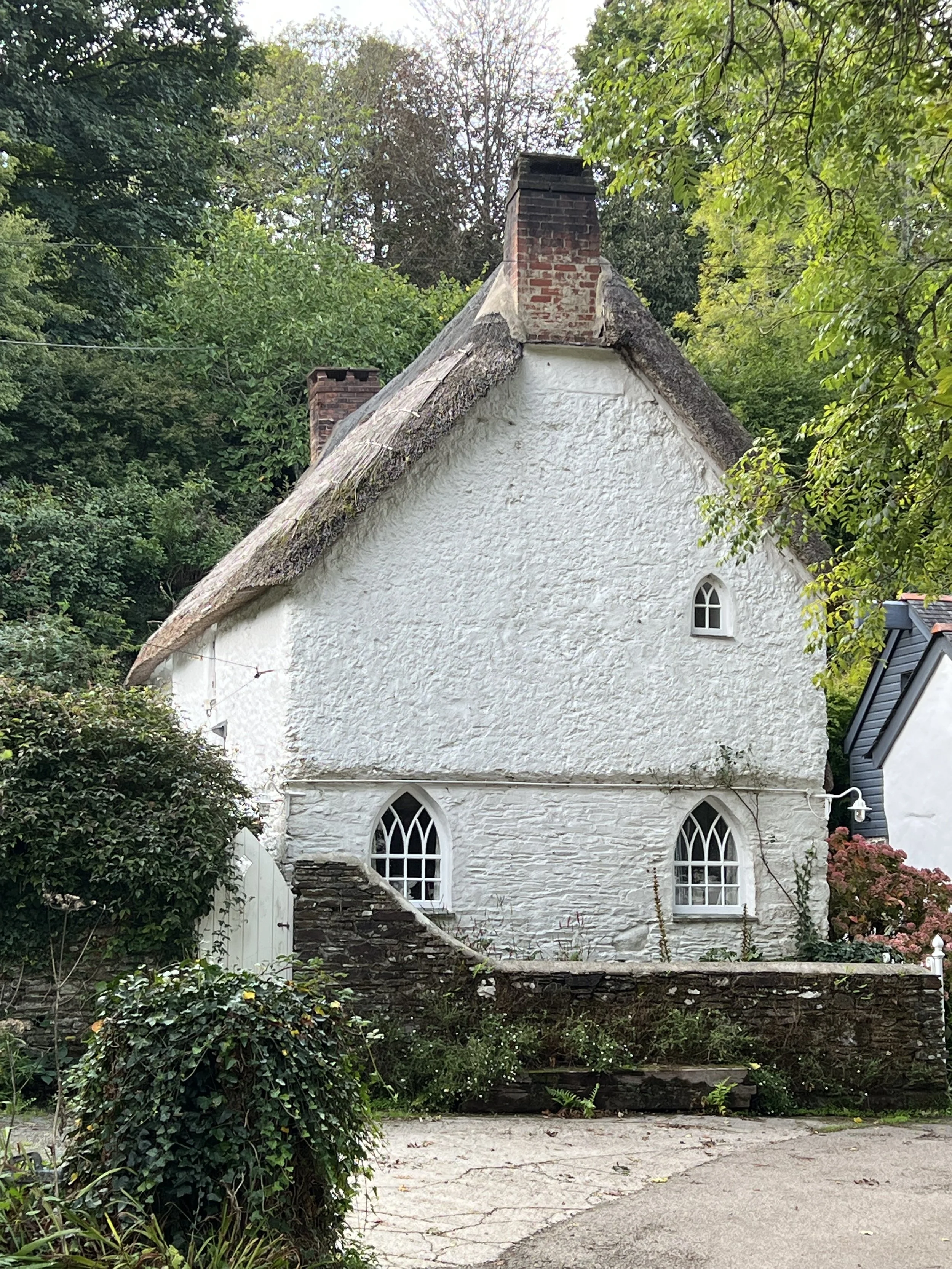
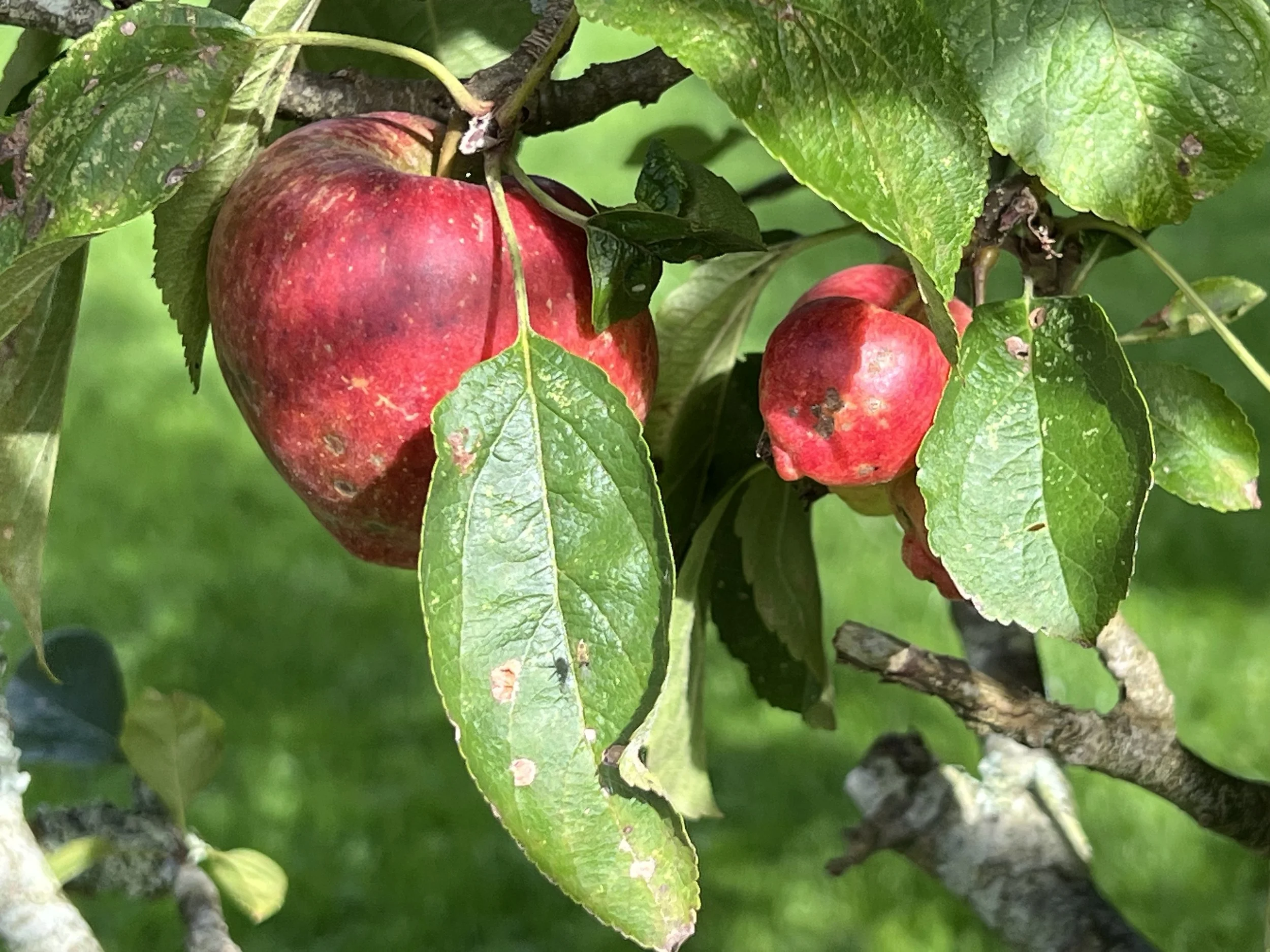
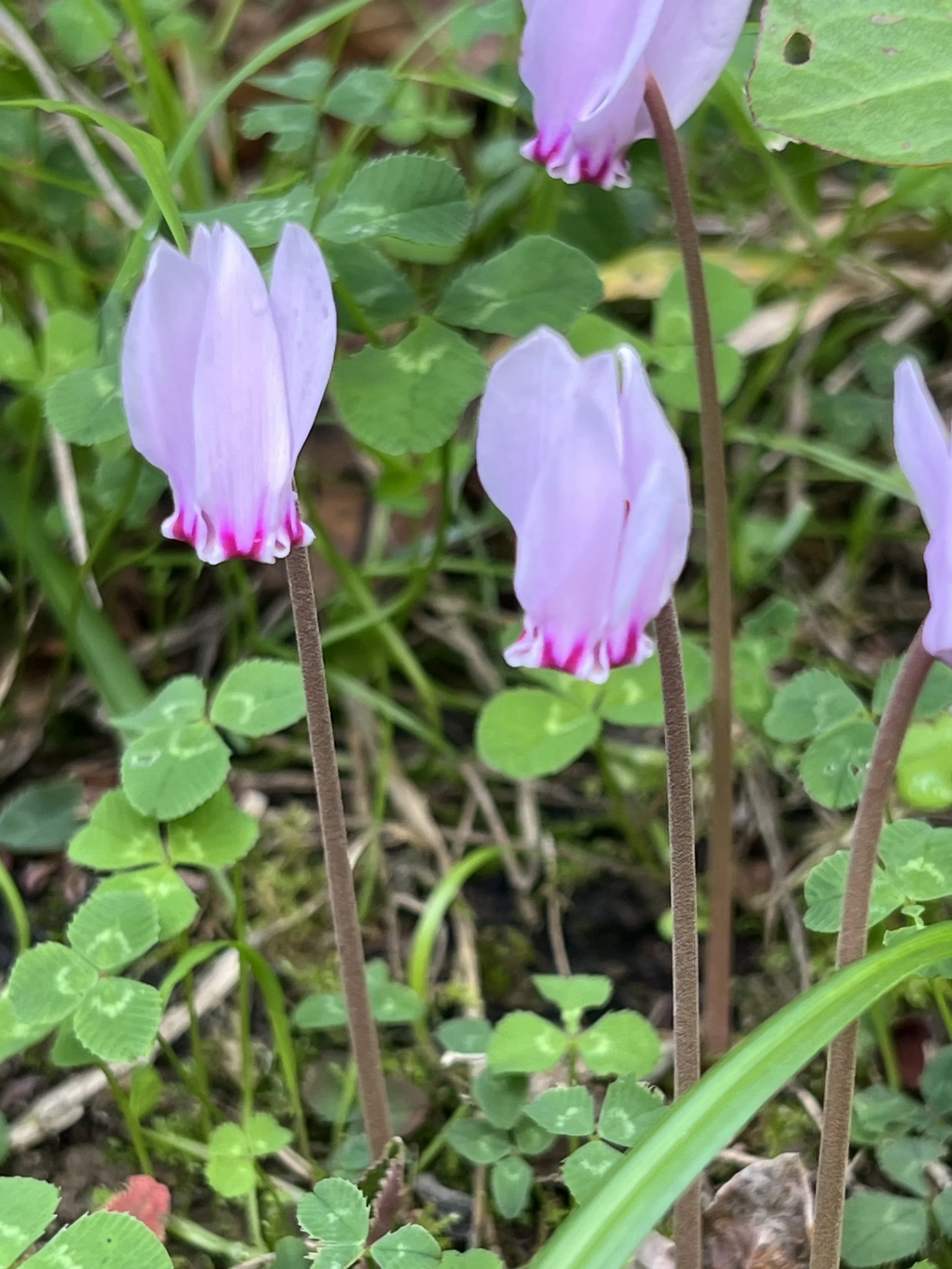
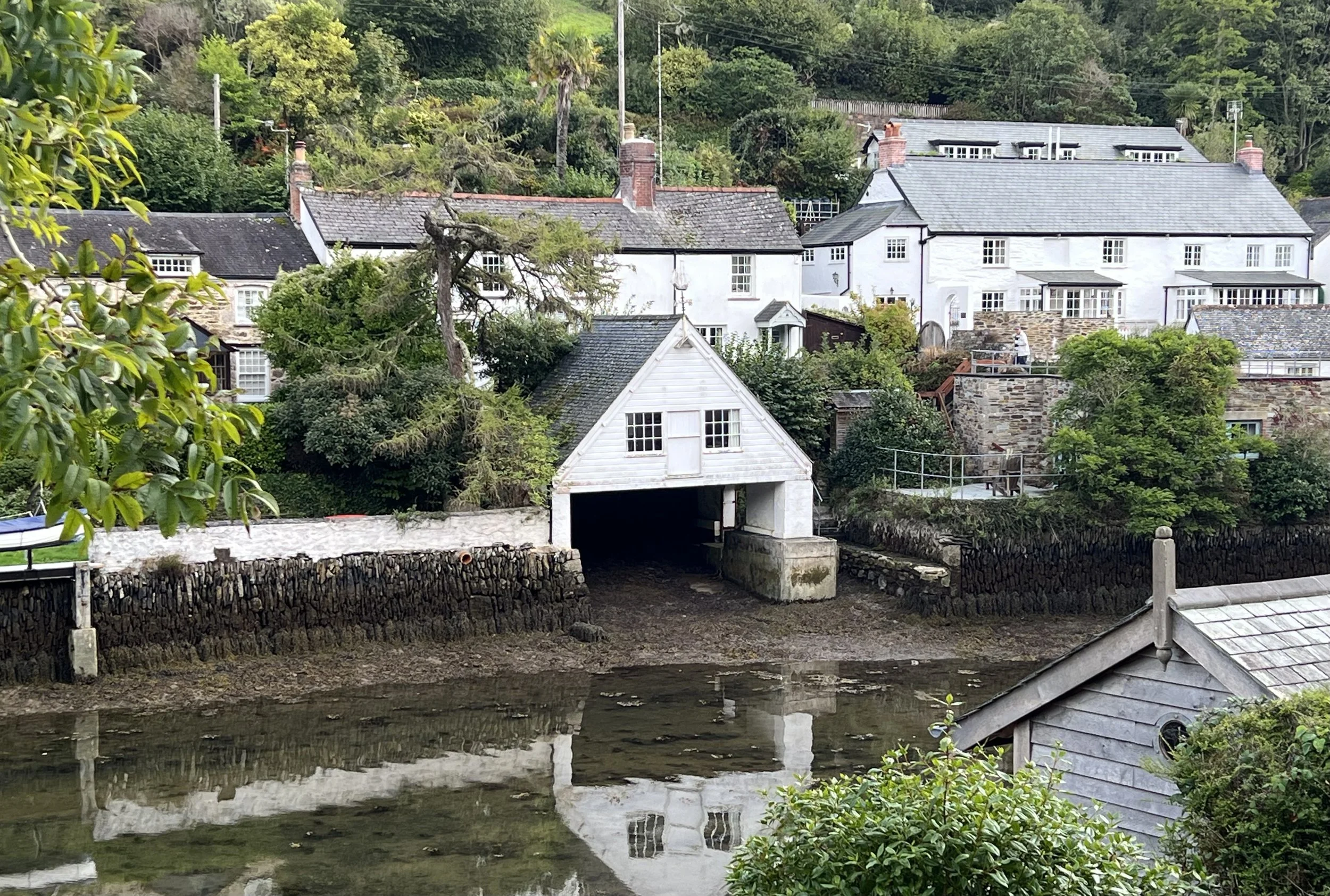
Helford, Cornwall.
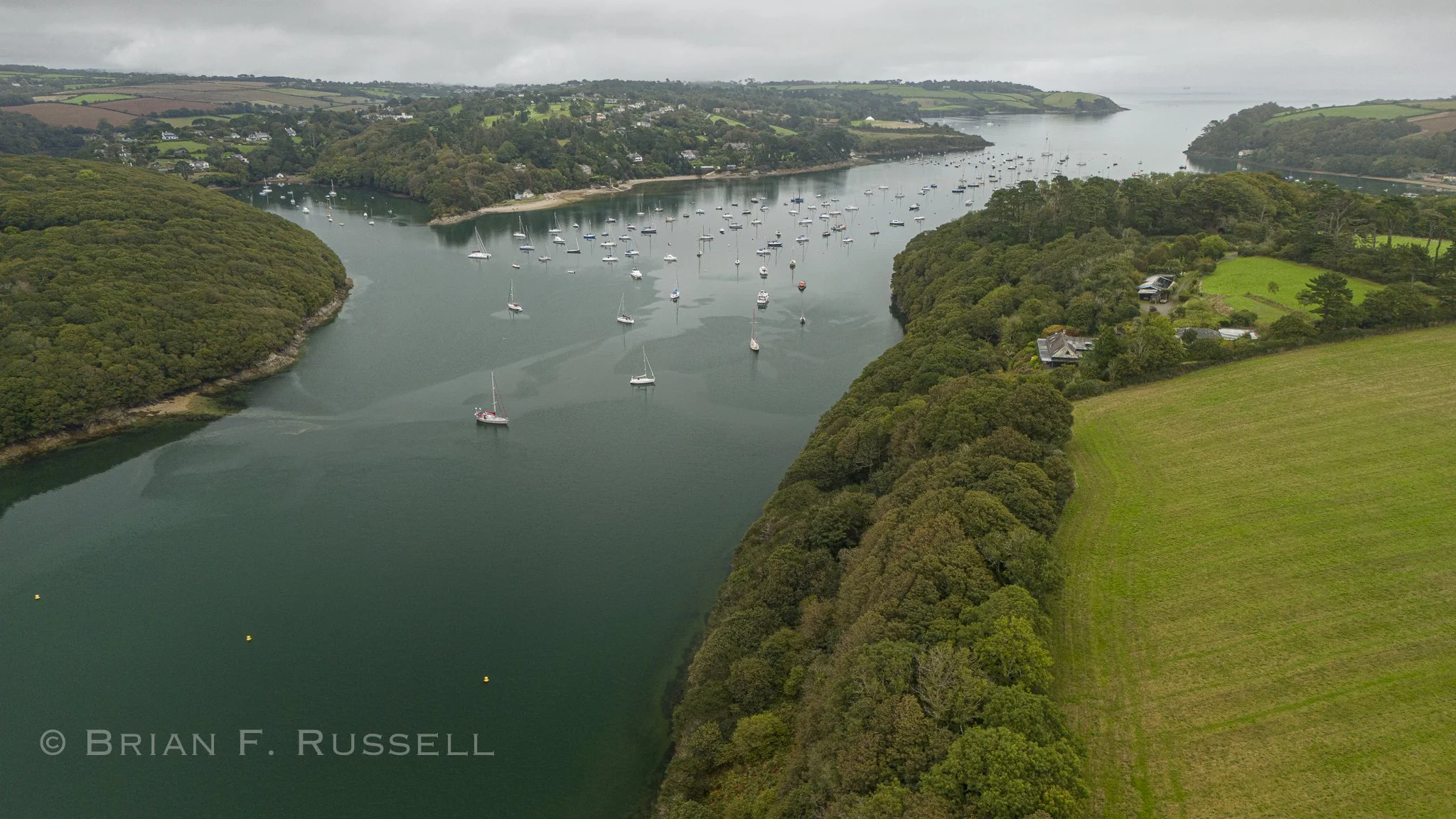
Helford River anchorage.
It was time to top up the ships supplies, so we pulled up the anchor and headed around the corner into Falmouth harbor. As we were leaving the Helford River we heard an announcement on the radio, a warning that a World War II unexploded ordinance had been located and to stay clear. We missed the co-ordinates given so drove on into Falmouth marina, unaware that we had passed very close to the site.
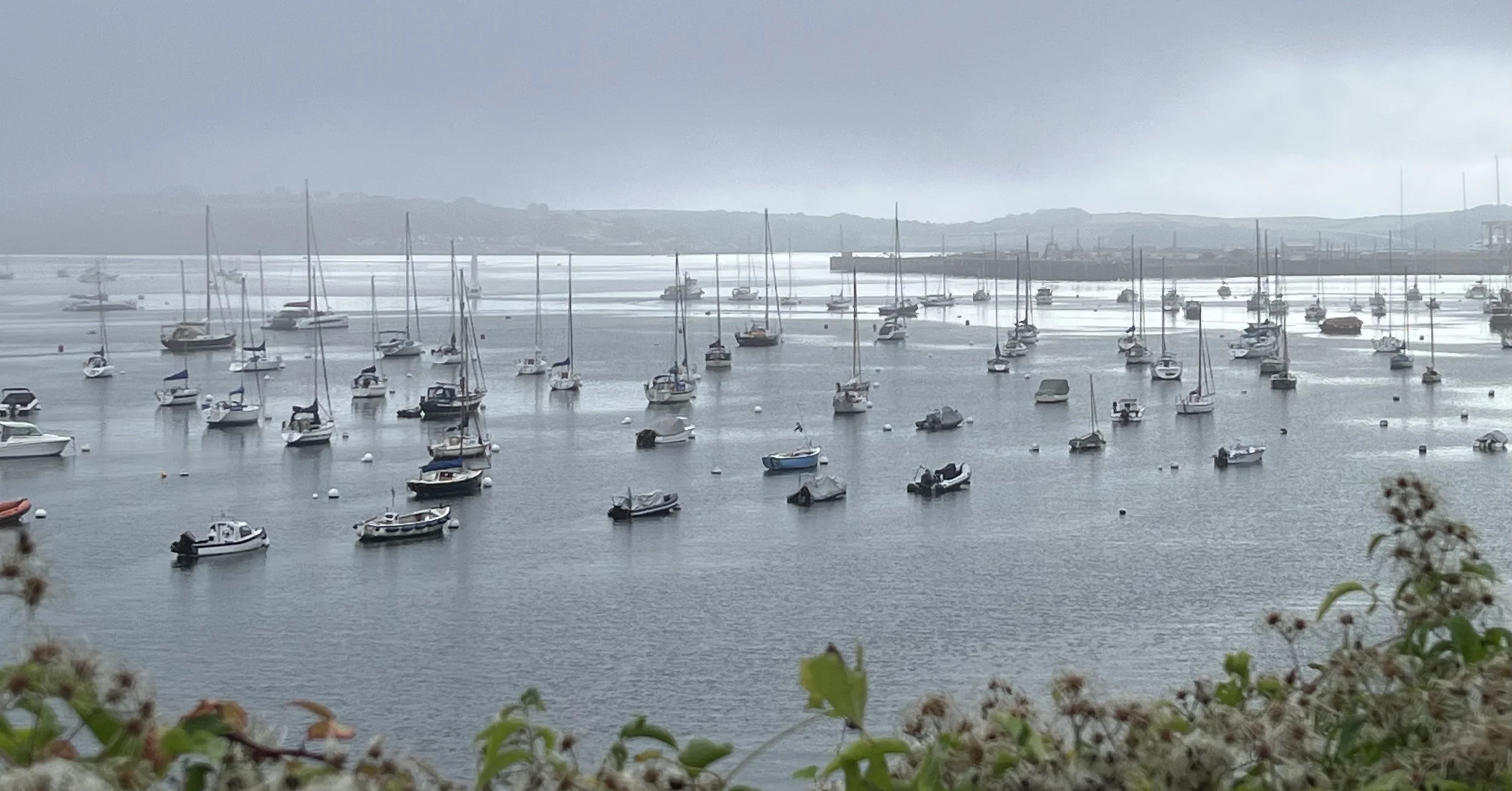
A misty morning in Falmouth Harbor.
For the next couple of days we rented a car and explored the interior of Cornwall with its narrow lanes, and the wonderful northern shoreline around St Ives.
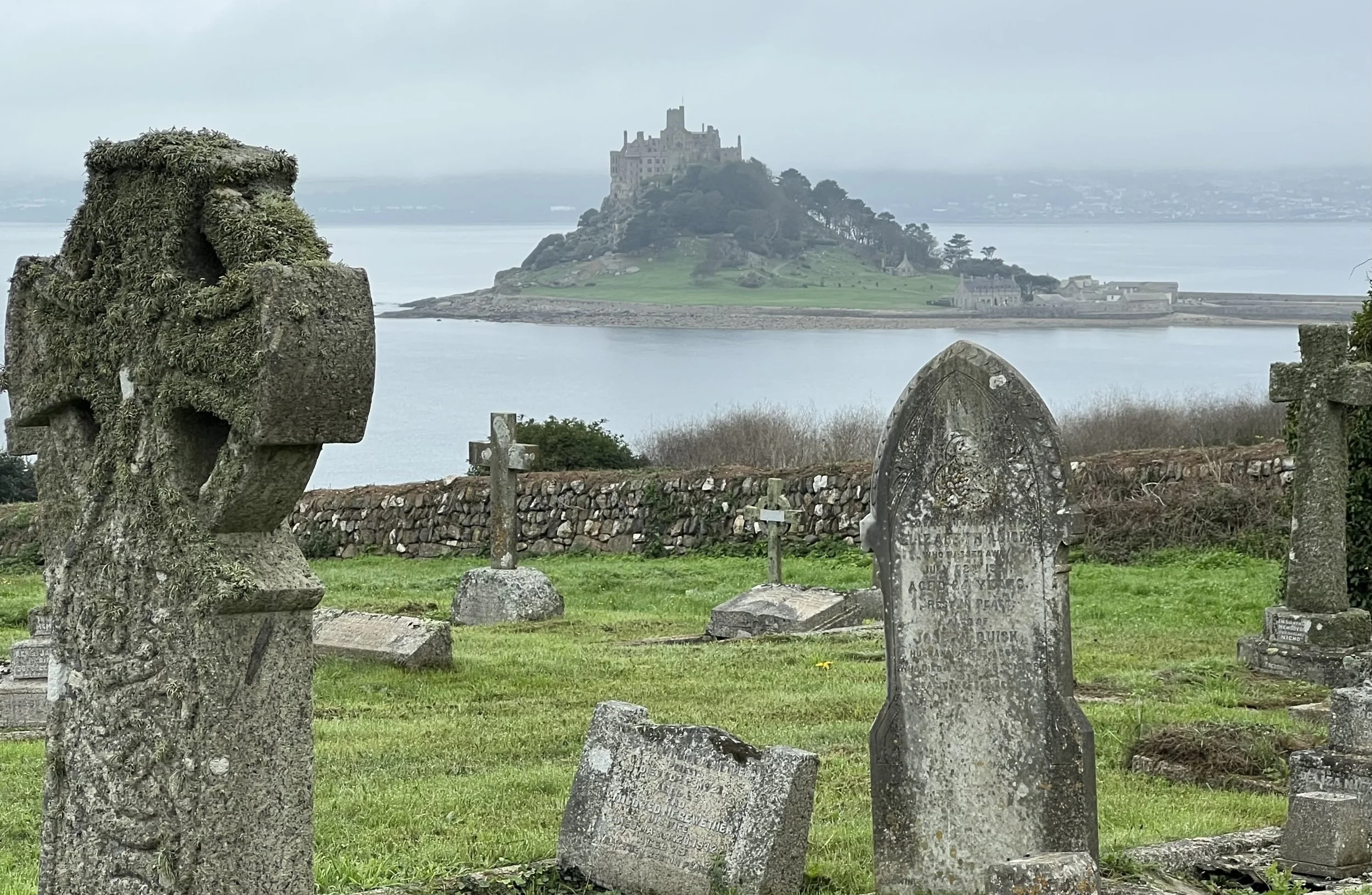
St Michaels Mount, near Penzance, was at one time a monastery.
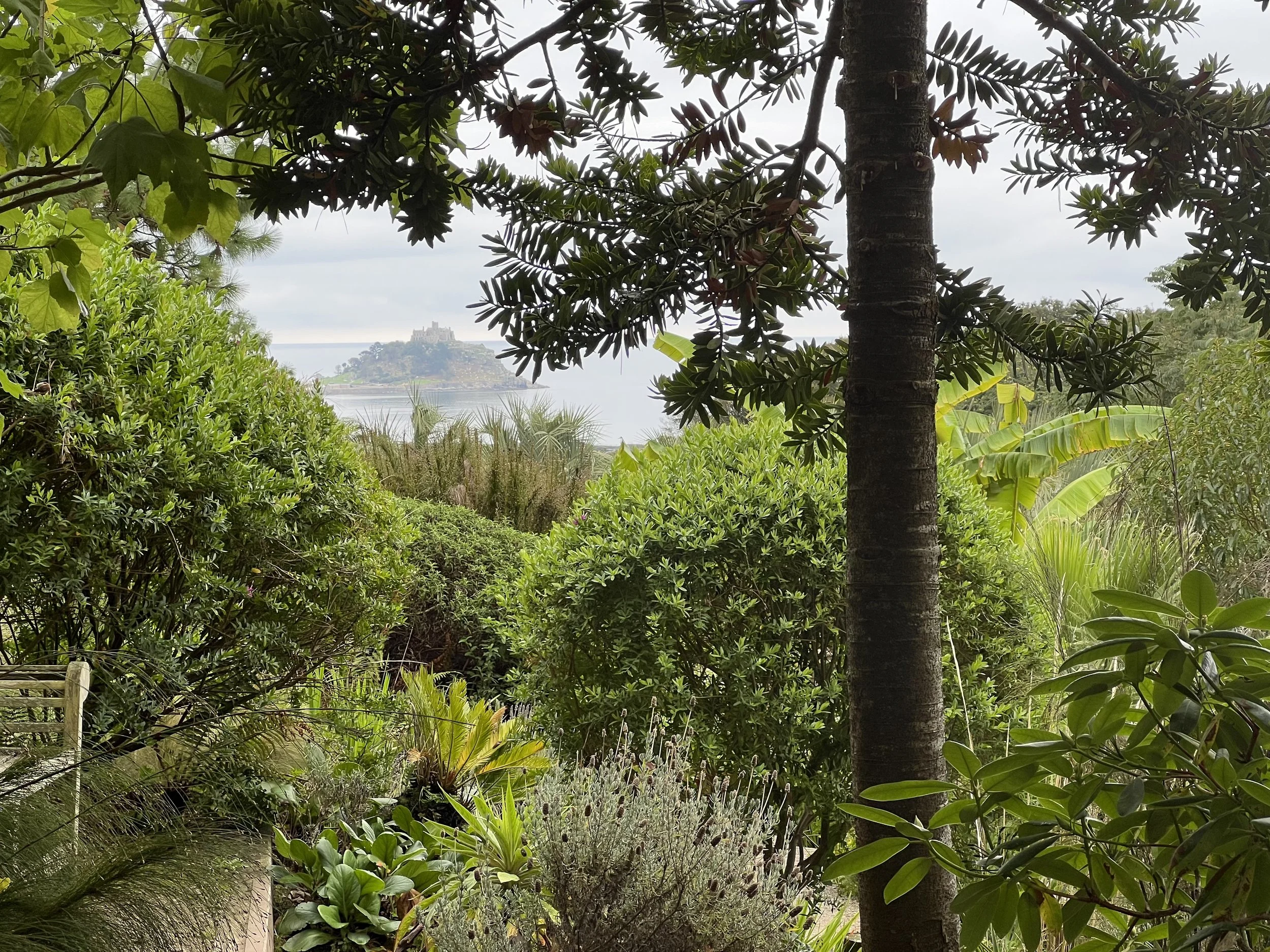
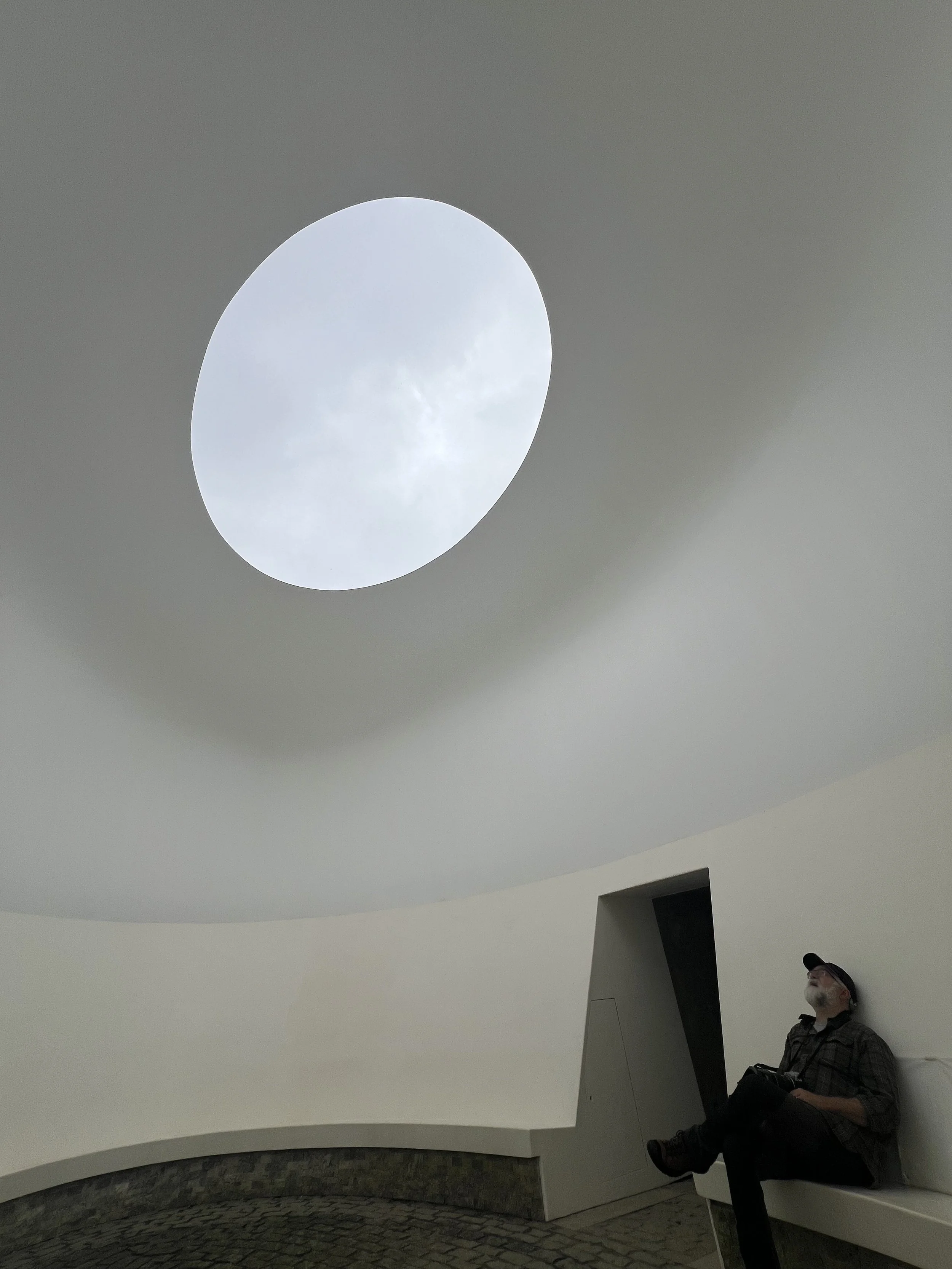
Just inland from St Michaels Mount is Tremenheere Sculpture Gardens. Originally the land was said to be the vineyard for the monks, obviously the special microclimate in this area was recognized long ago. Although the current gardens were started fairly recently, in 1997, they were very lush and impressive. Scattered throughout the landscape were sculptures and art installations. Our favorite was called Skyfall, an underground bunker with just a hole in the ceiling to observe the sky. It was remarkably effective at inducing a contemplative manner.
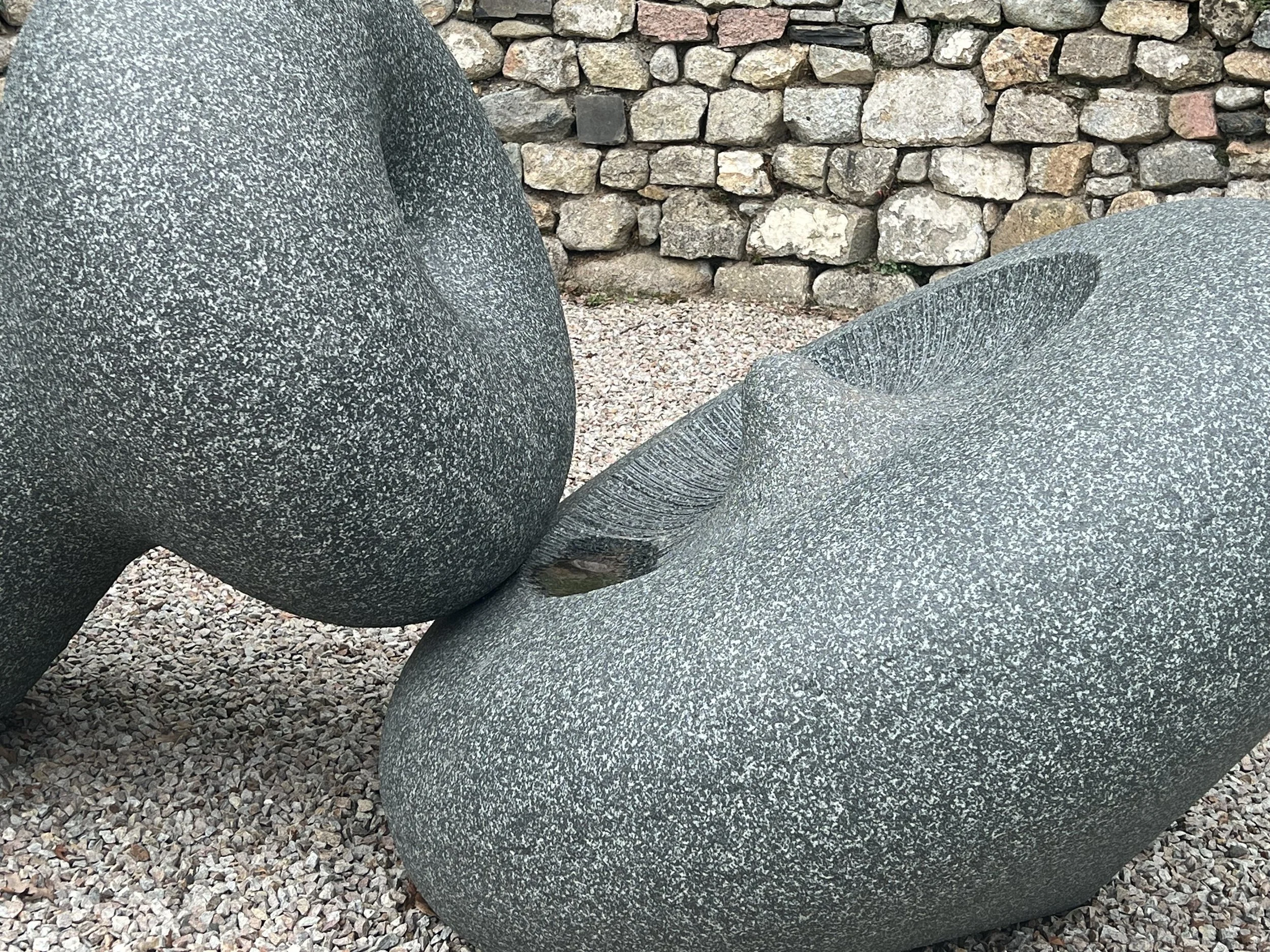
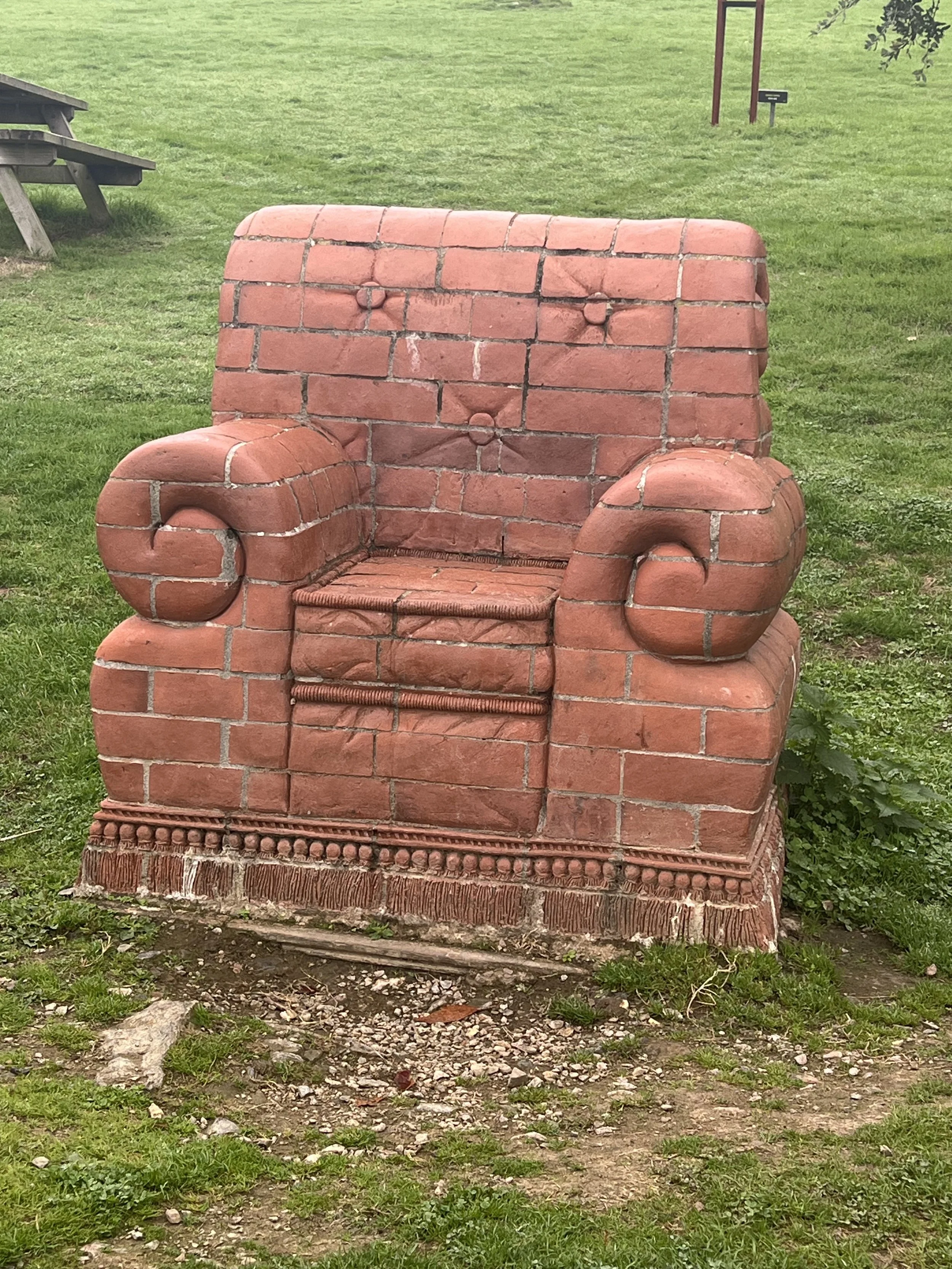
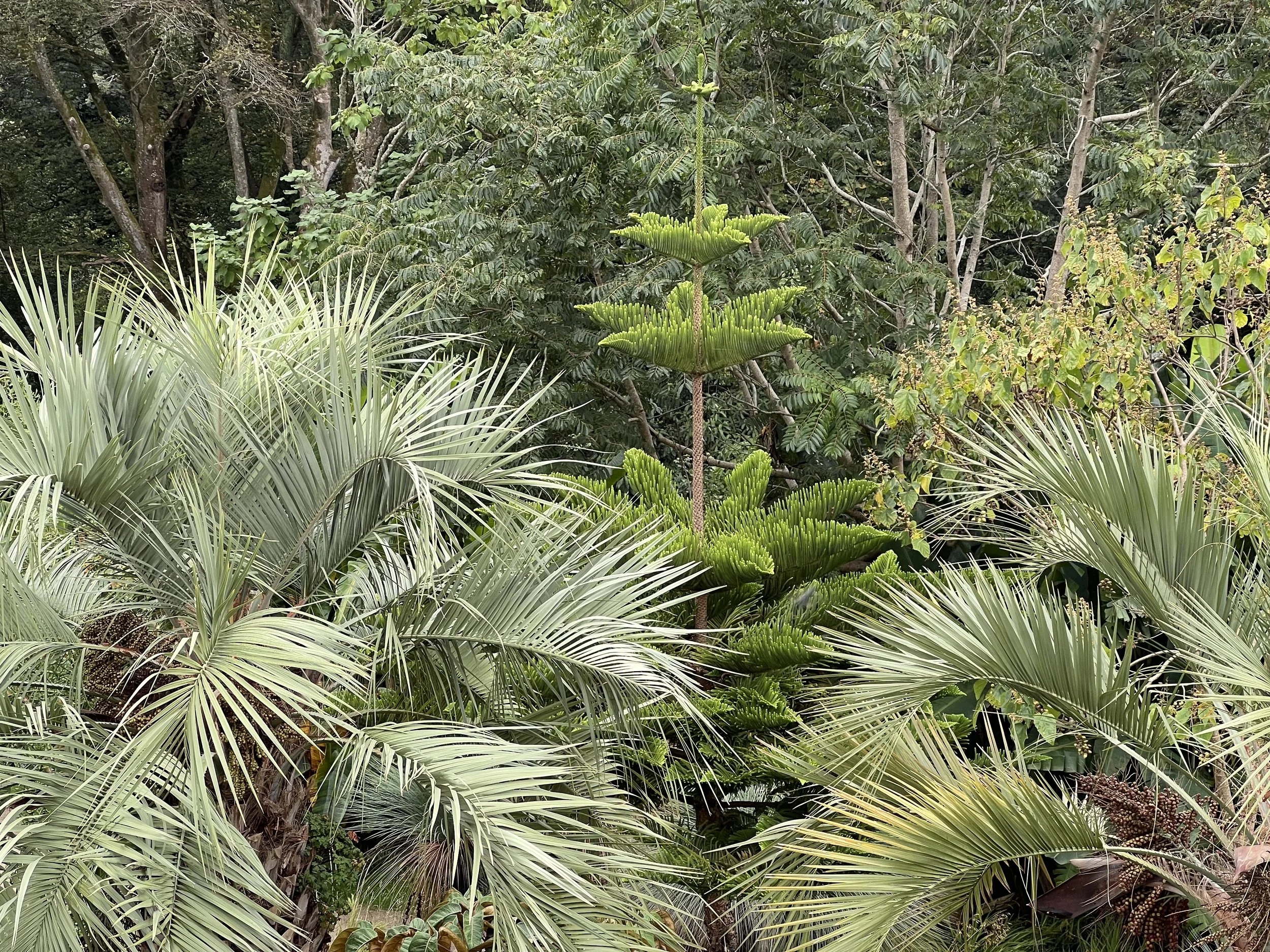
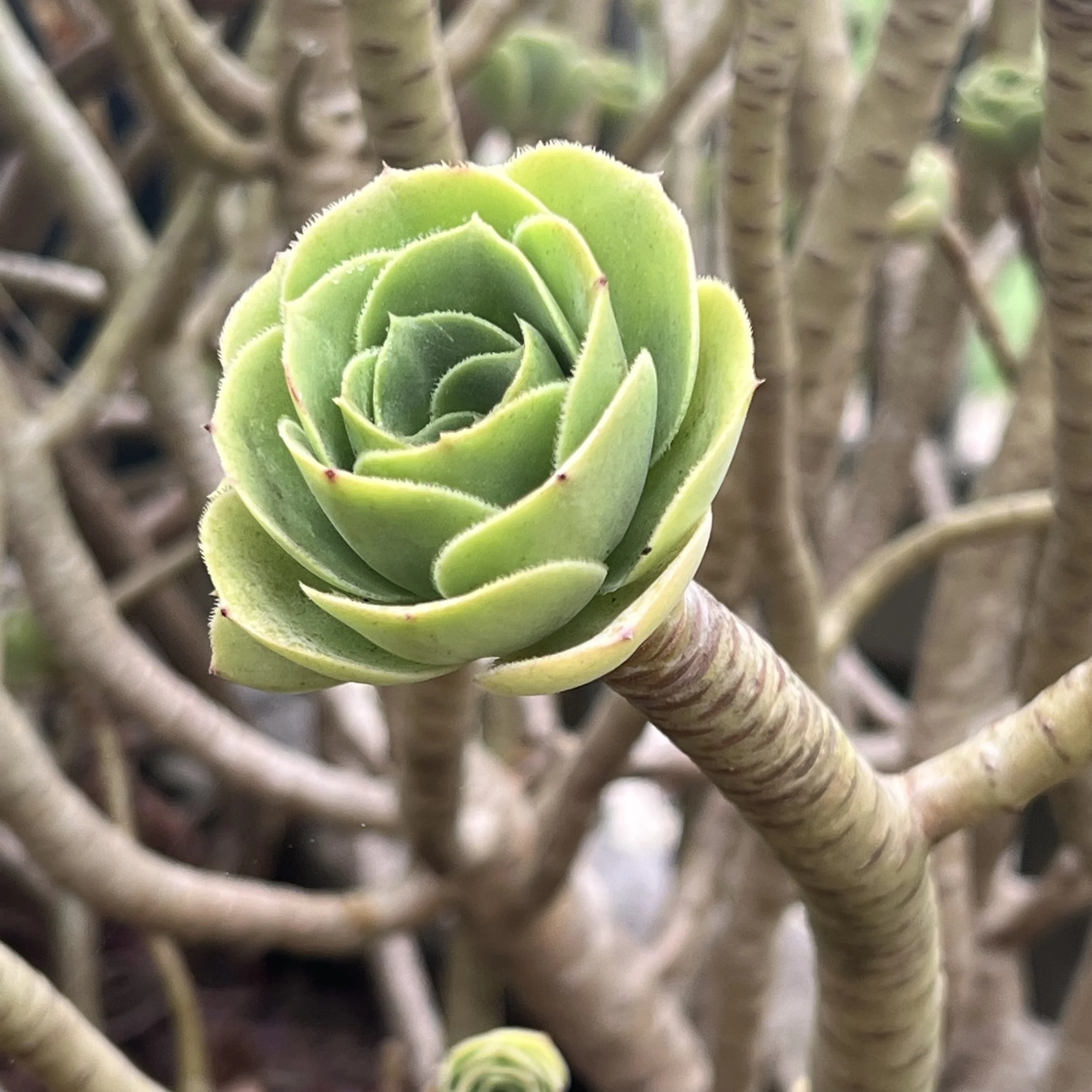
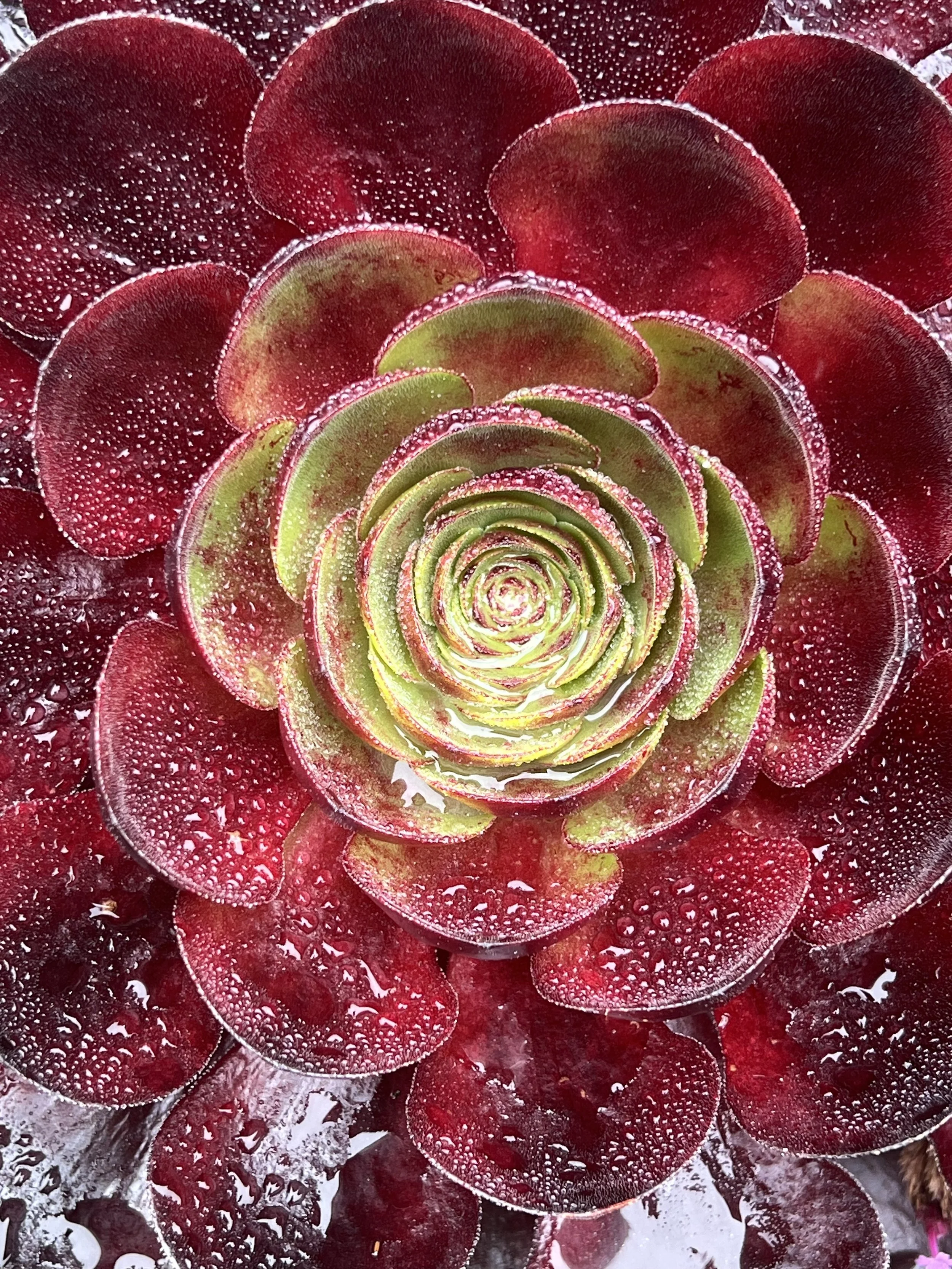
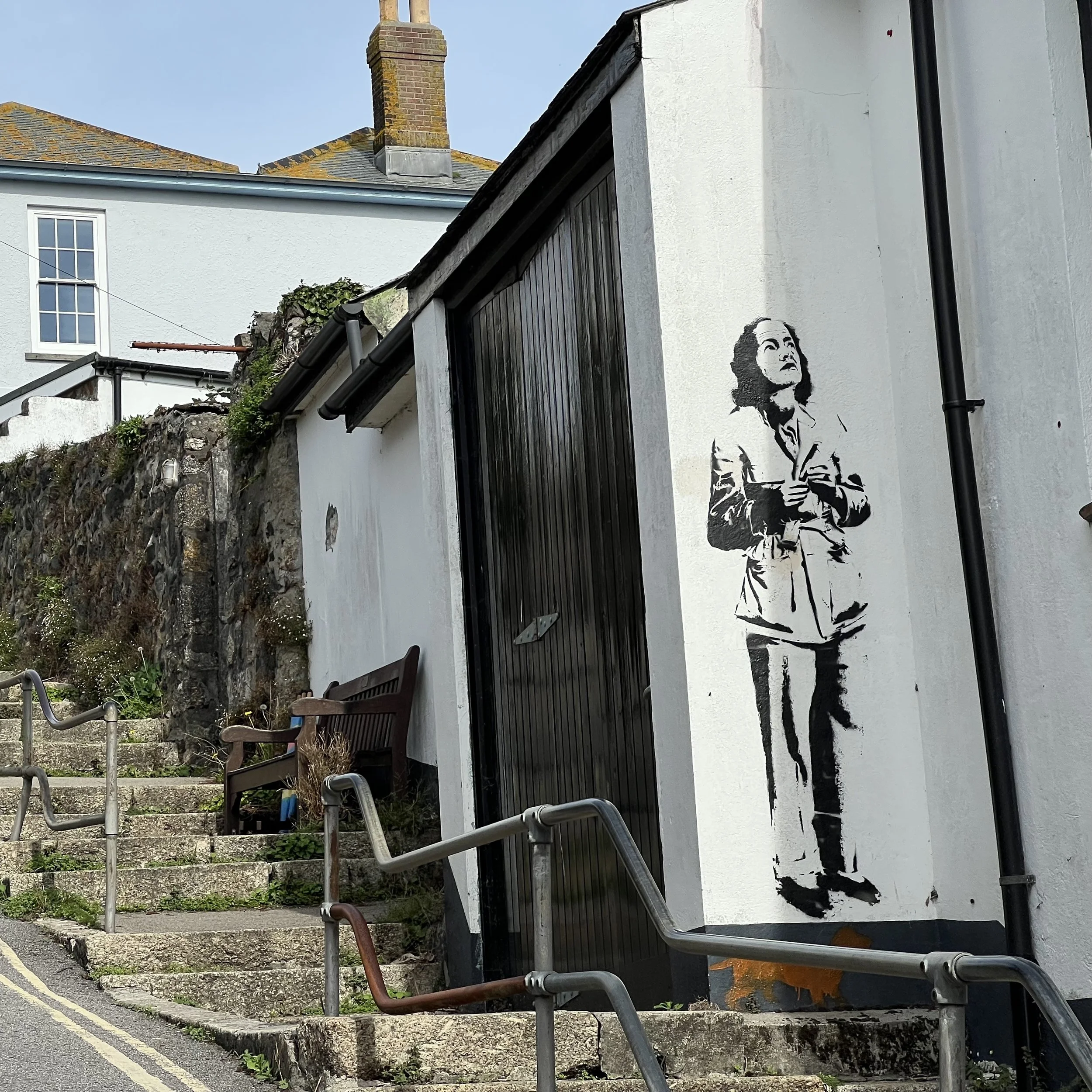
St Ives, on the north Cornwall coast, is a popular tourist destination for good reason. Artists escaping London during the second world war settled in the small fishing village. It has since grown and is now full of galleries and nice eateries.
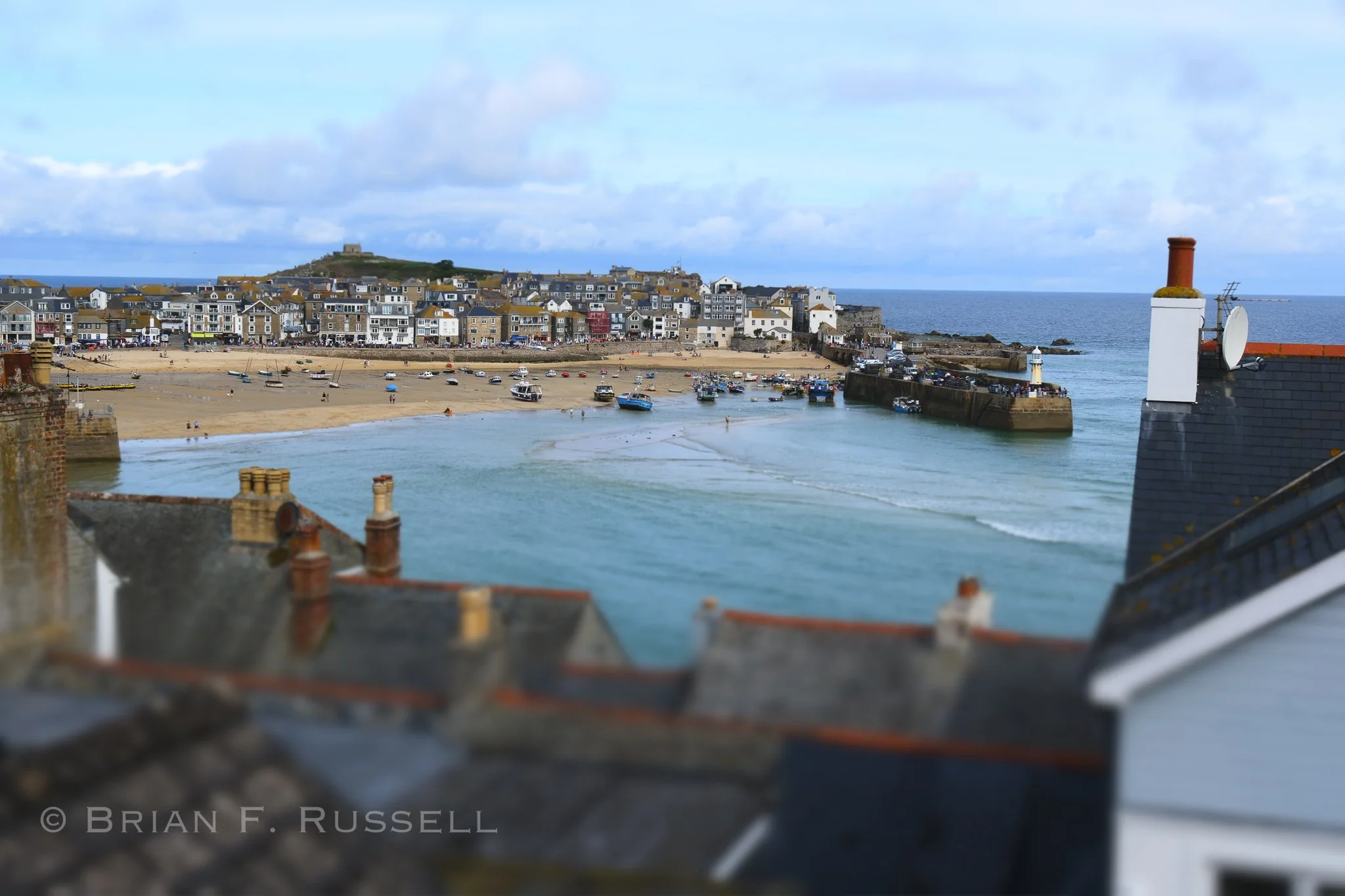
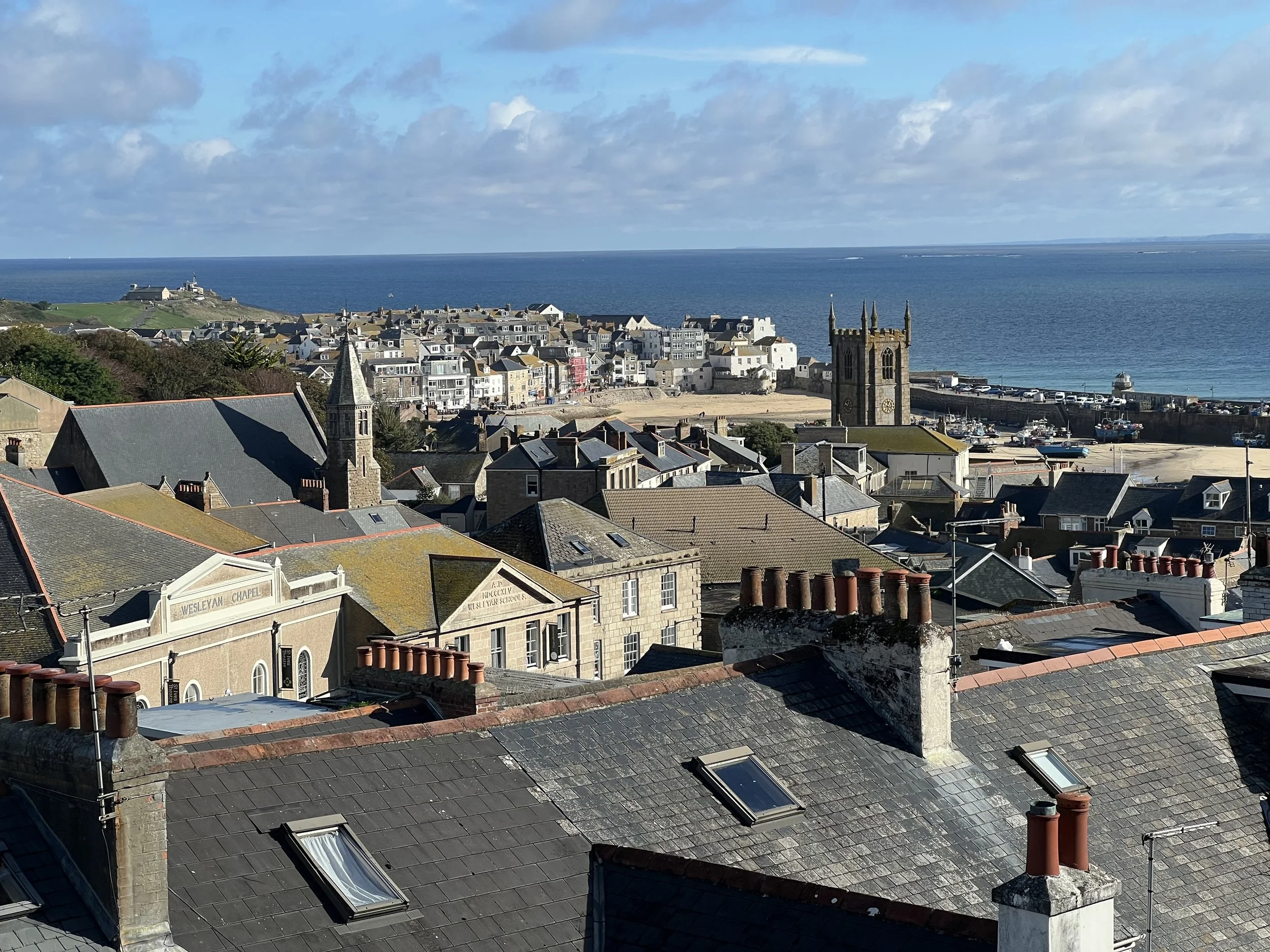
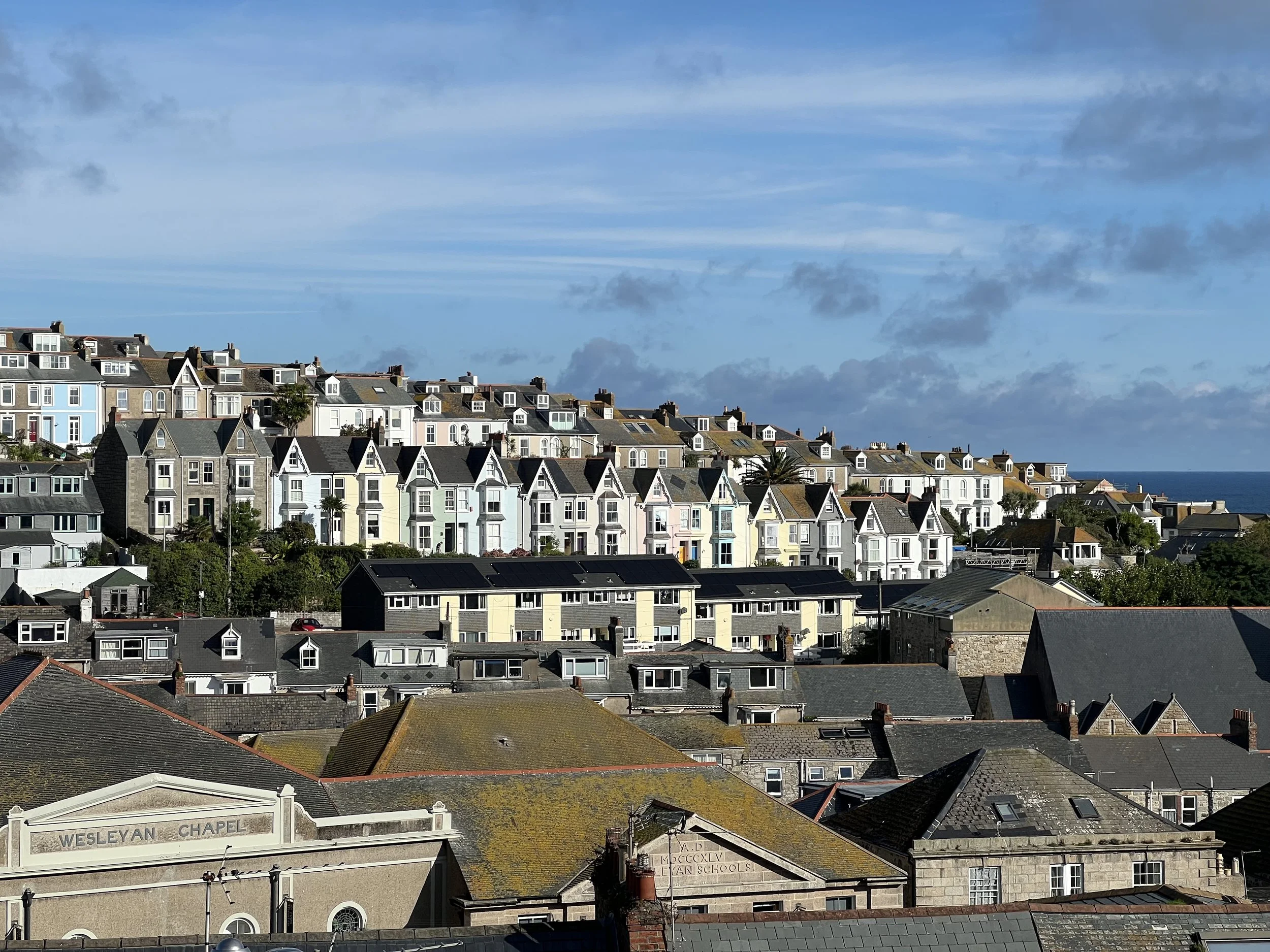
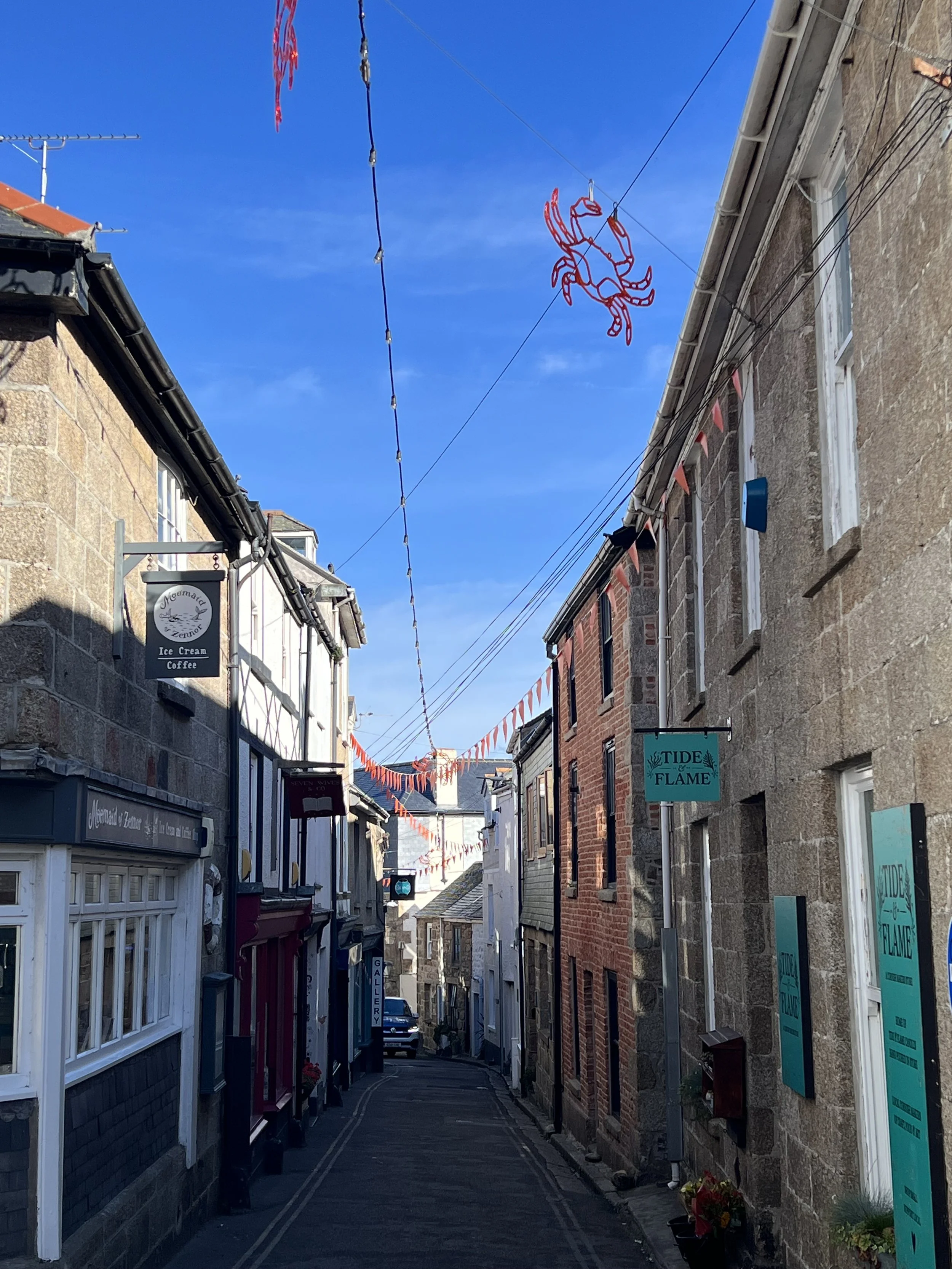
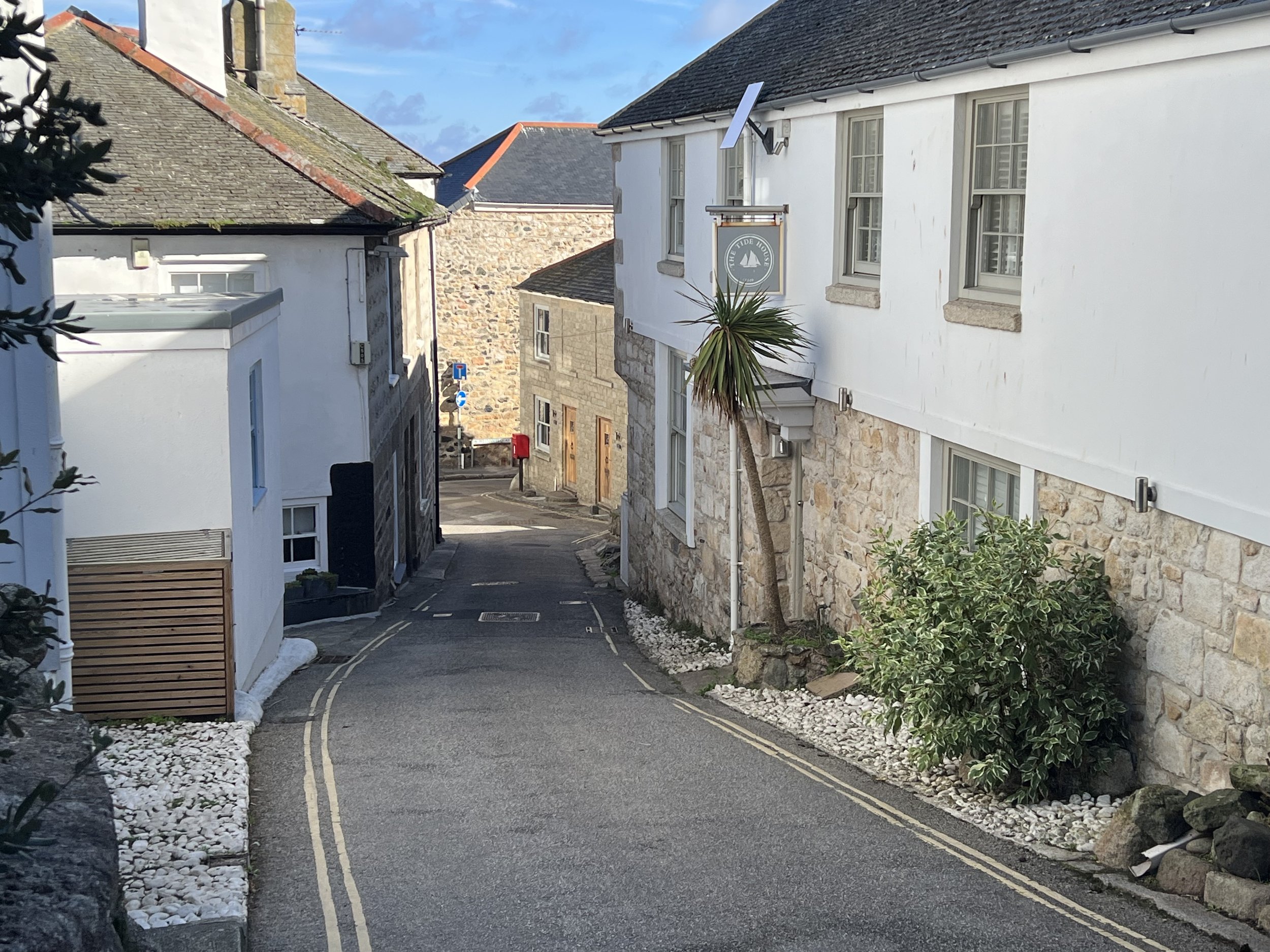
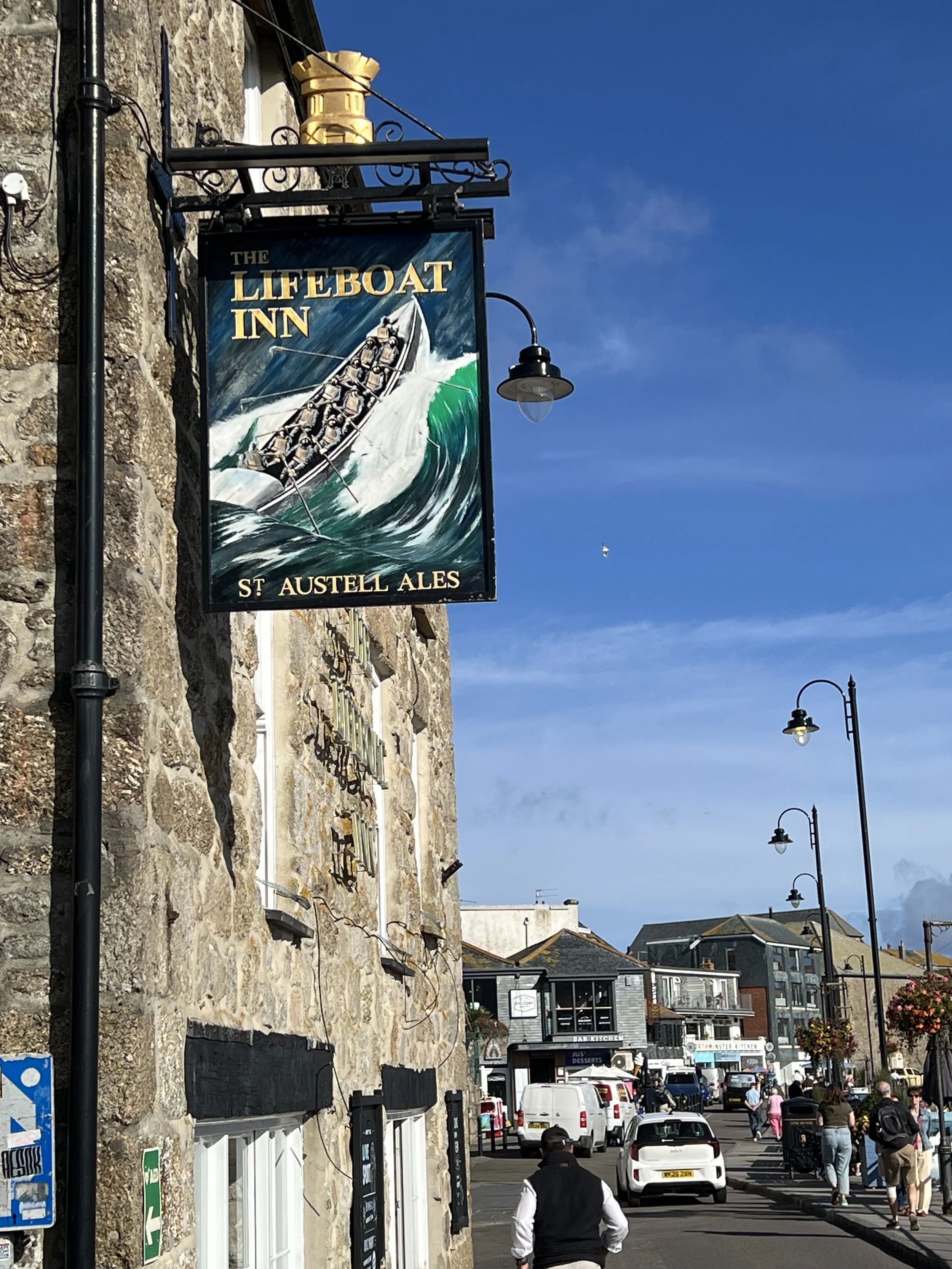
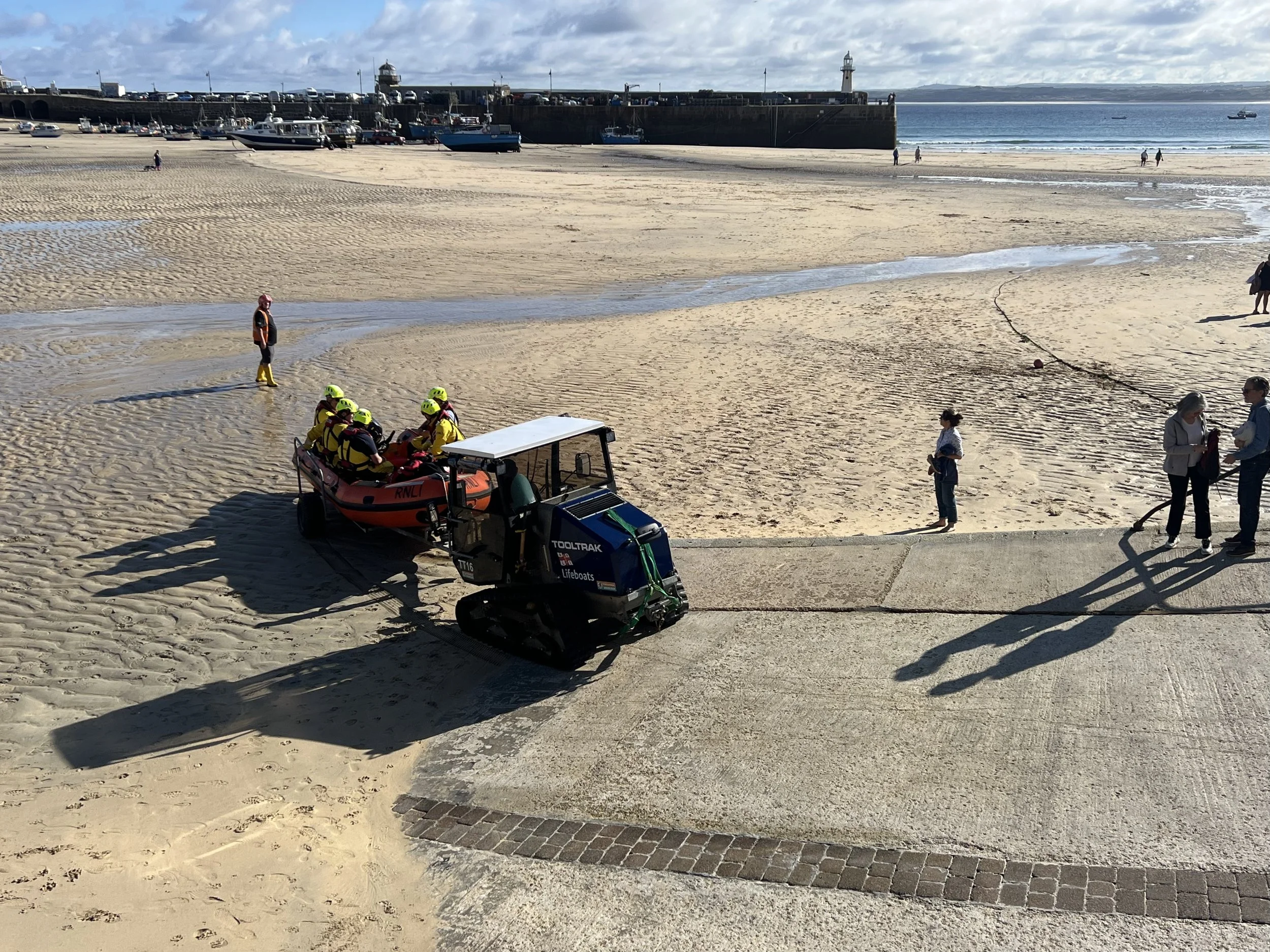
We watched the lifeboat team practice their launch procedure. The large tides here make things much more complicated.
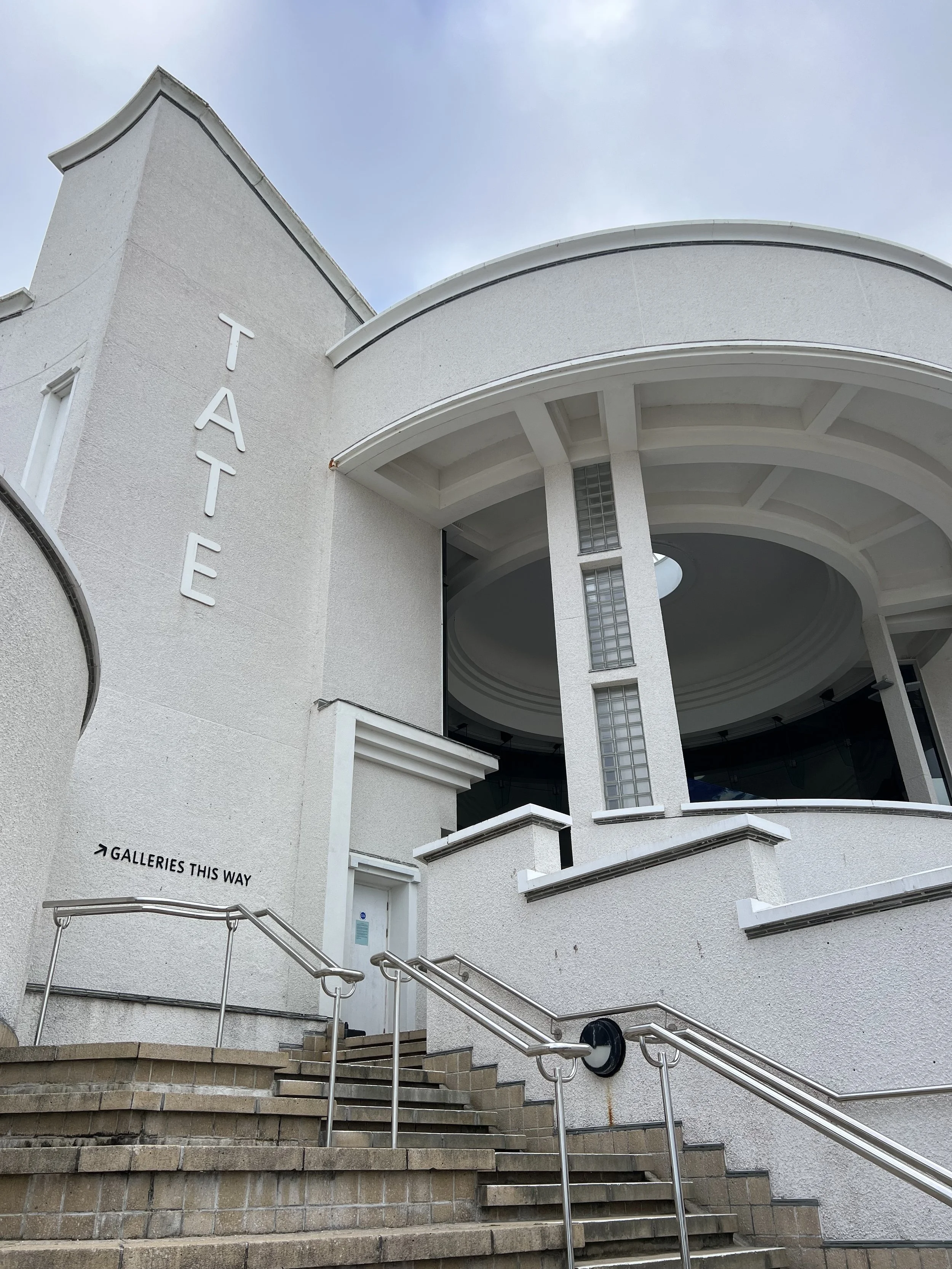
There is a Tate art gallery full of modern work by artists connected to the area. In addition, sculptor Barbara Hepworth’s home, garden and studio is now a small museum. It was beautifully done, using her living space and garden as a gallery. Her backyard studio, where she worked until her death in a house-fire, was just as she left it.
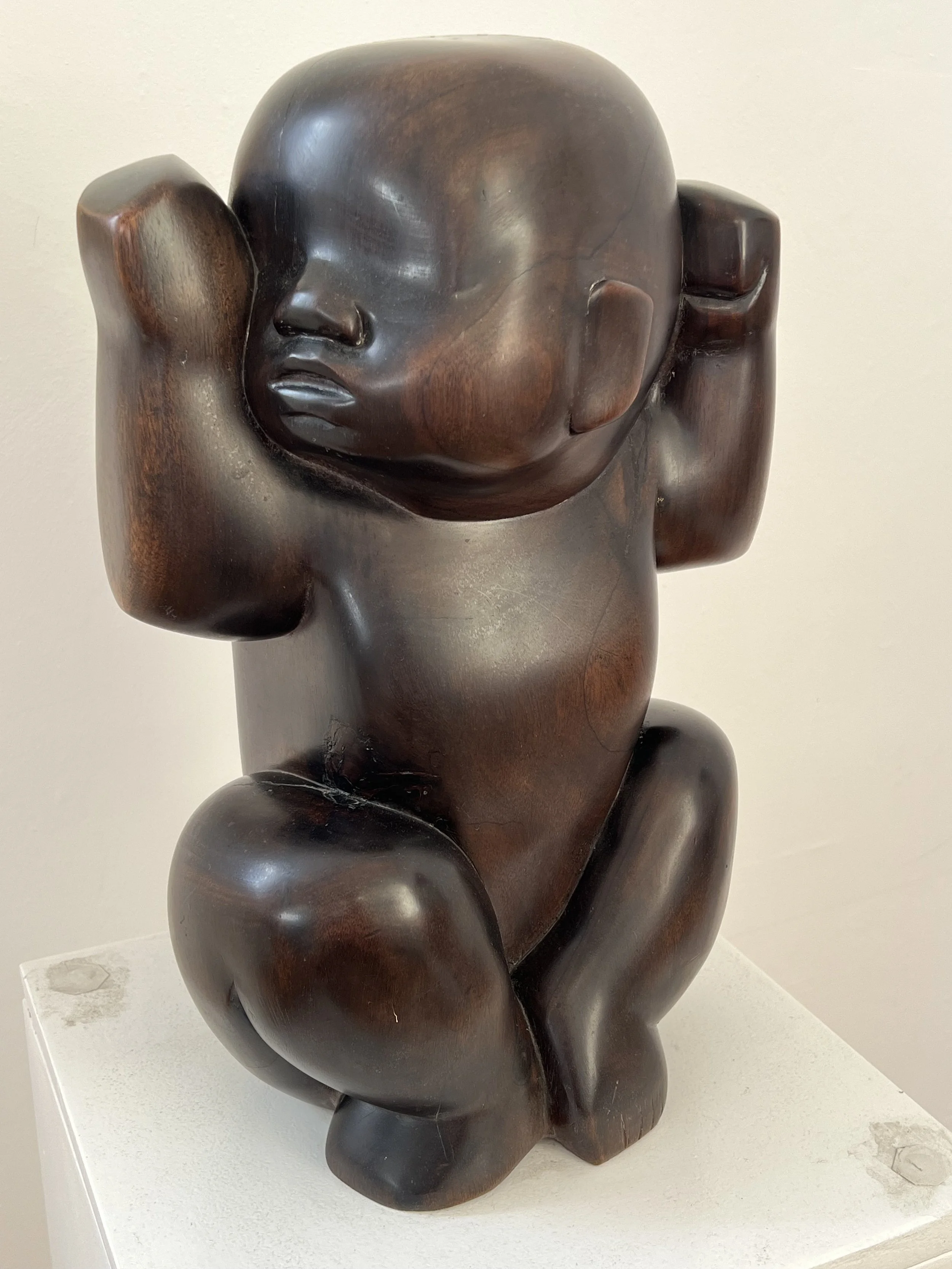
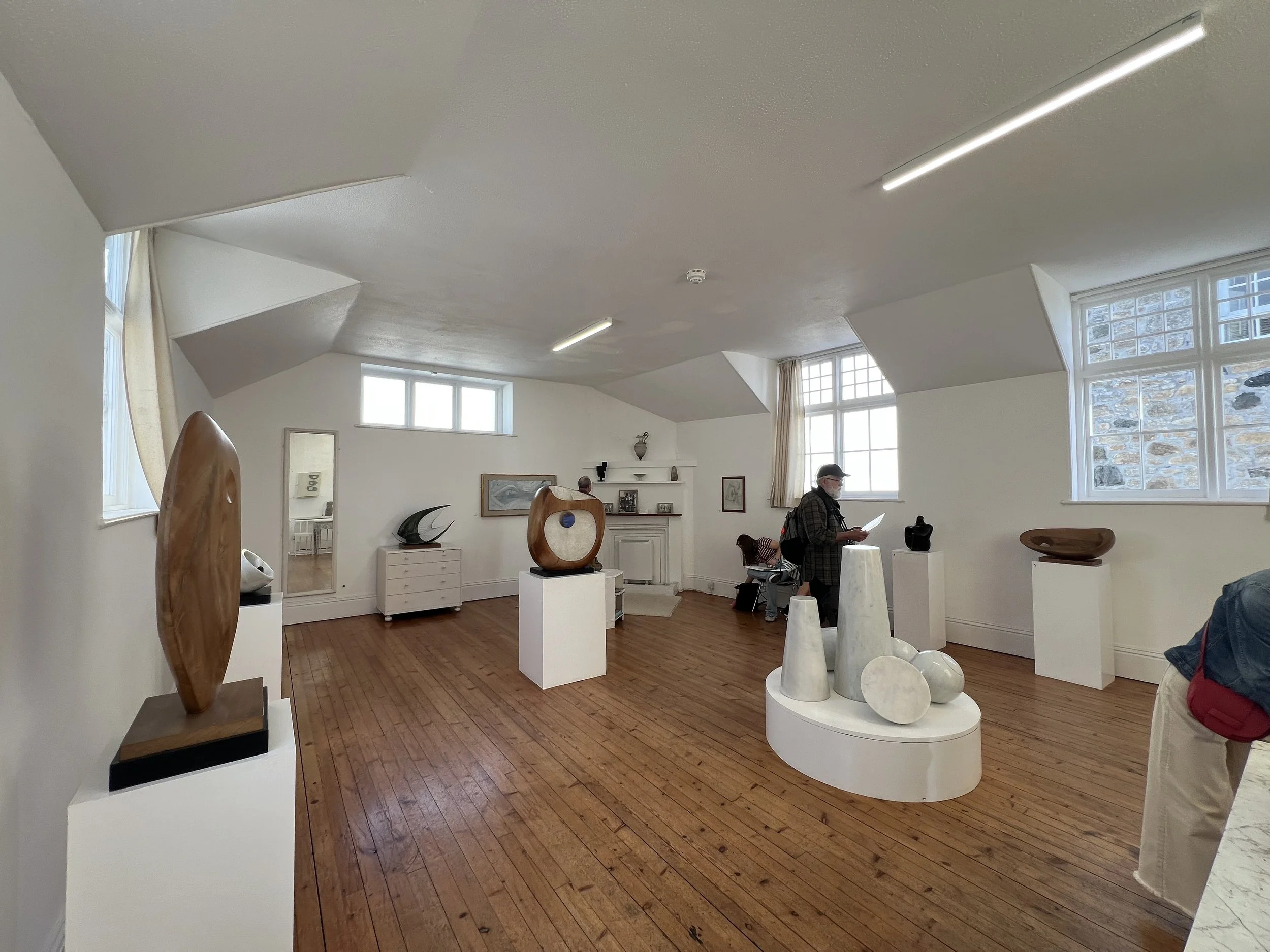
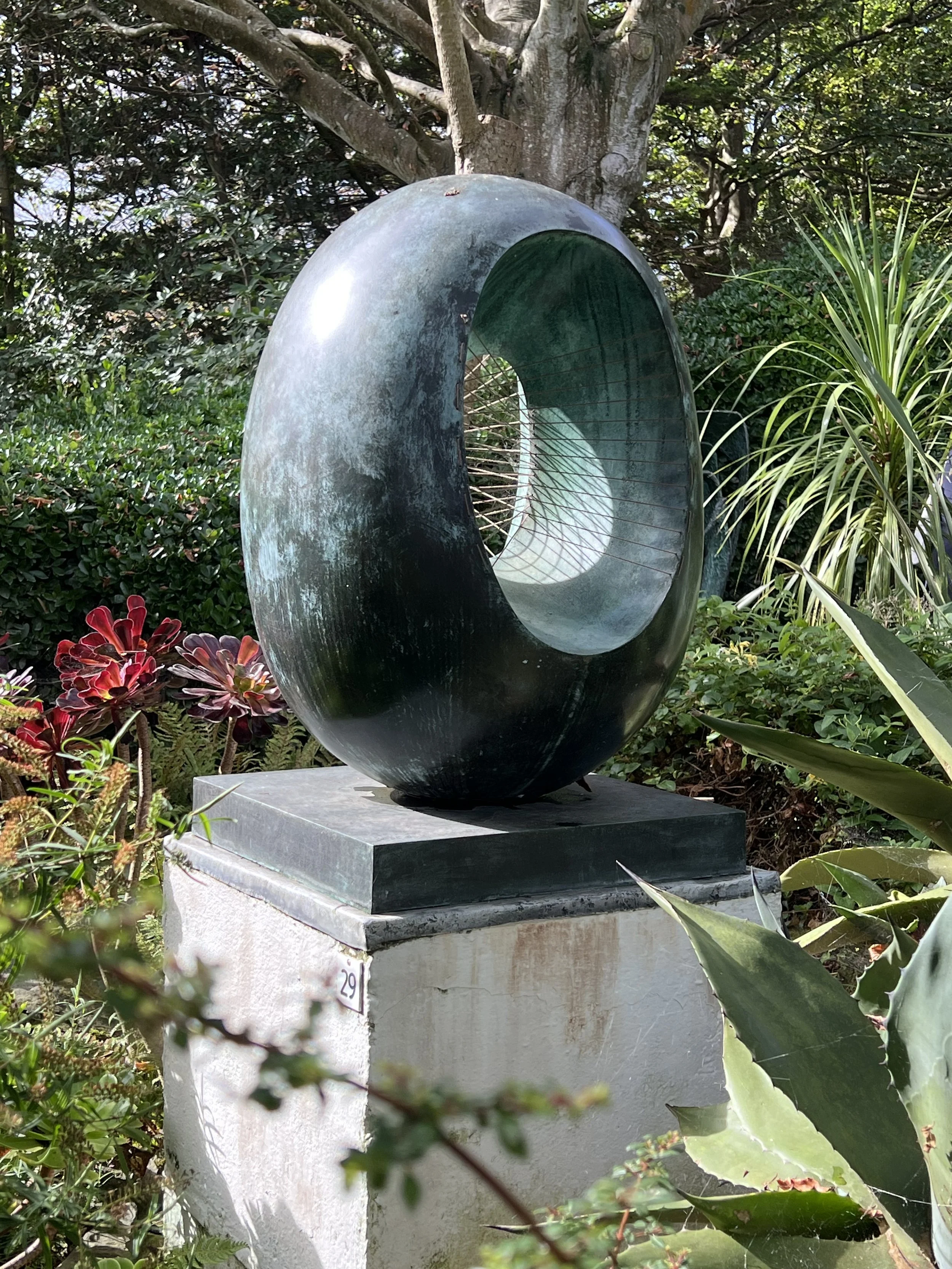
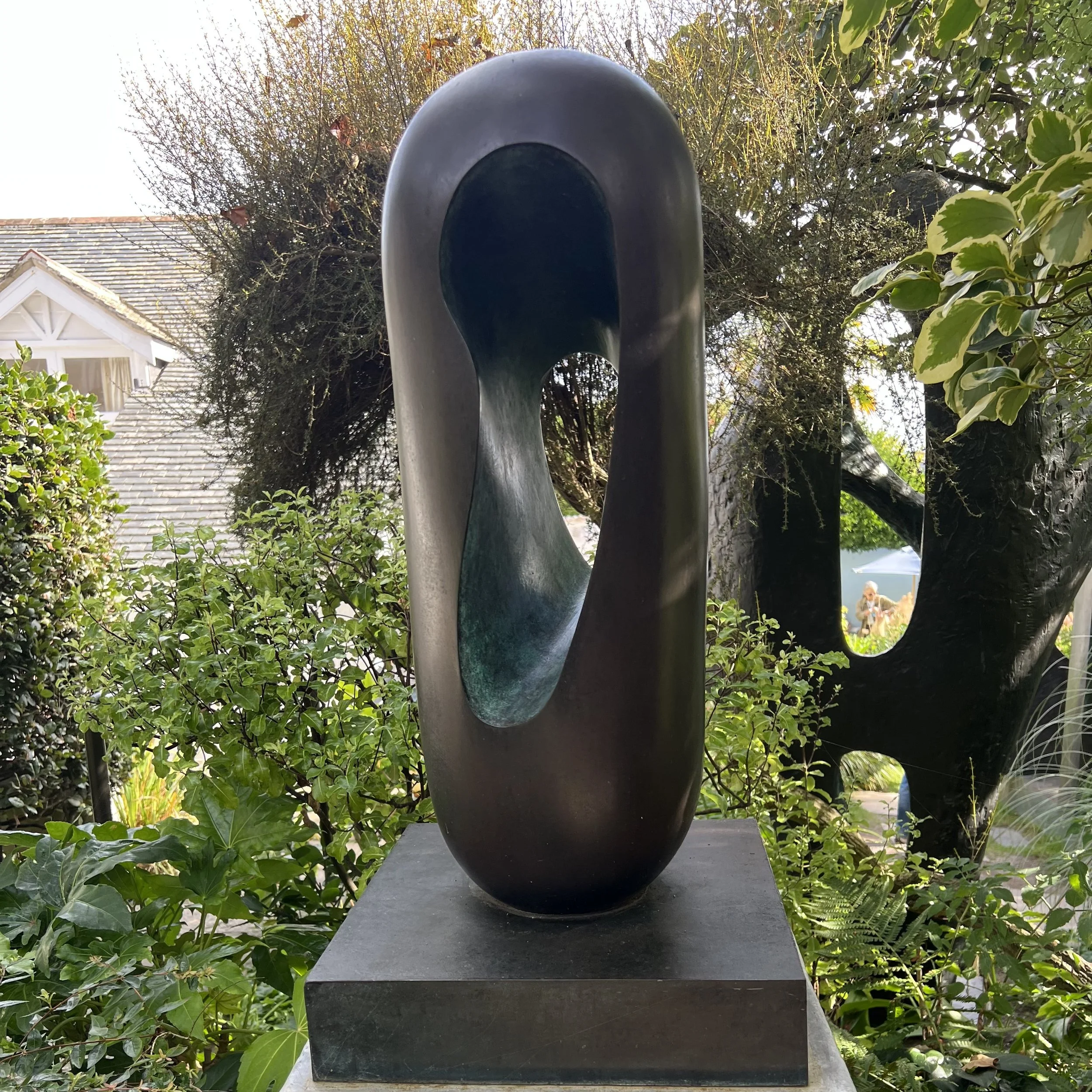
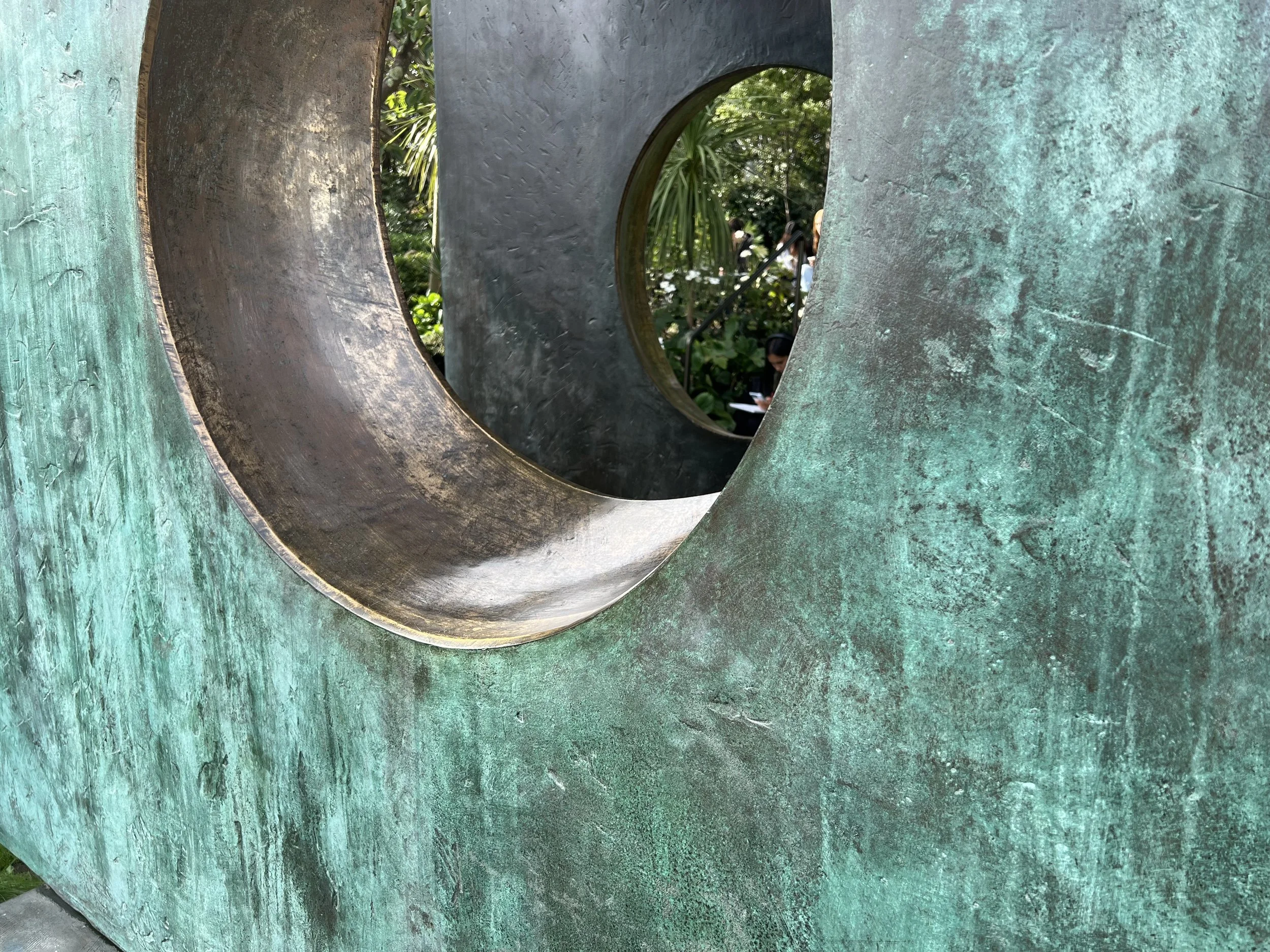
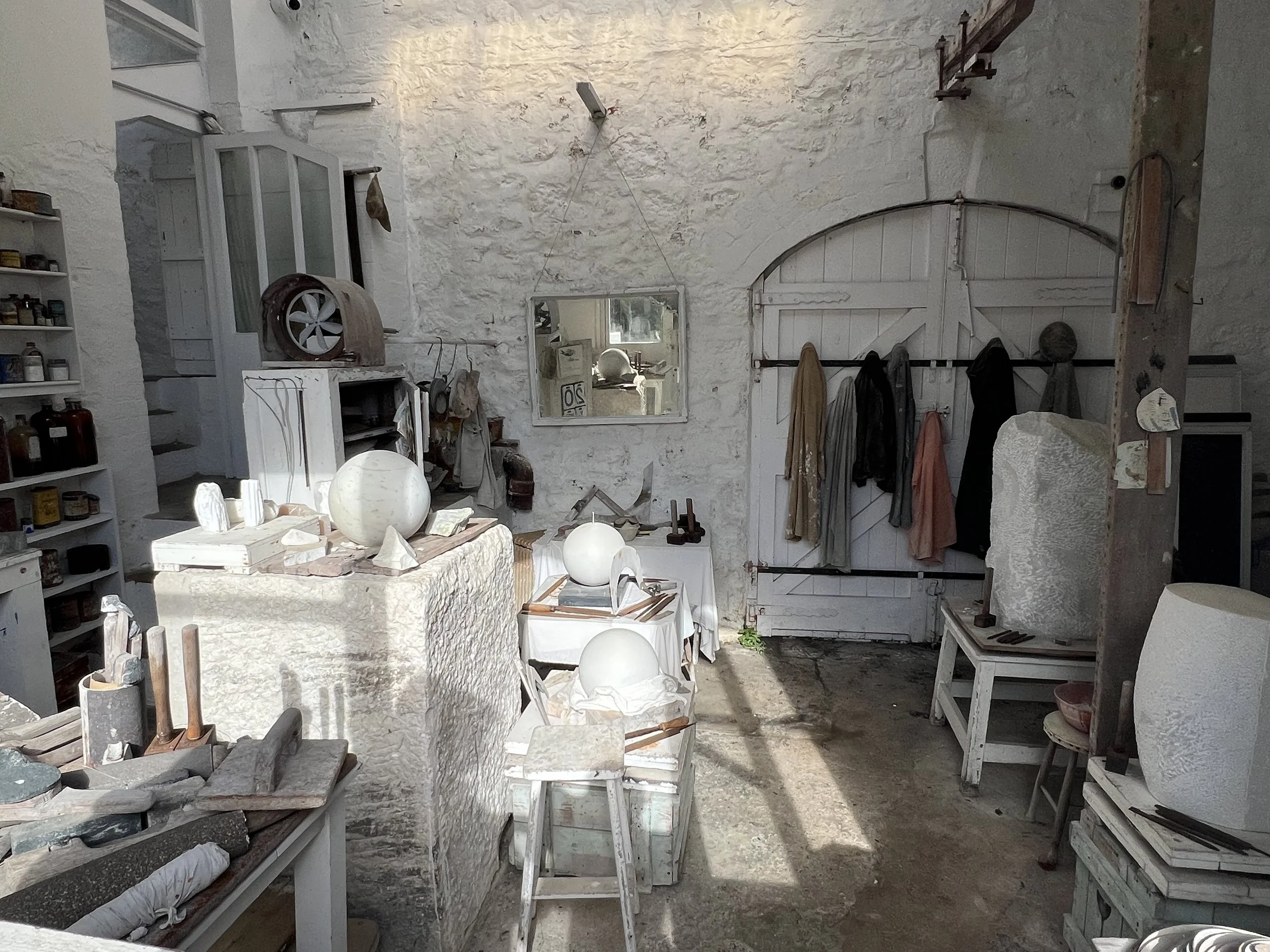
Barbara Hepworth’s bright and light studio.
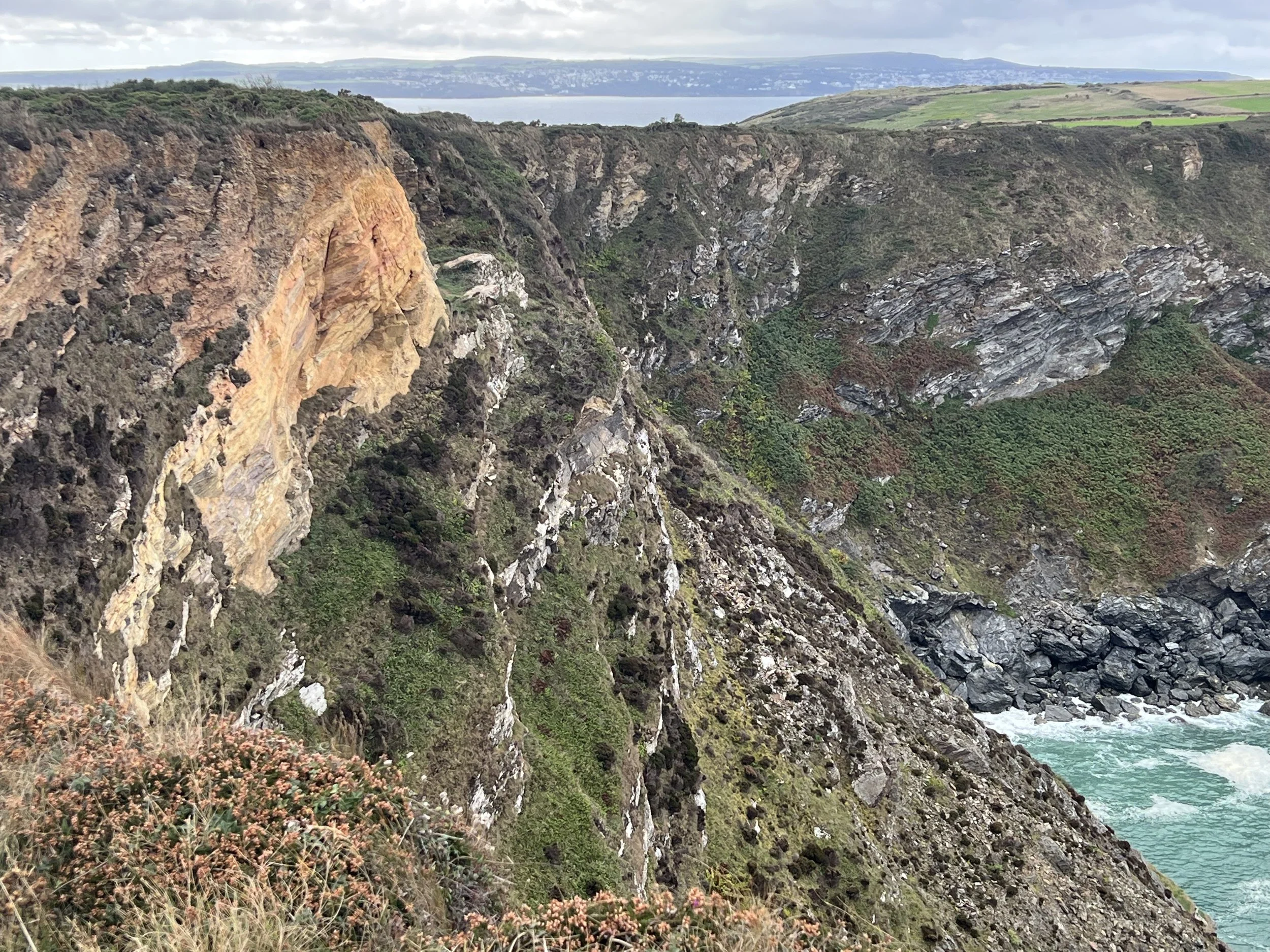
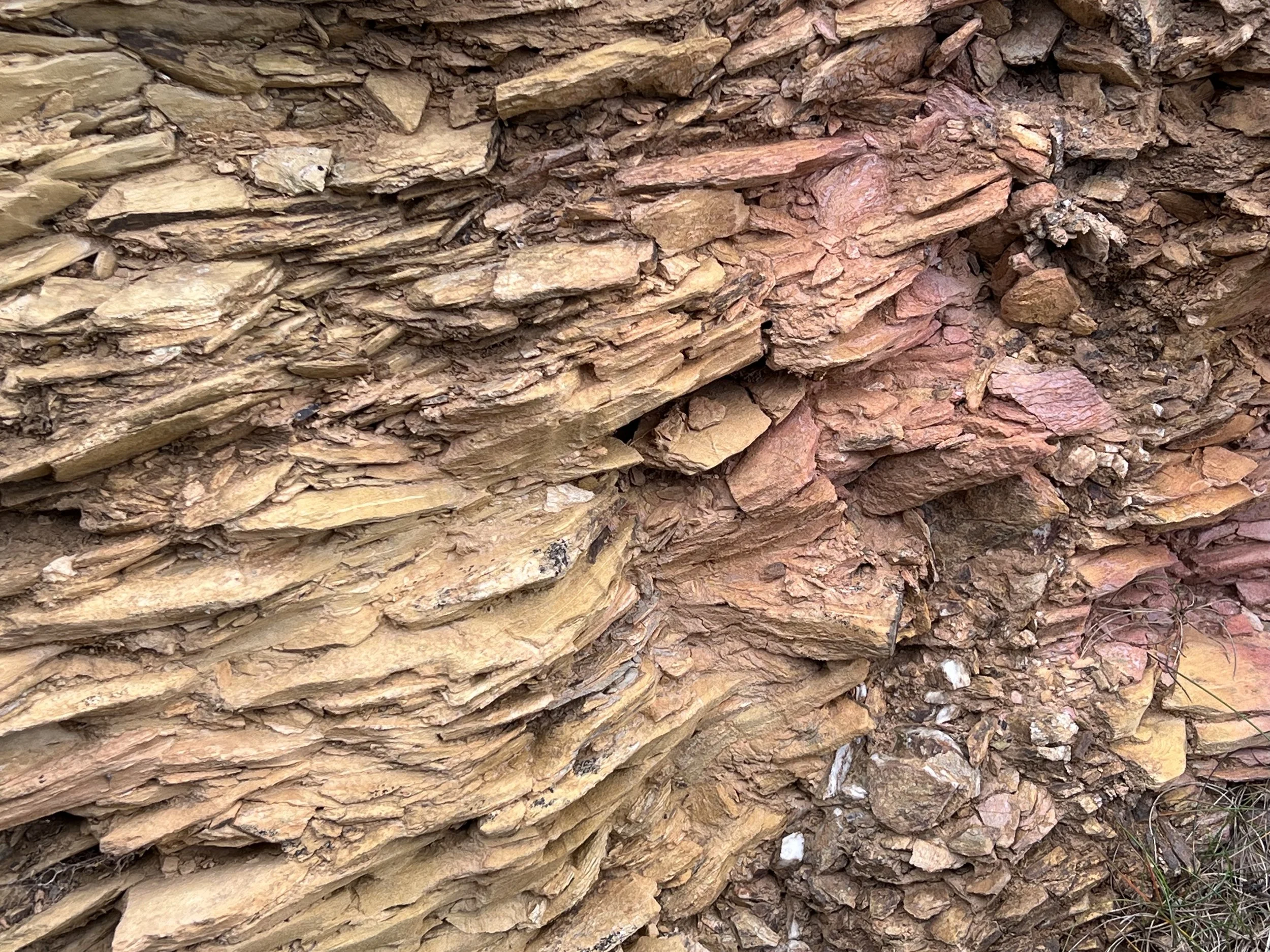
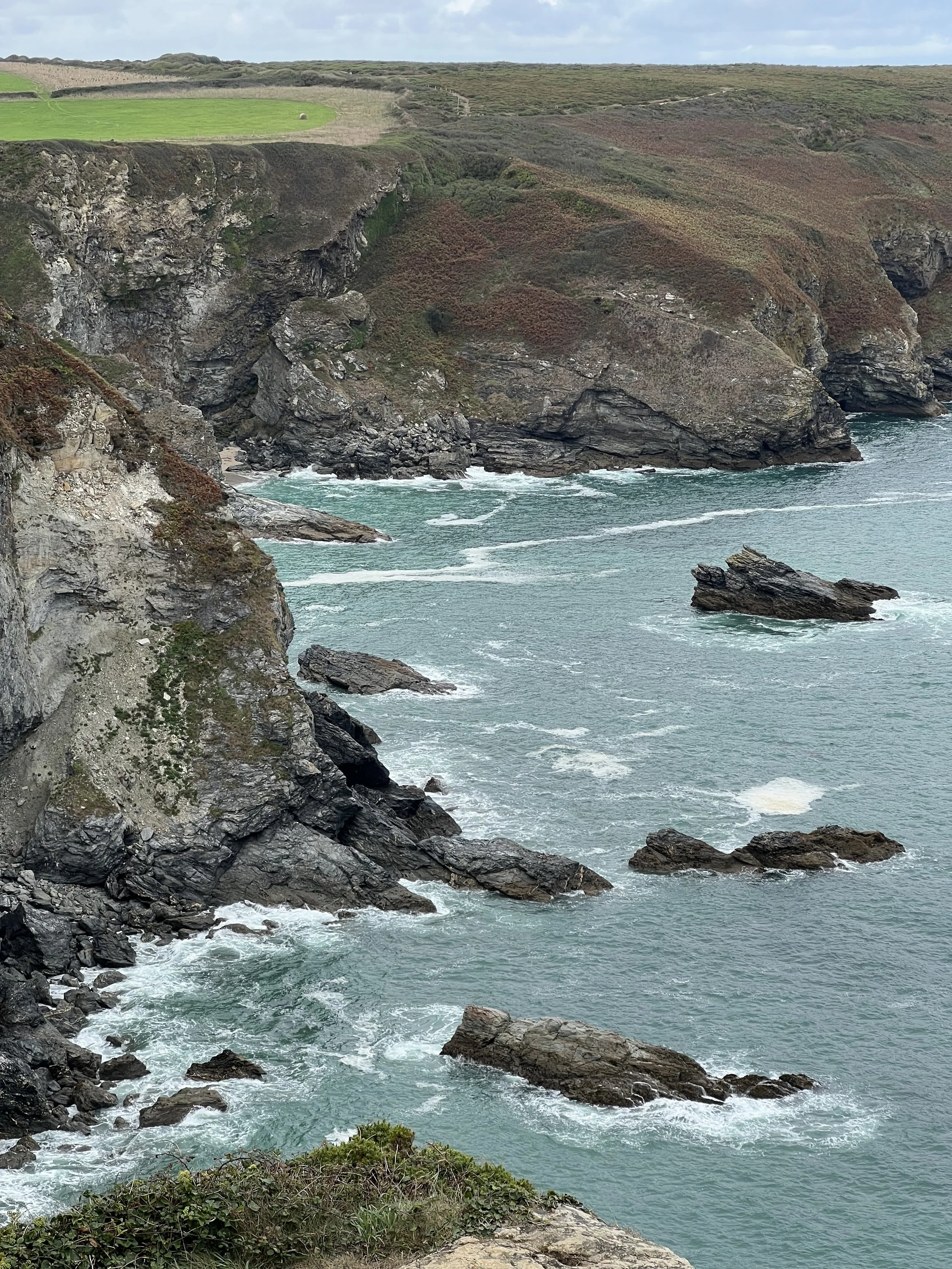
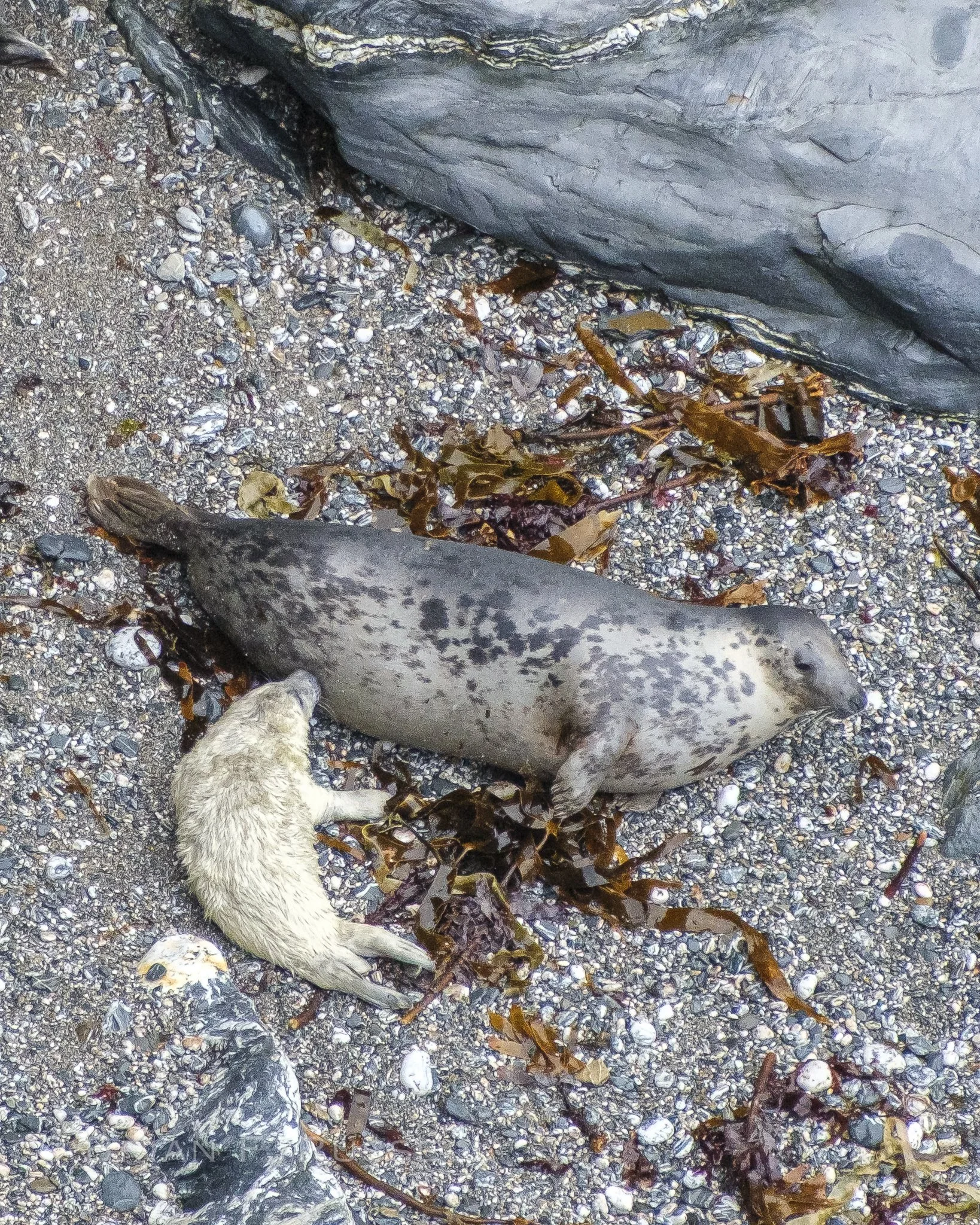
Walking along the cliffs just east of St Ives we noted this band of bright orange sandstone like a ribbon appearing all along the coast. It was remarkable that is was still there, appearing so fragile. The bays and small beaches were inaccessible to all but the seals. We saw a brand new pup, still with the white fur that it is born with. They lose it after a couple of weeks as they gain sufficient blubber to be able to survive in the water.
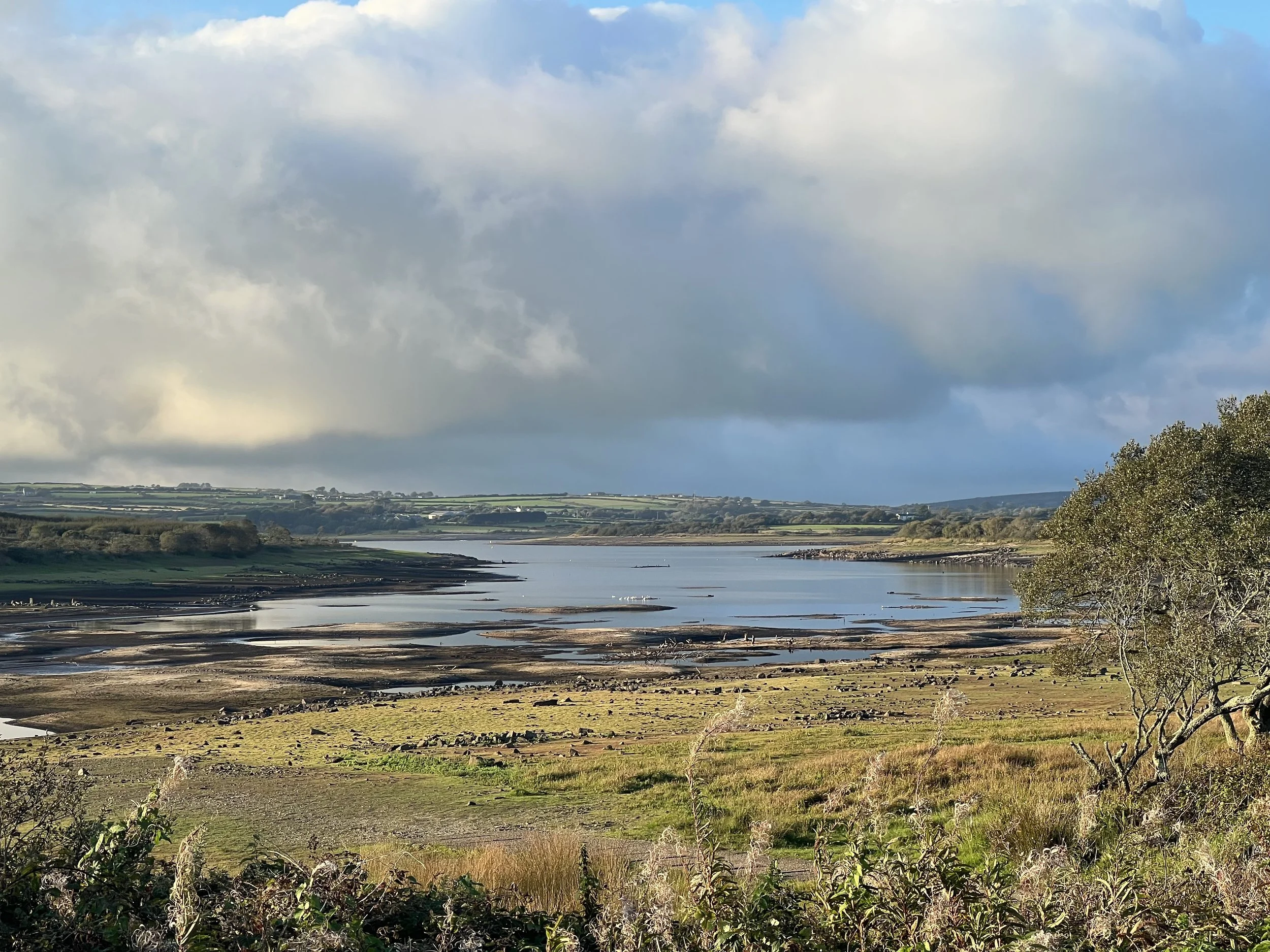
Reservoirs at record low levels.
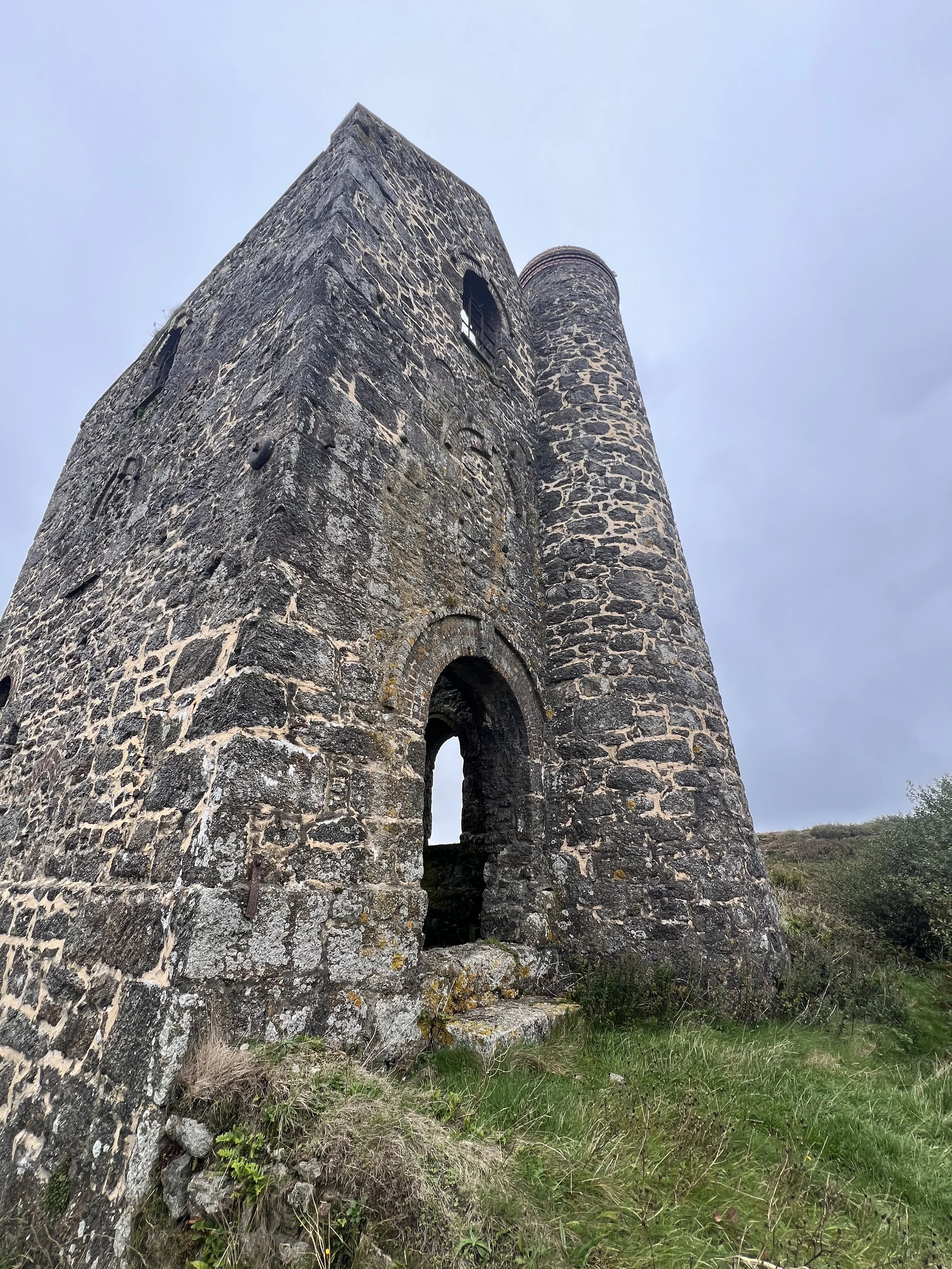
Driving back over the center of Cornwall toward Falmouth we saw evidence of the dry summer southern UK has had this year. The reservoir was extremely low with vast stretches of muddy shoreline exposed. We also passed many ruined towers, these are the old mine-head engine houses for the steam engines and pumps used in the tin and copper mines. Mining in Cornwall started in the Bronze age, but reached its peak in the 19th century, during the Industrial Revolution.
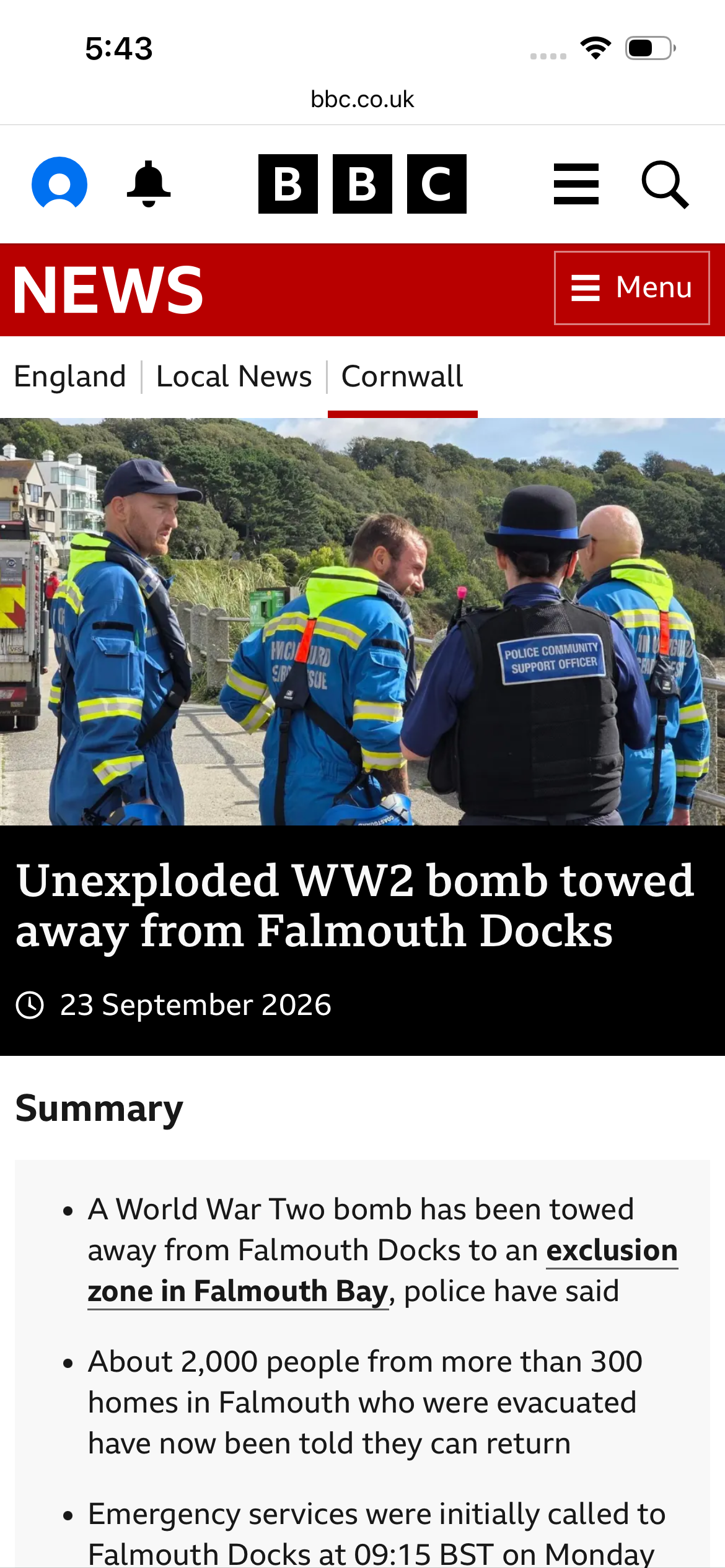
When we returned the car we were told that we had been lucky to be able to drive it around Falmouth as that afternoon roads had been closed and a number of residences evacuated. That WW2 bomb we had heard mentioned on the radio on our way into the harbor was being dealt with. The train back to town from the car rental office was also one of the few to not be cancelled that day. It seems we got lucky in more ways than one.
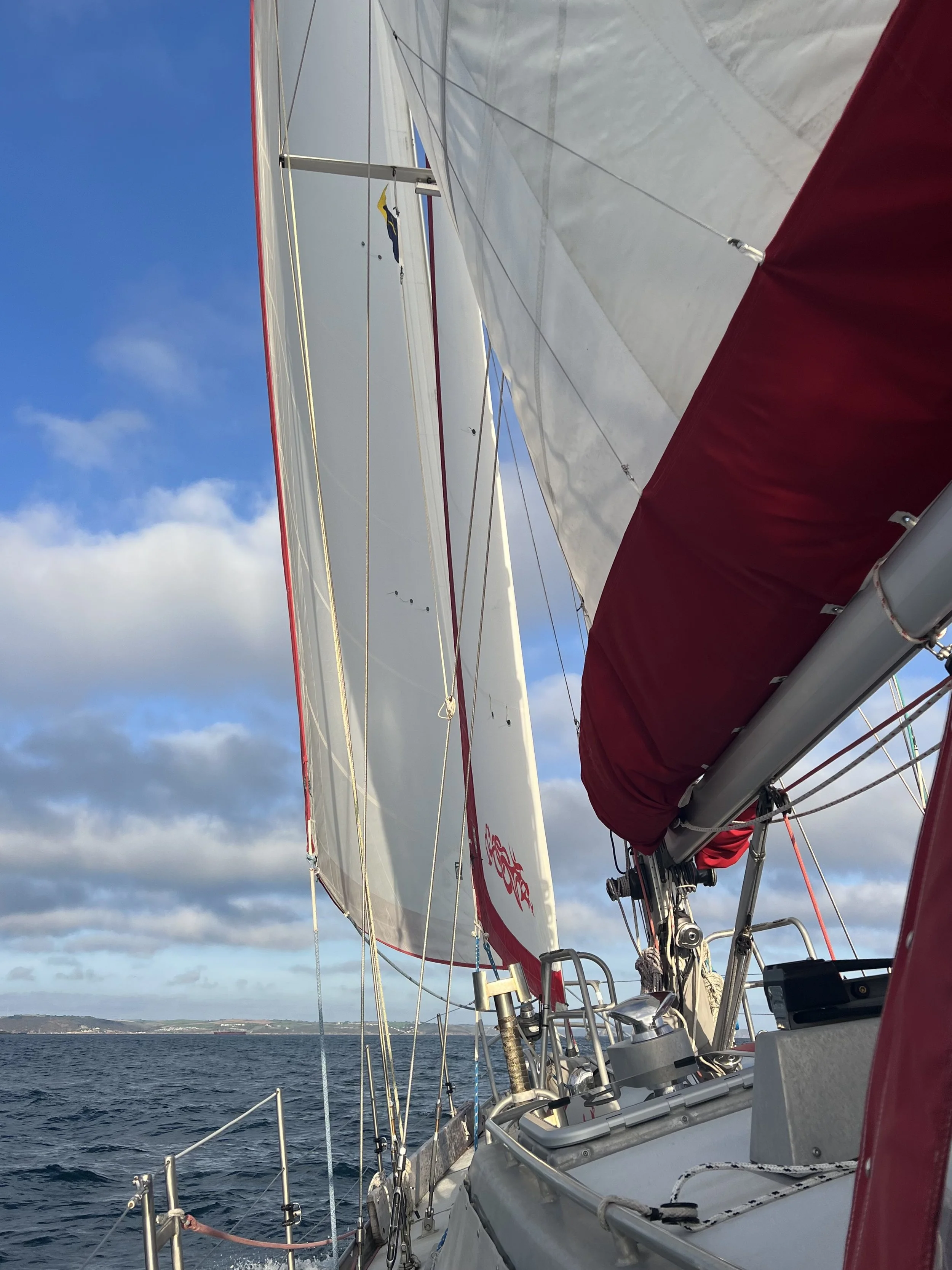
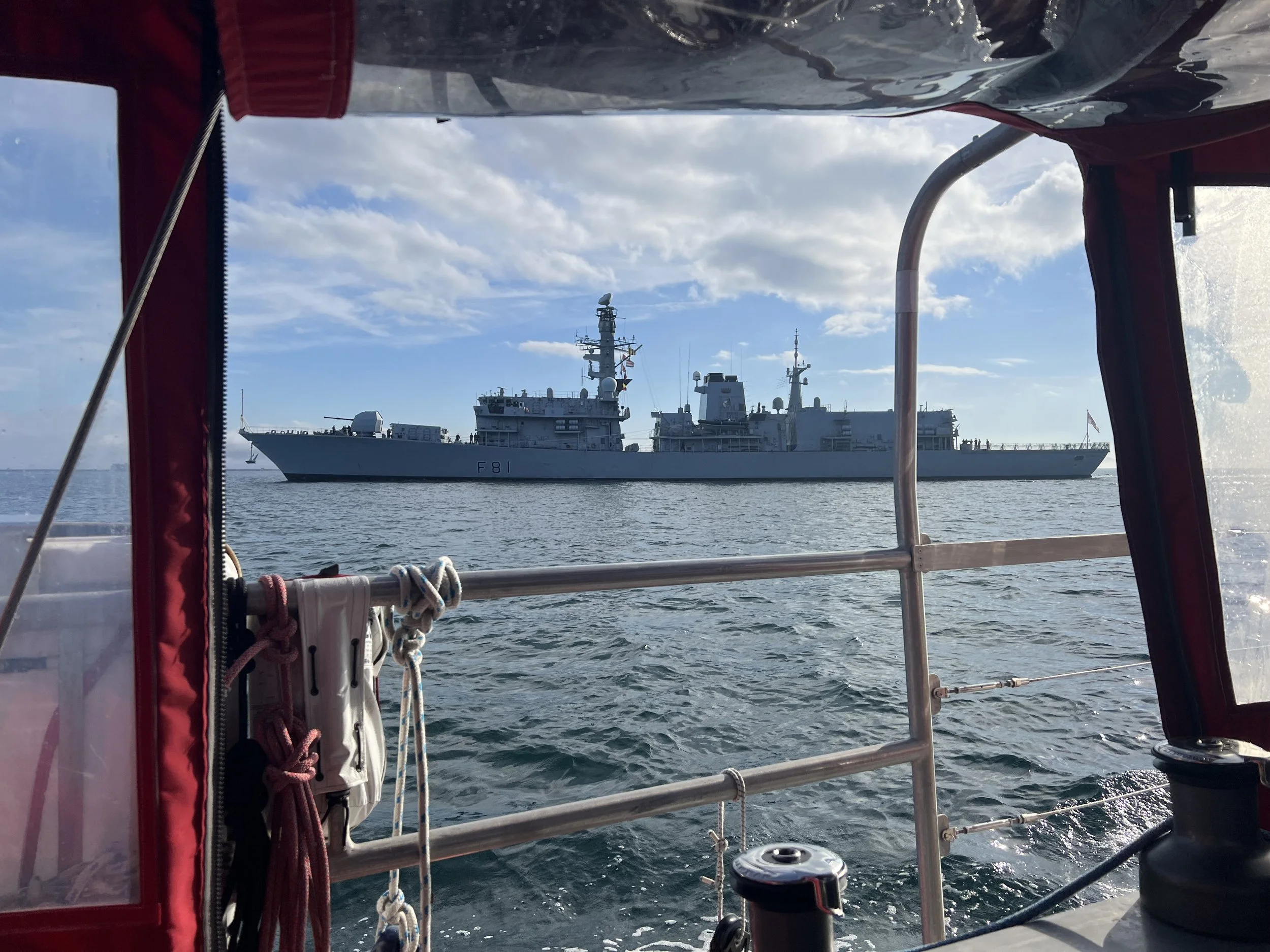
A gentle sail the next day took us to Plymouth. We decided at the last minute to not visit the town. The marinas are busy and expensive, and the town looked to be more business with Naval bases and such, rather than a tourist stop. Instead we dropped the hook in a small bay to the west and woke the next morning to a charming view of the village climbing the hillside in the misty morning light.
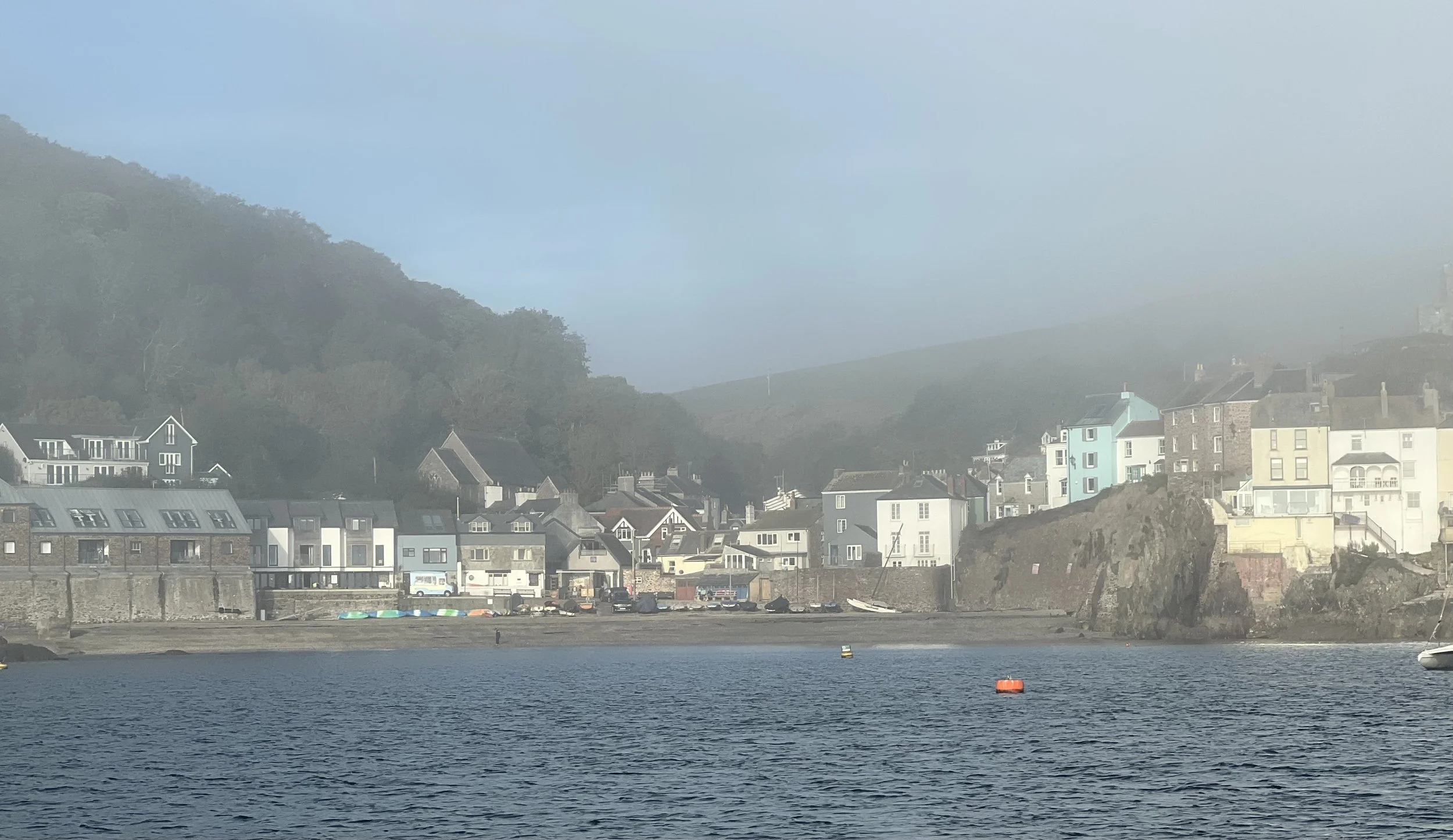
Cawsand Bay.
Moving on eastward our next stop was Salcombe. In high season this inlet is very busy with boaters of all flavors. The moorings which fill the waterways are highly sought after. Interestingly this estuary is totally tidal, there are no rivers feeding into it, yet it looked and felt very much like a narrow river estuary, with the twists and turns. The shallow sand bar at the entrance made our entry route pass within just 100 feet of the western cliffs, yet with the tide being low we were not going to take any chances crossing the bar. Out of season sailing along this popular coastline has its advantages: we easily snagged a mooring near the quite ritzy town of Salcombe.
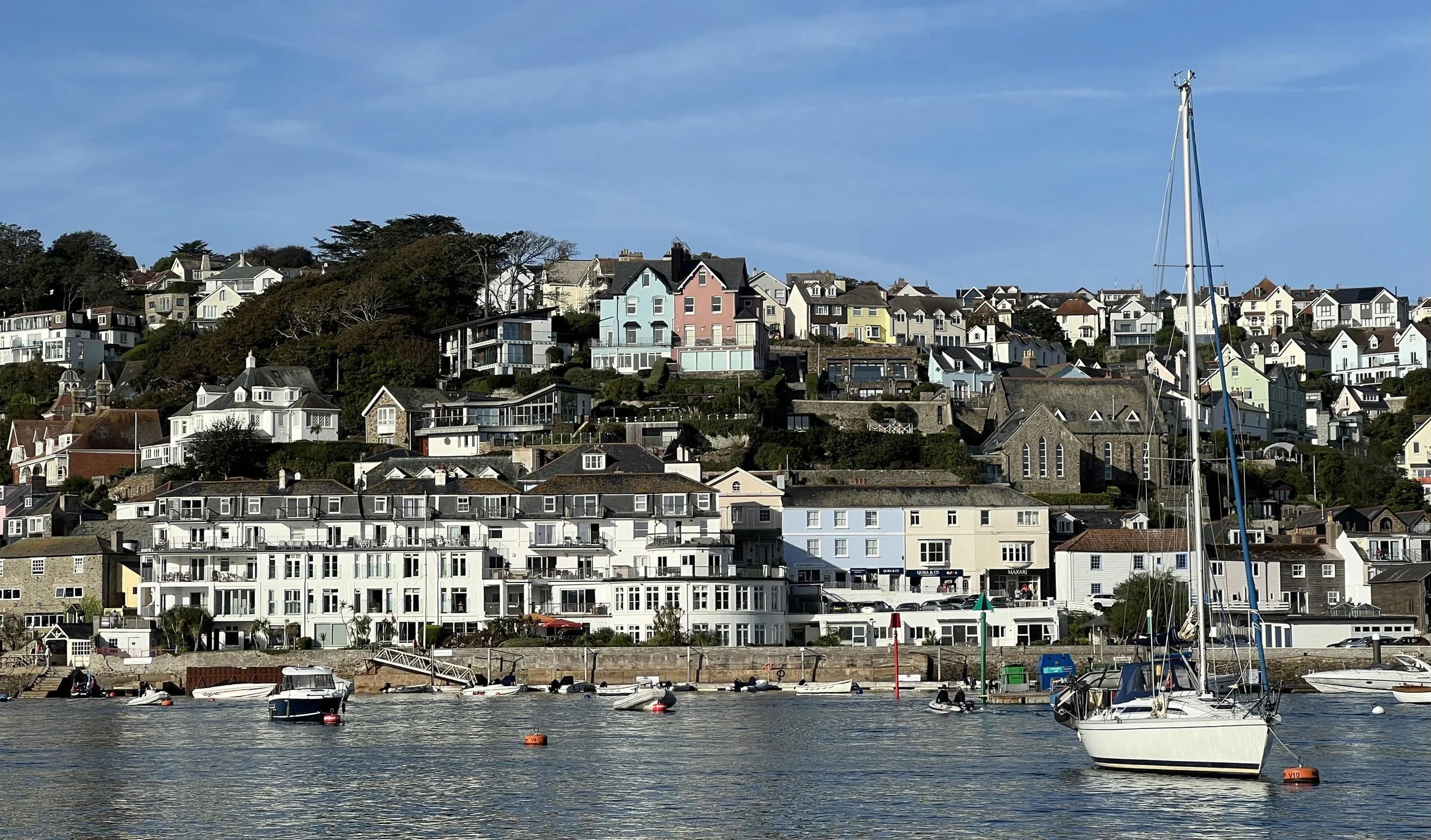
Salcombe waterfront.
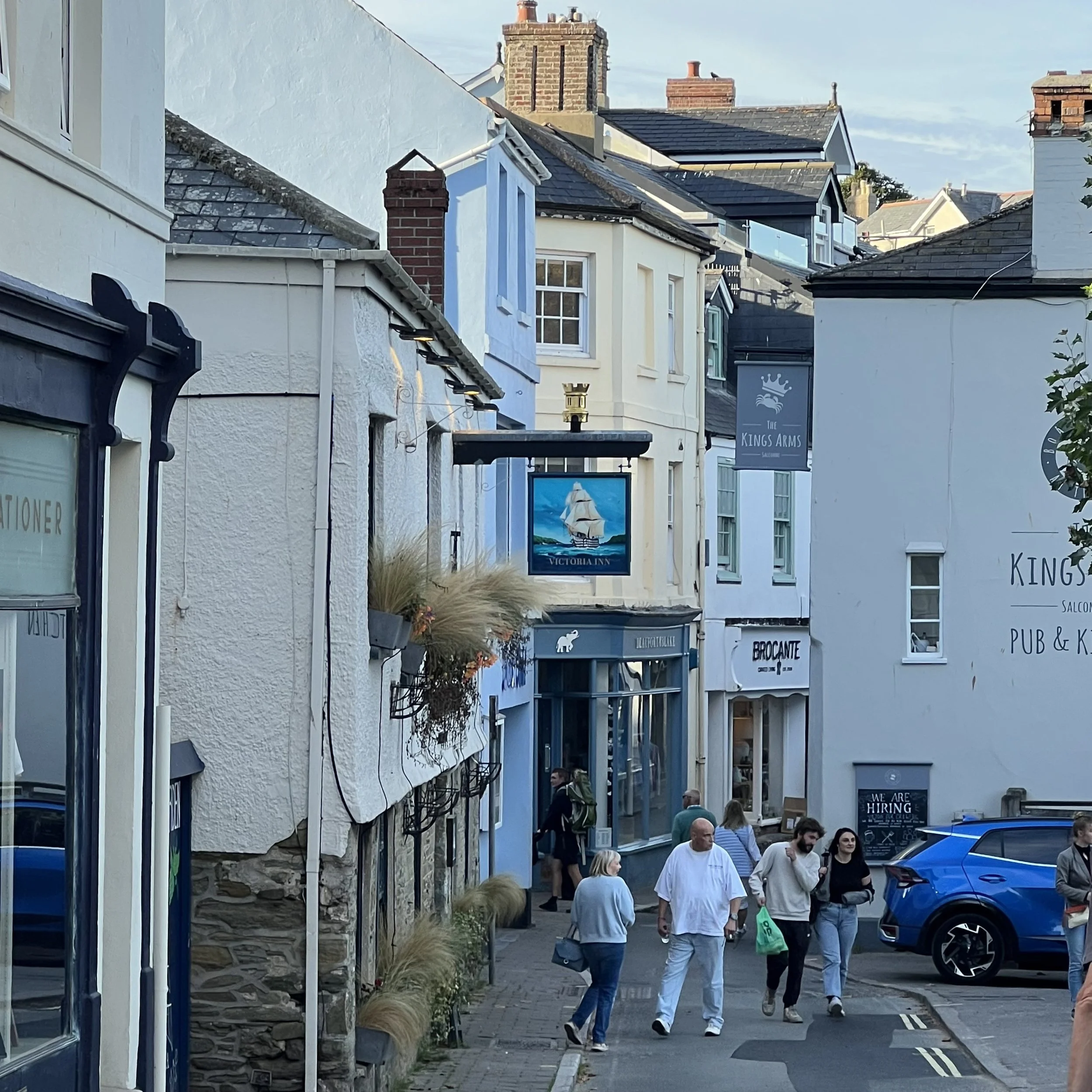
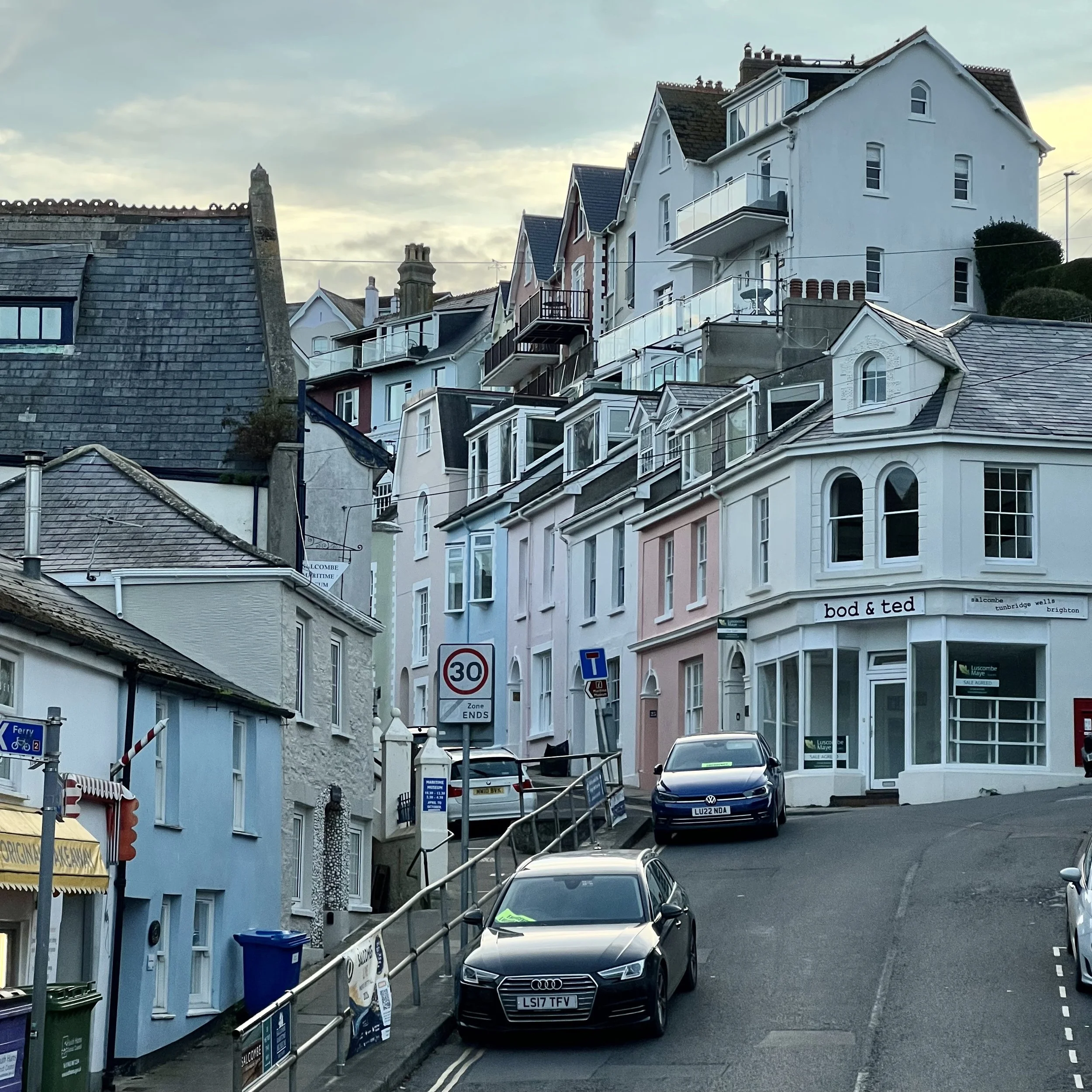
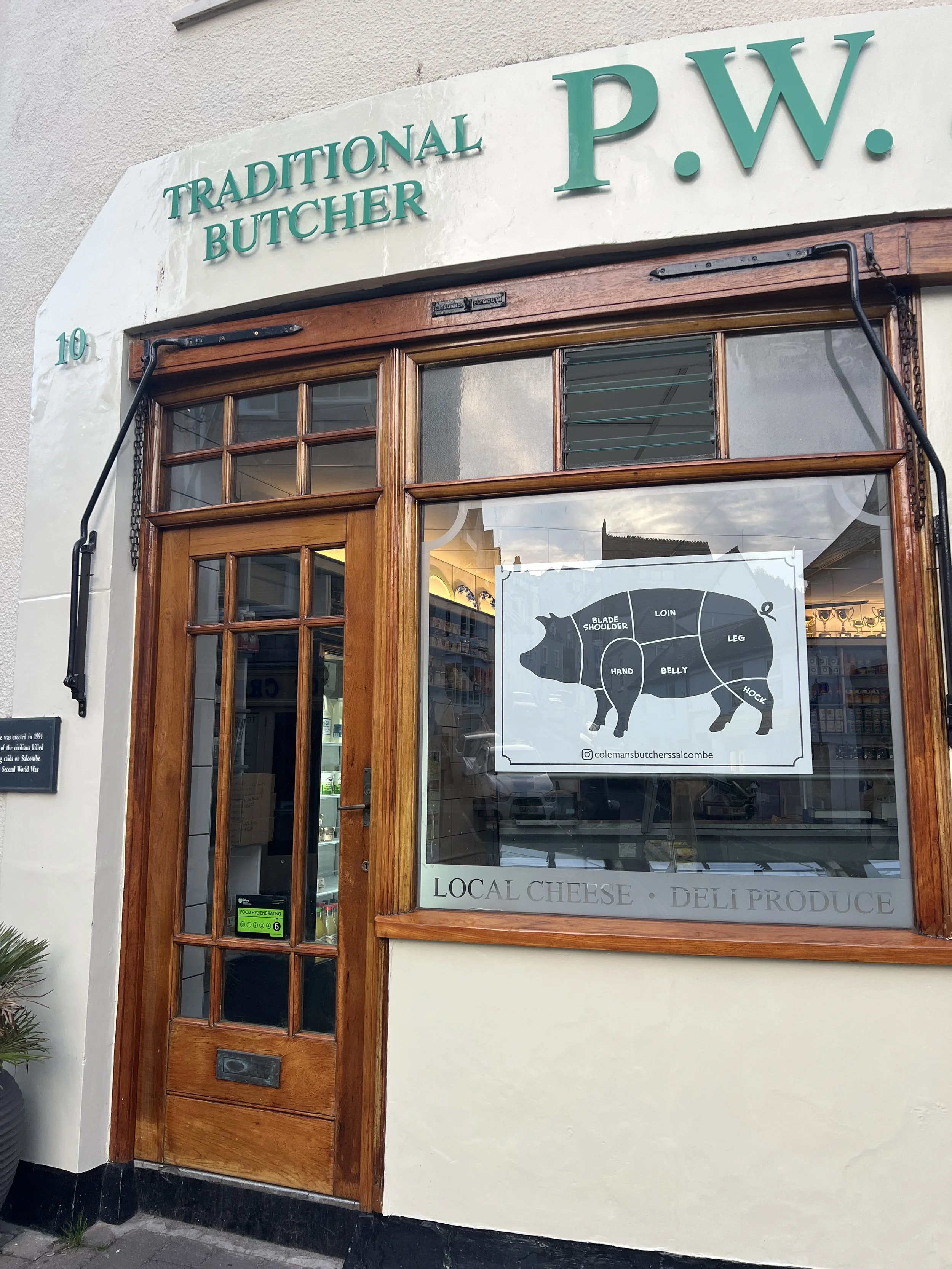
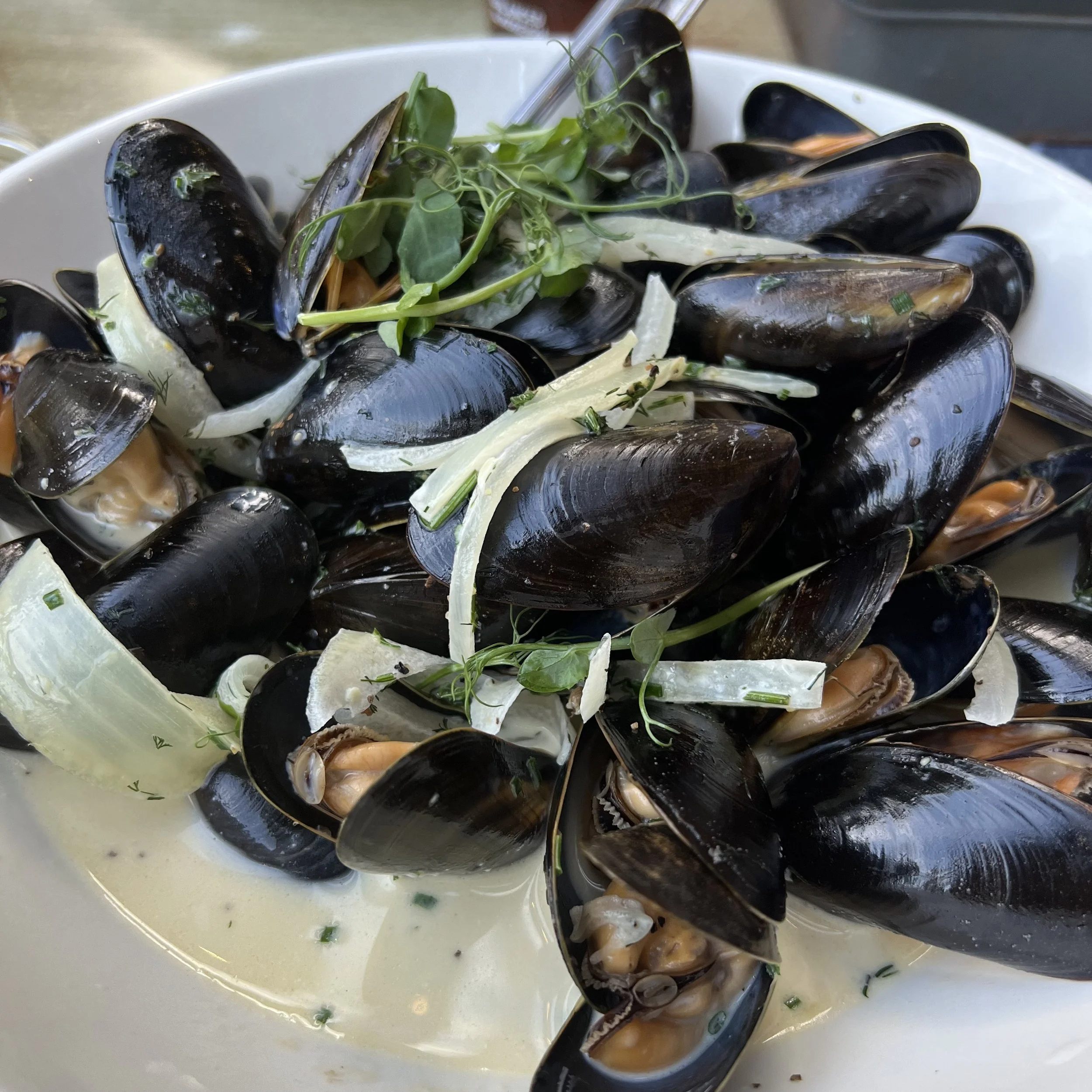
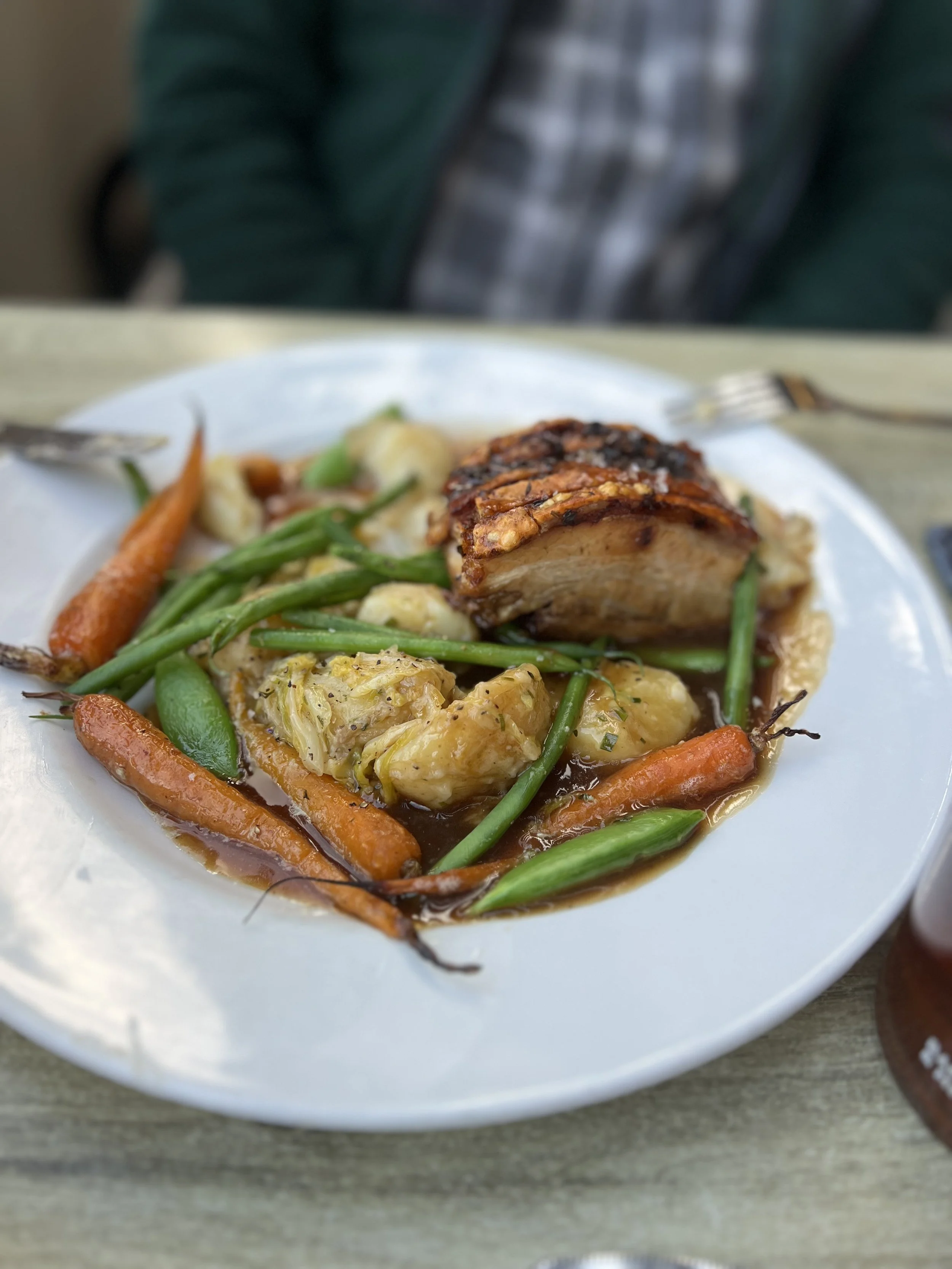
We treated ourselves to a meal out and the next day walked it off with a hike around the headland.
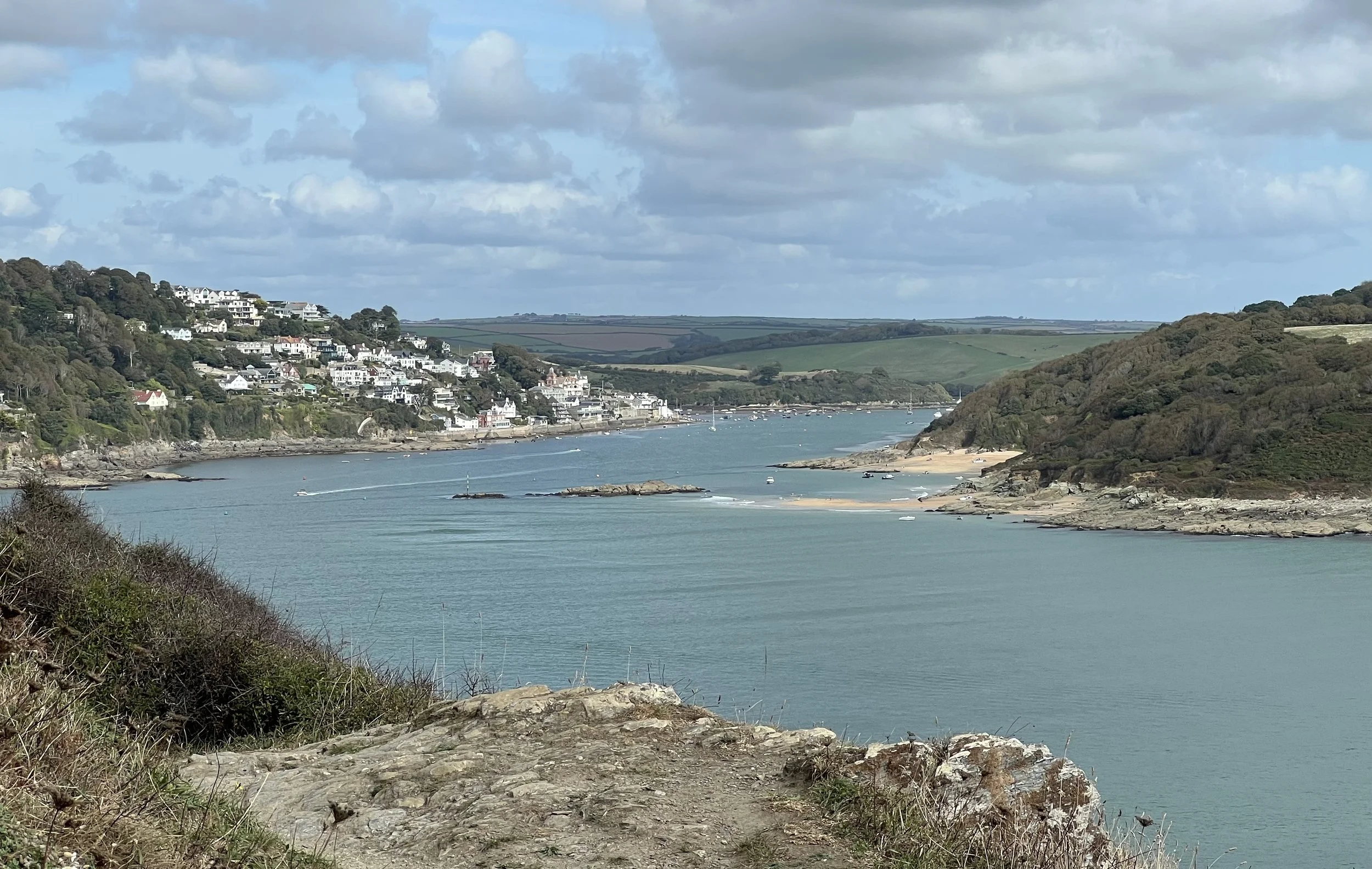
Looking inland toward Salcombe.
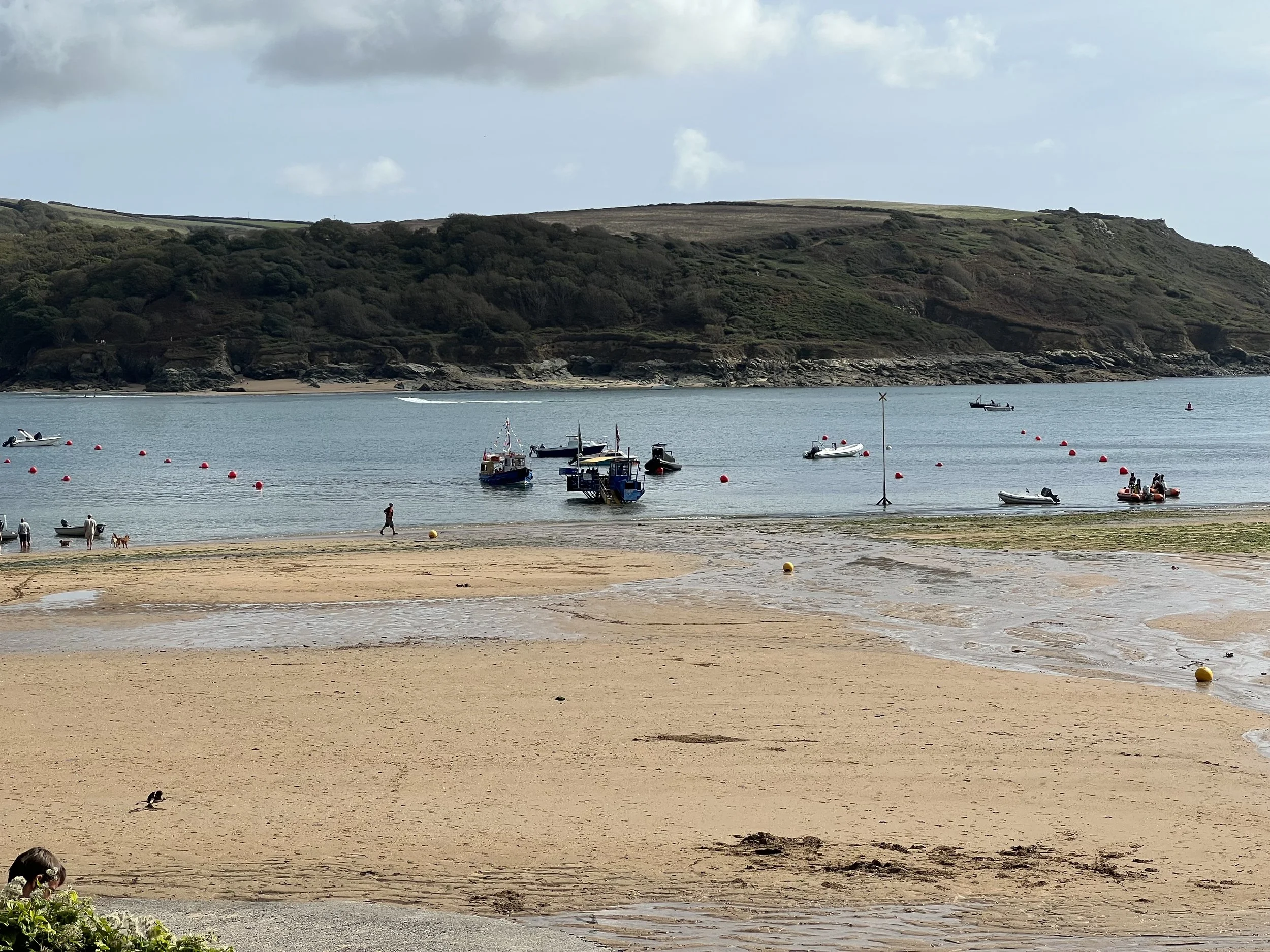
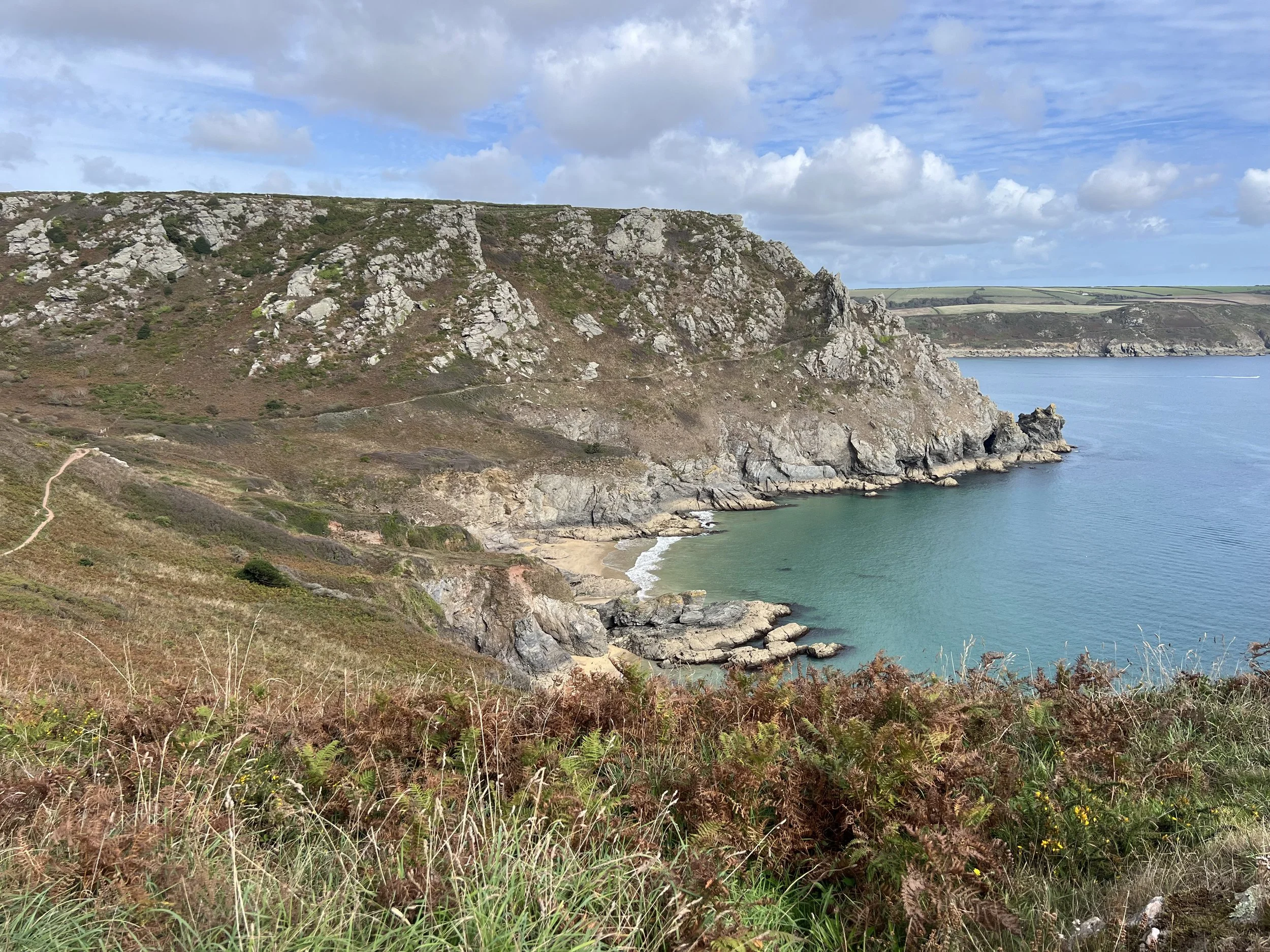
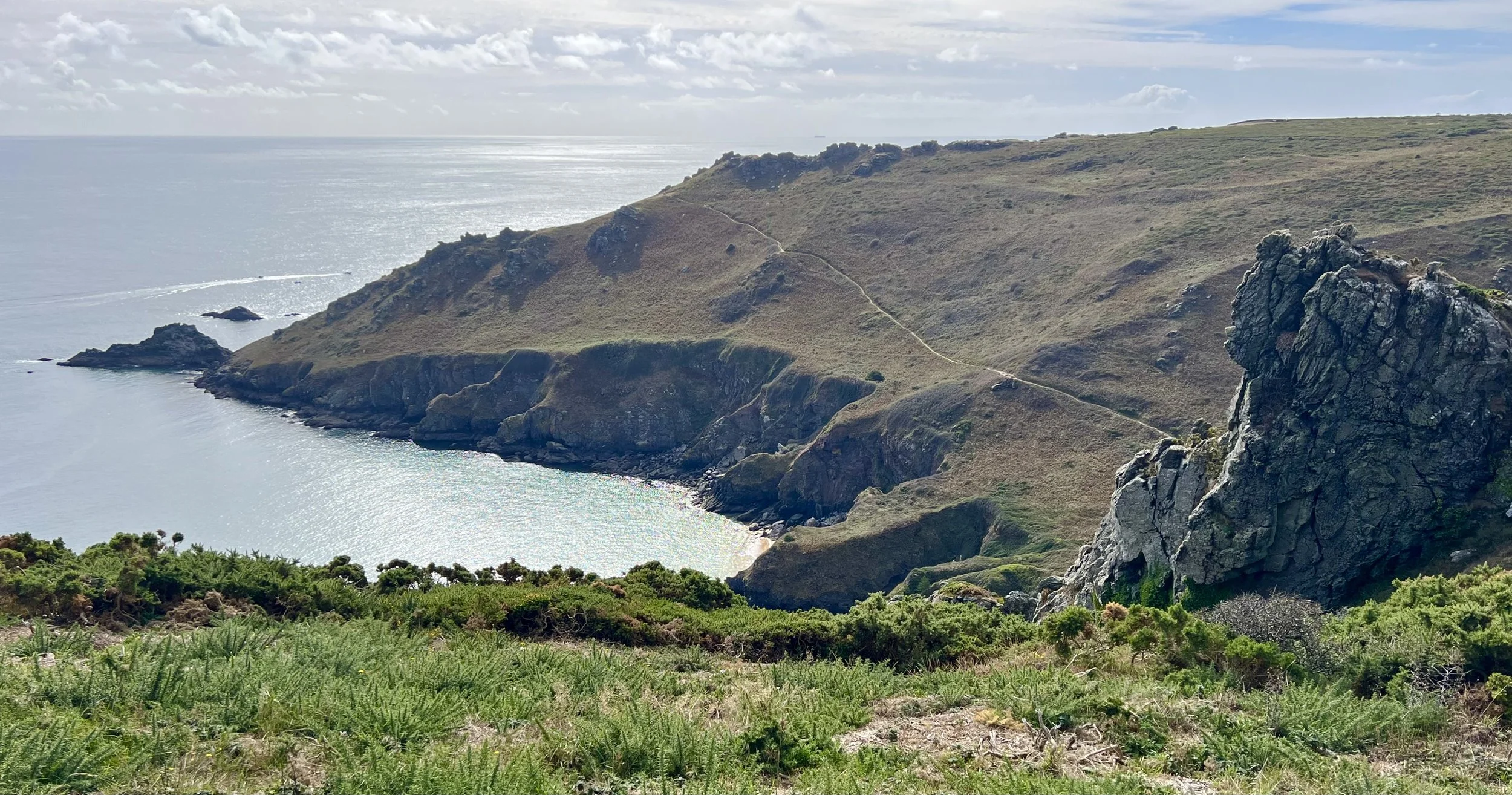
The tides are large and this sandy bay is filled with water at high tide. The ferry that brings guests from Salcome uses a tractor to ride them across the beach to and from the ferry. It looked like fun, so we rode the ferry home later that day.
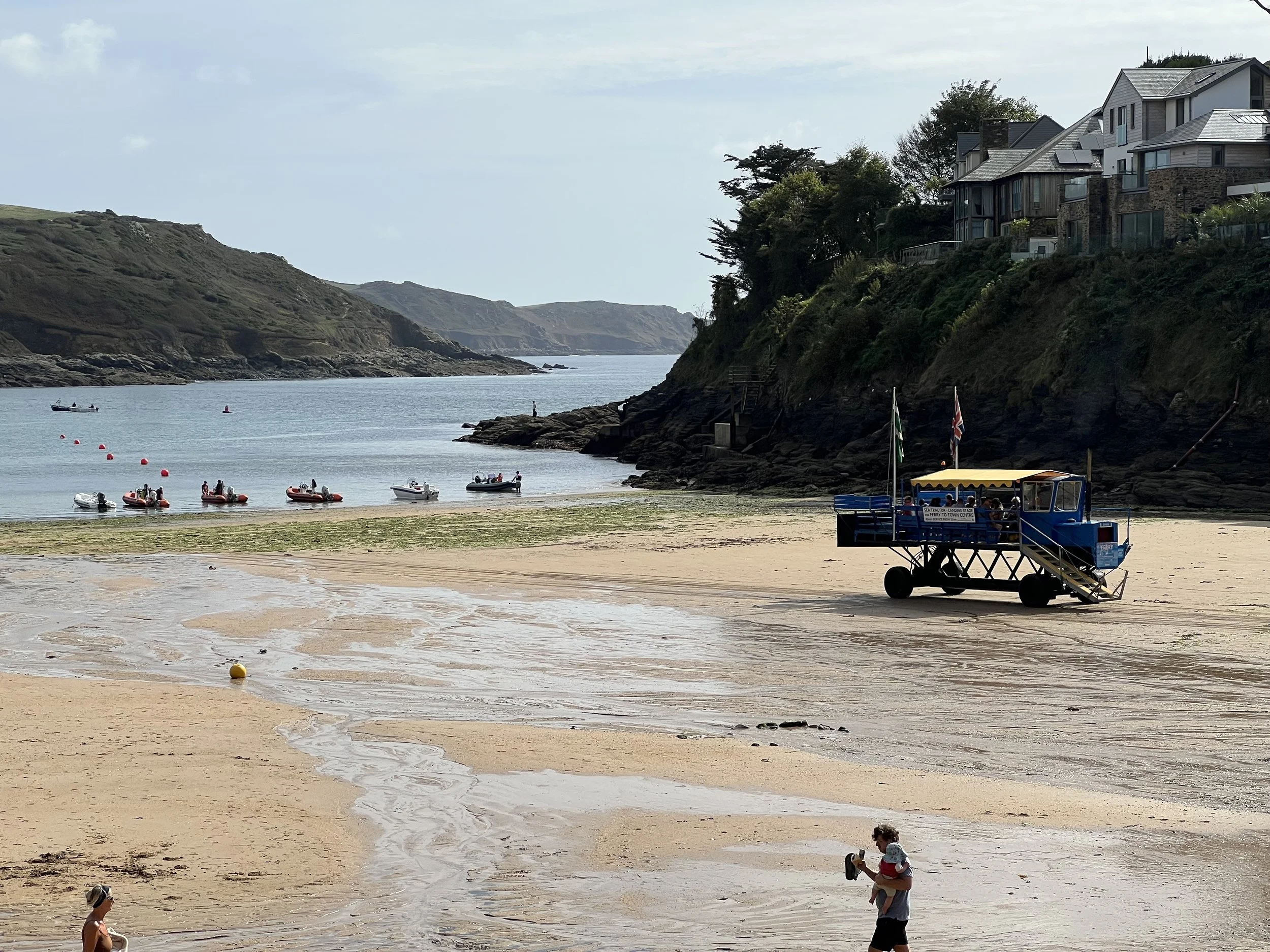
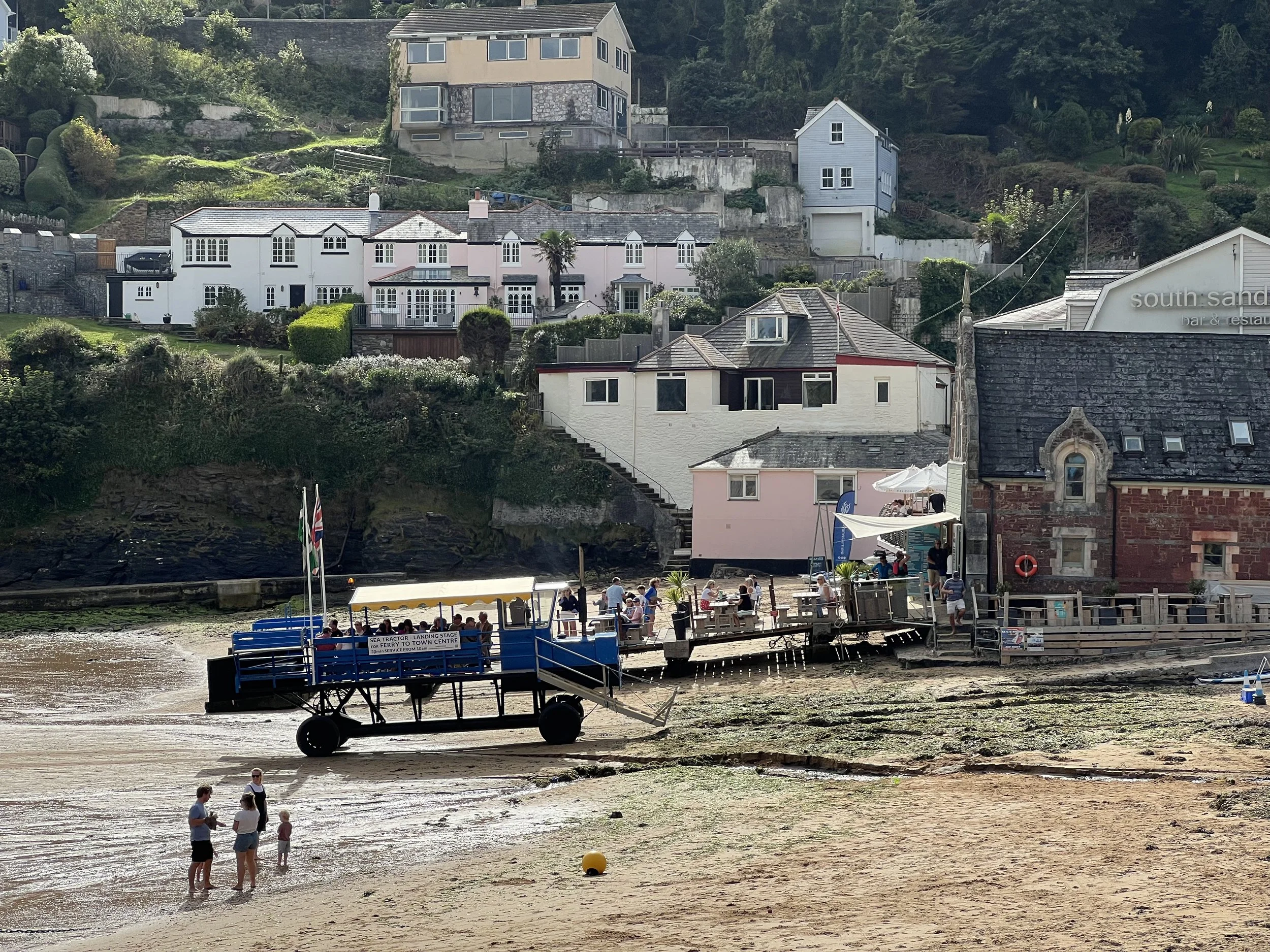
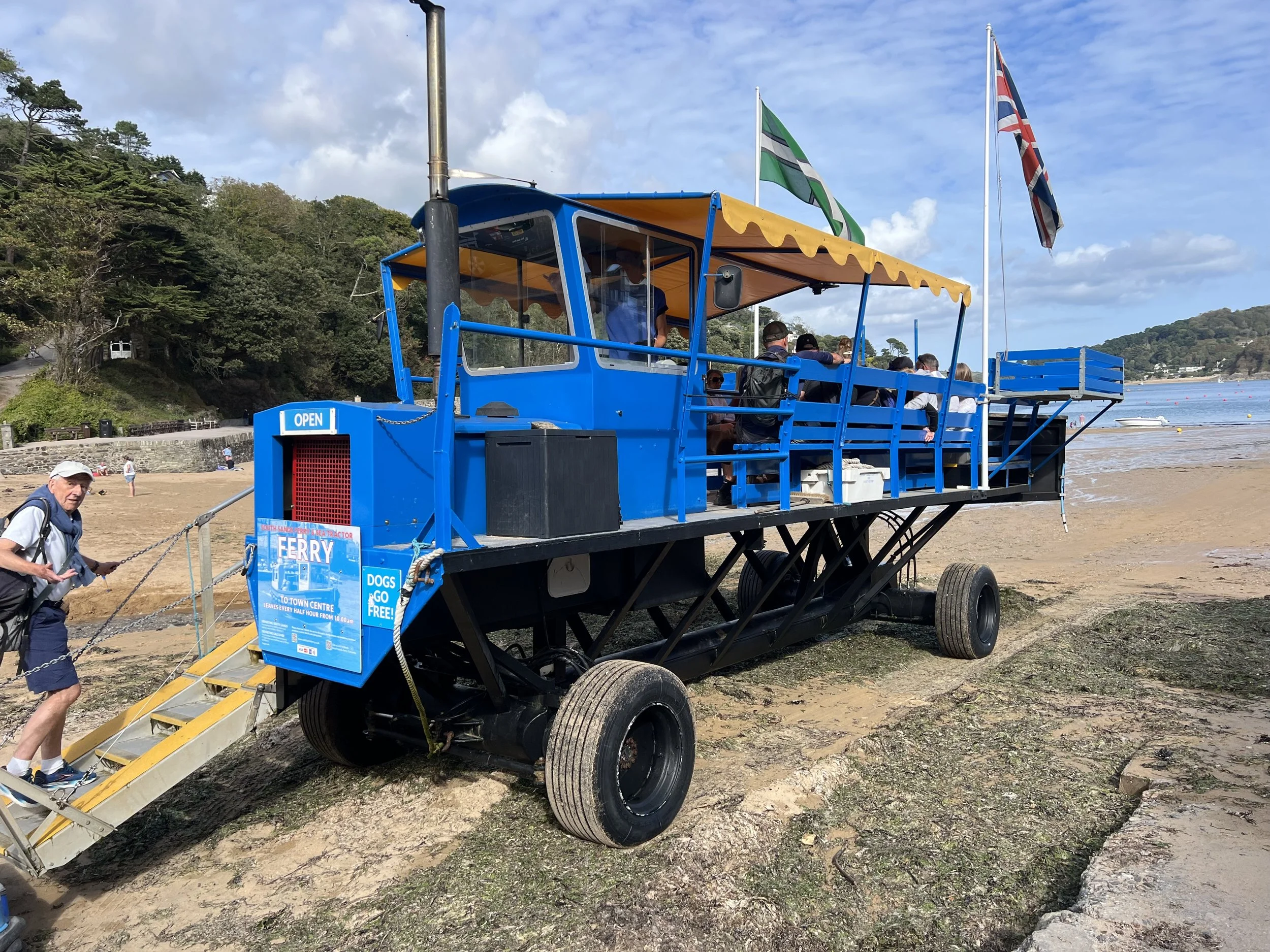
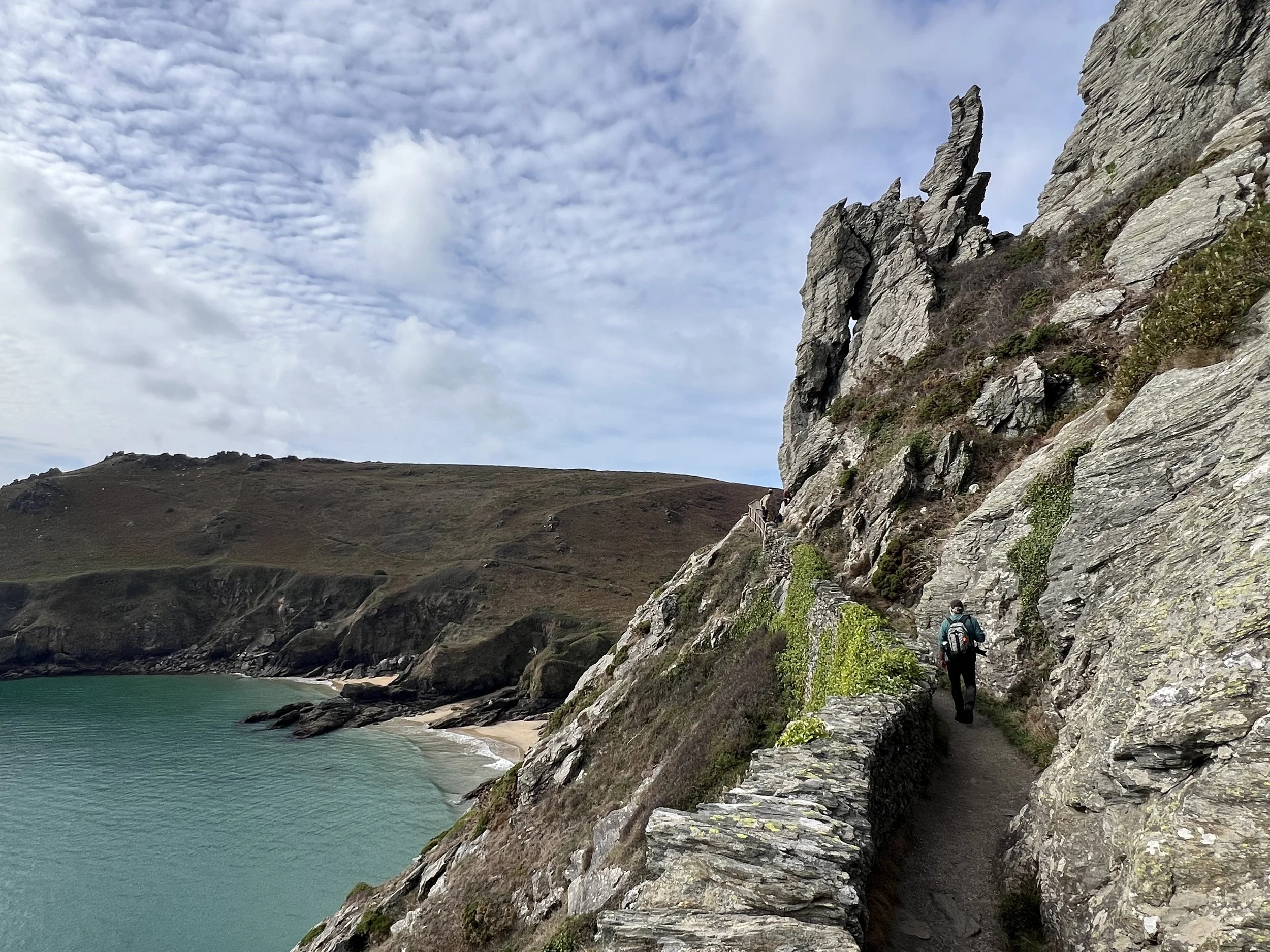
Back to the hike. The path was well marked, along the rocky headlands, past deserted coves and out to overlook the channel. The weather was perfect. It was a good day out.
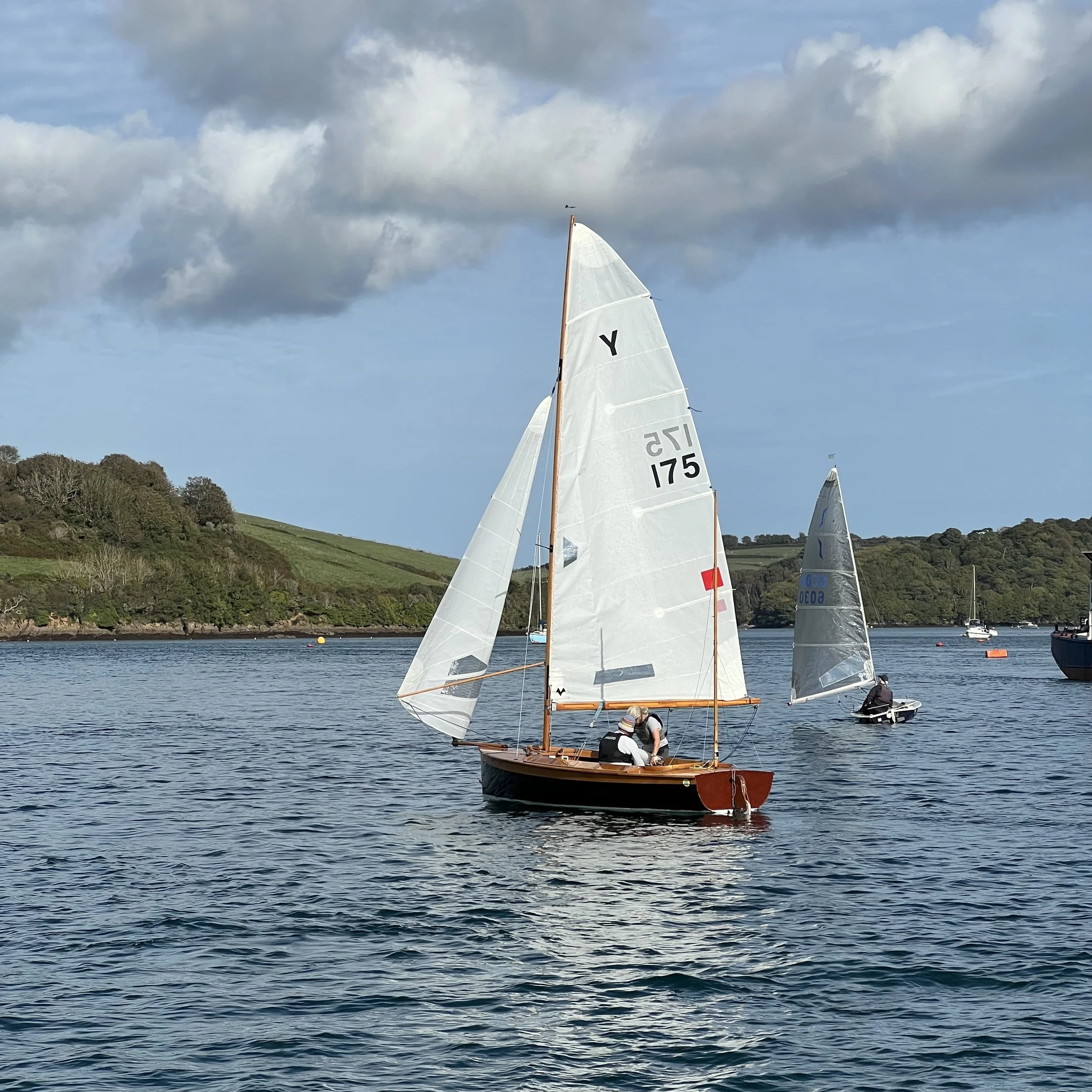
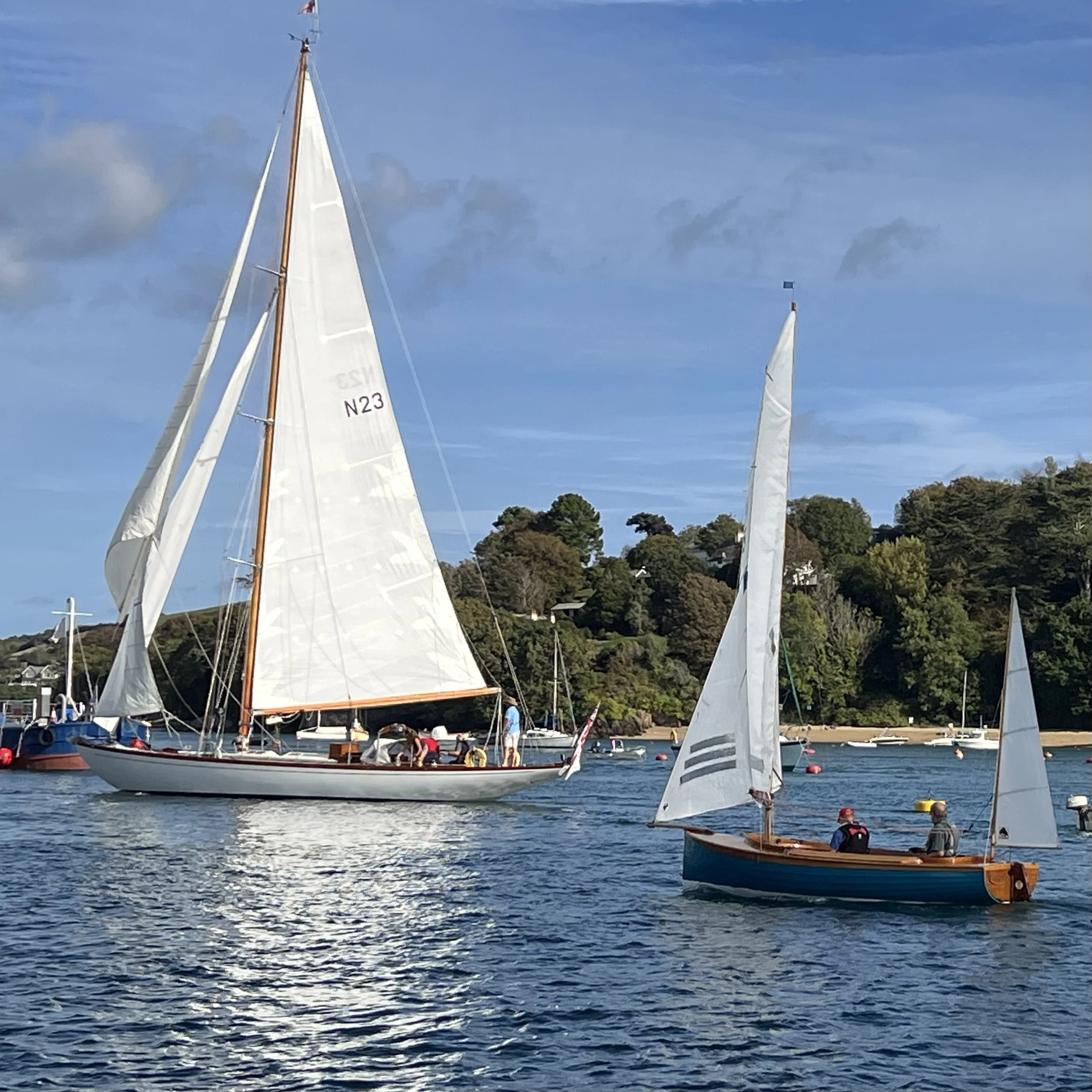
I always thought of Falmouth as a sailing mecca of sorts, but we saw more lovely classic boats out on the water, actually sailing, here in Salcombe.
The next stretch of coastline was tricky. We did not have the time, or inclination, to dawdle and visit every little bay and town. It was a long way from Salcombe to the notorious Portland Bill, where one of the UK’s strongest tidal races awaited us. Timing is everything, we wanted to be rounding Portland Bill with the tide and wind in our favor, otherwise things could get very lumpy, very fast. We started out with good wind on the beam, 22-25kt, pushing us along at close to hull speed. In the late afternoon however the wind died just as we approached the race and our speed dropped. We chose to pass the tip of Portland some 5 miles offshore to avoid the worst of the currents, it was still quite a boisterous ride without the help of the wind in our sails. Instead of tucking into the anchorage at Portland which would have entailed a hard left turn and fighting the current to get behind the breakwaters, we continued on and dropped the anchor in Studland Bay in the dark. We were lucky, there was only one other boat so there was plenty of space and we were clear of the buoys that we could pick out with our strong flashlight. The following morning as we left we motored close to the buoys only to read “sea grass protection zone, do not anchor”. Sorry!
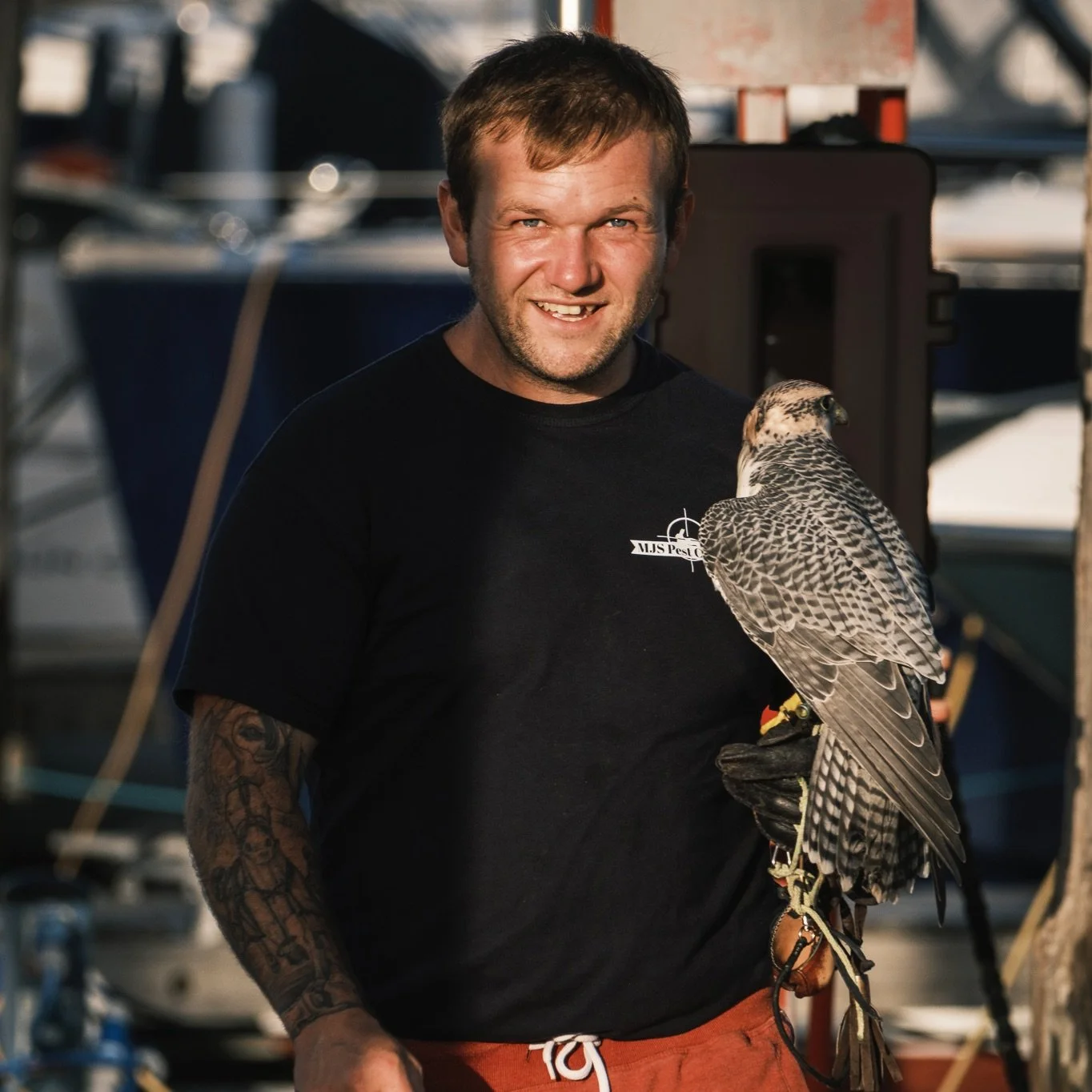
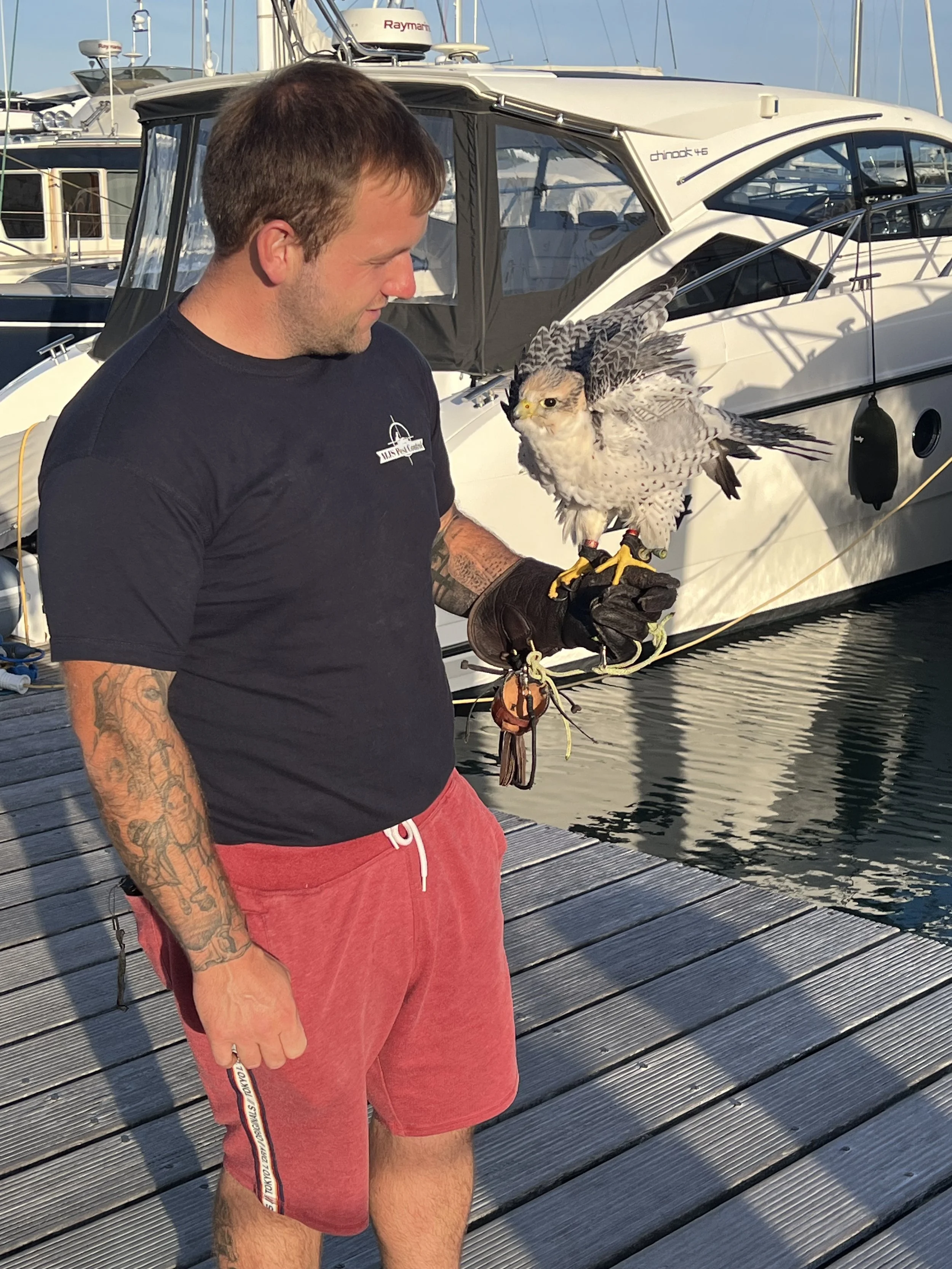
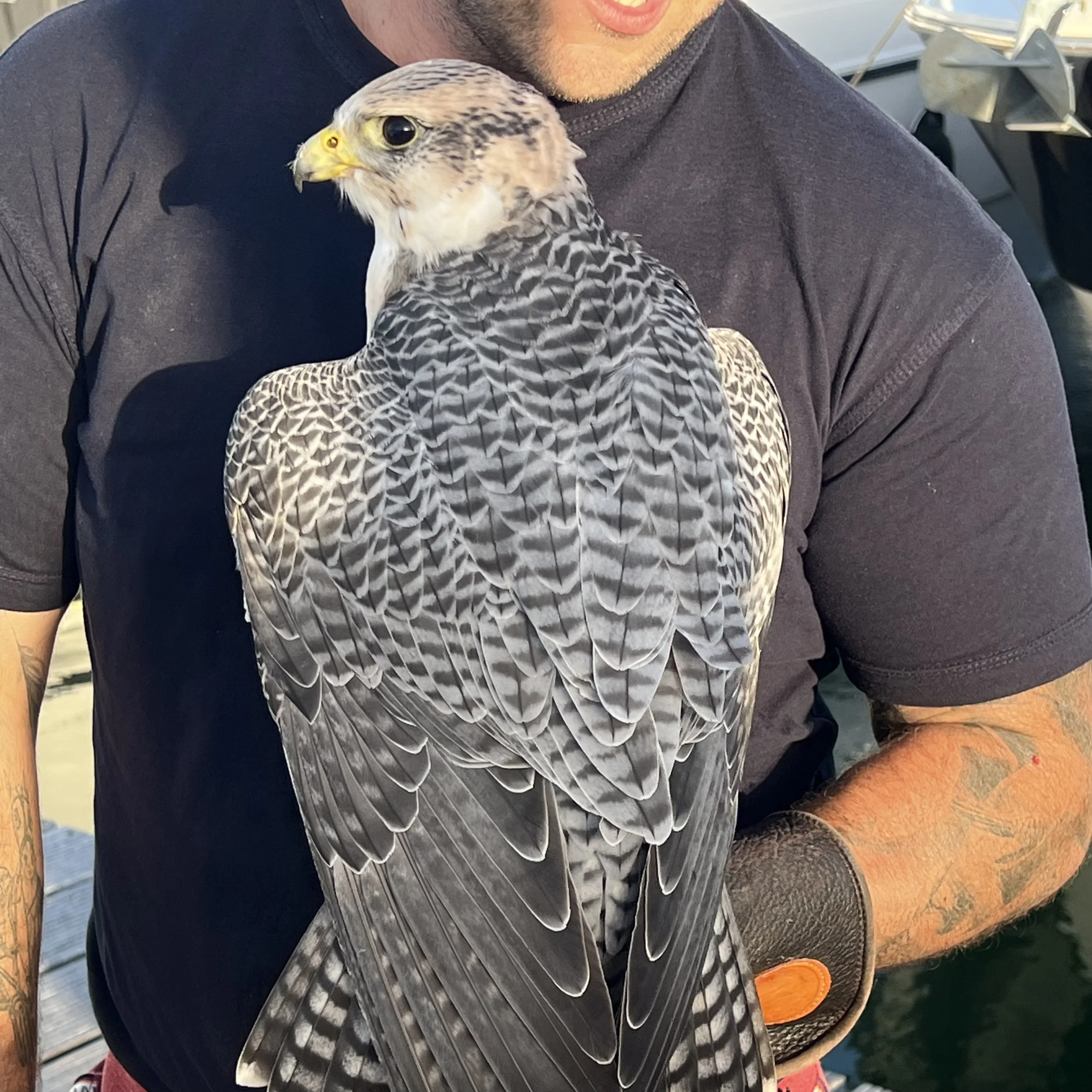
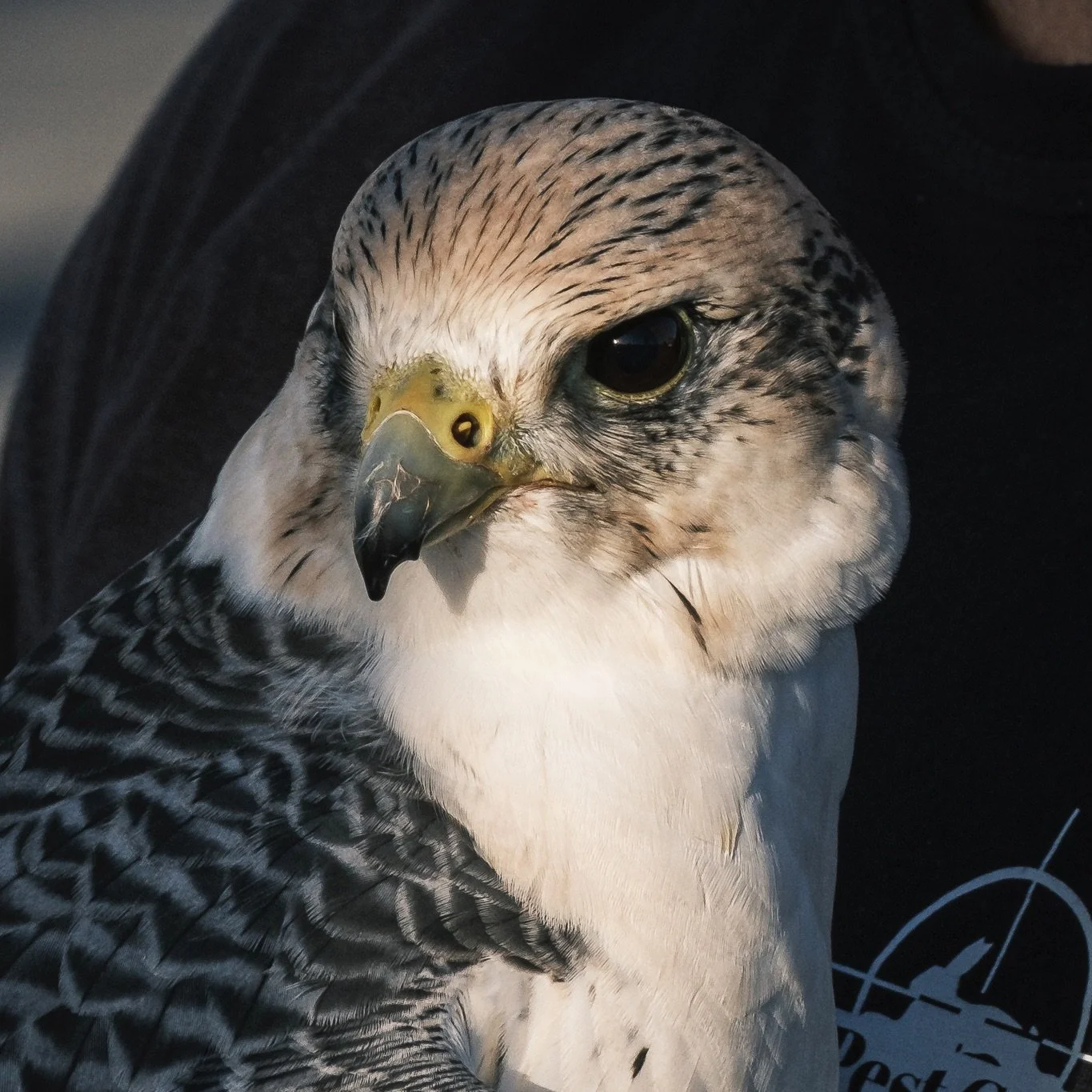
We made the short hop into the Solent and stayed at Berthon marina in Lymmington for a few nights. Here we caught up with Paul, who we had originally met in the Faroes and Iceland last summer. We also got up to date with family news after meeting with Tracy and Ray for dinner one evening. Berthon is a lovely marina, well protected, up the river at Lymington. The fanciest marina bathrooms we have seen. The town is quaint and close by and there are nice trails across the marshes and country lanes. The docks were also very clean, kept free of seagull activity by the presence of Danny and Apollo who visit three times a week and simply walk around. Apollo is a Gyr-Lanner hybrid falcon, quite beautiful. Could this be a possible place to spend another winter?
Moving on, the weather promised a steady 14-17kt wind to help us make the next long jump to Eastbourne. Quite a long day, over 75nm, but with the predicted wind, perfectly feasible.
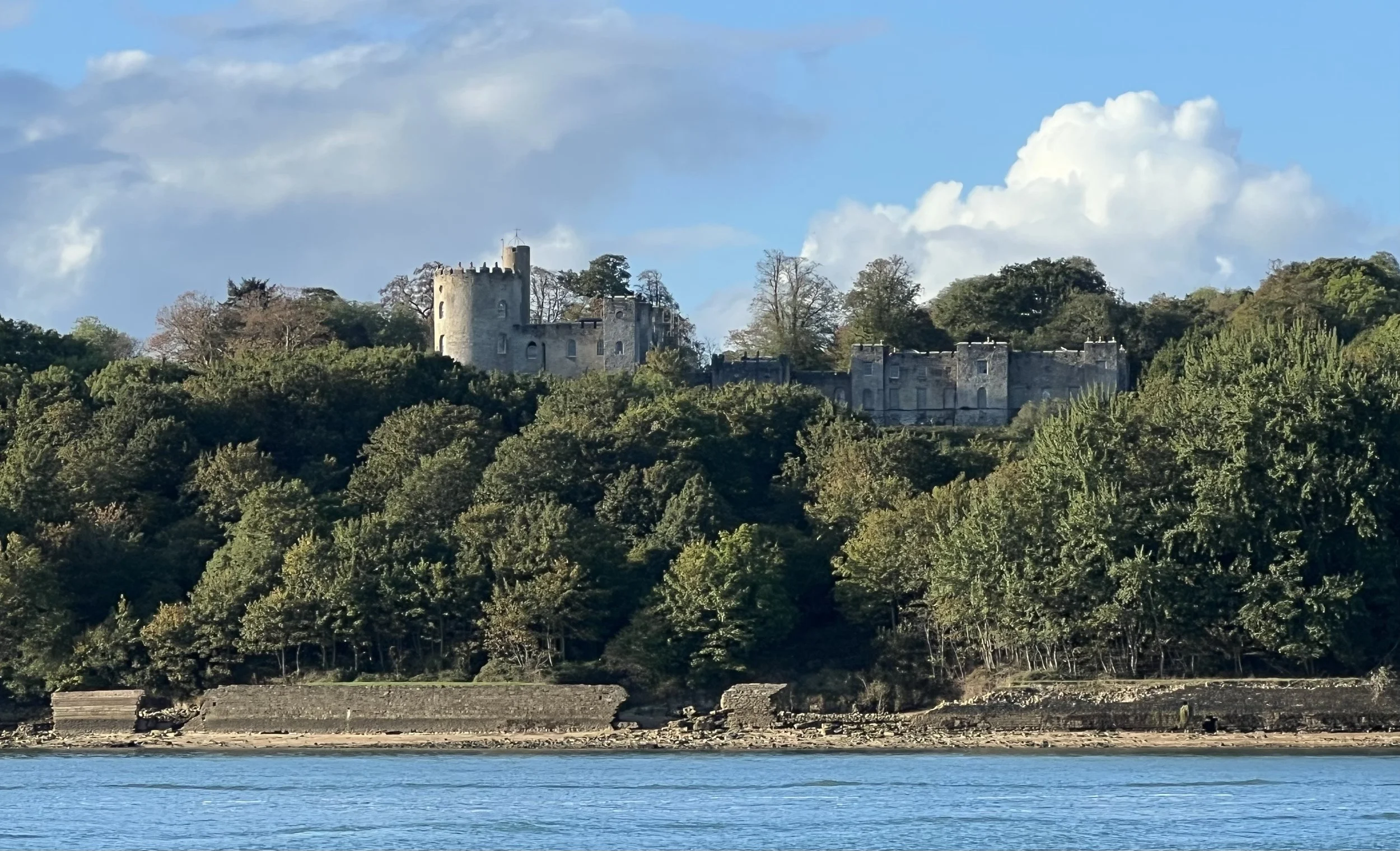
Passing Norris castle on the Isle of Wight. Below, the strong currents off Cowes, and Spitbank fort off Portsmouth Harbour.
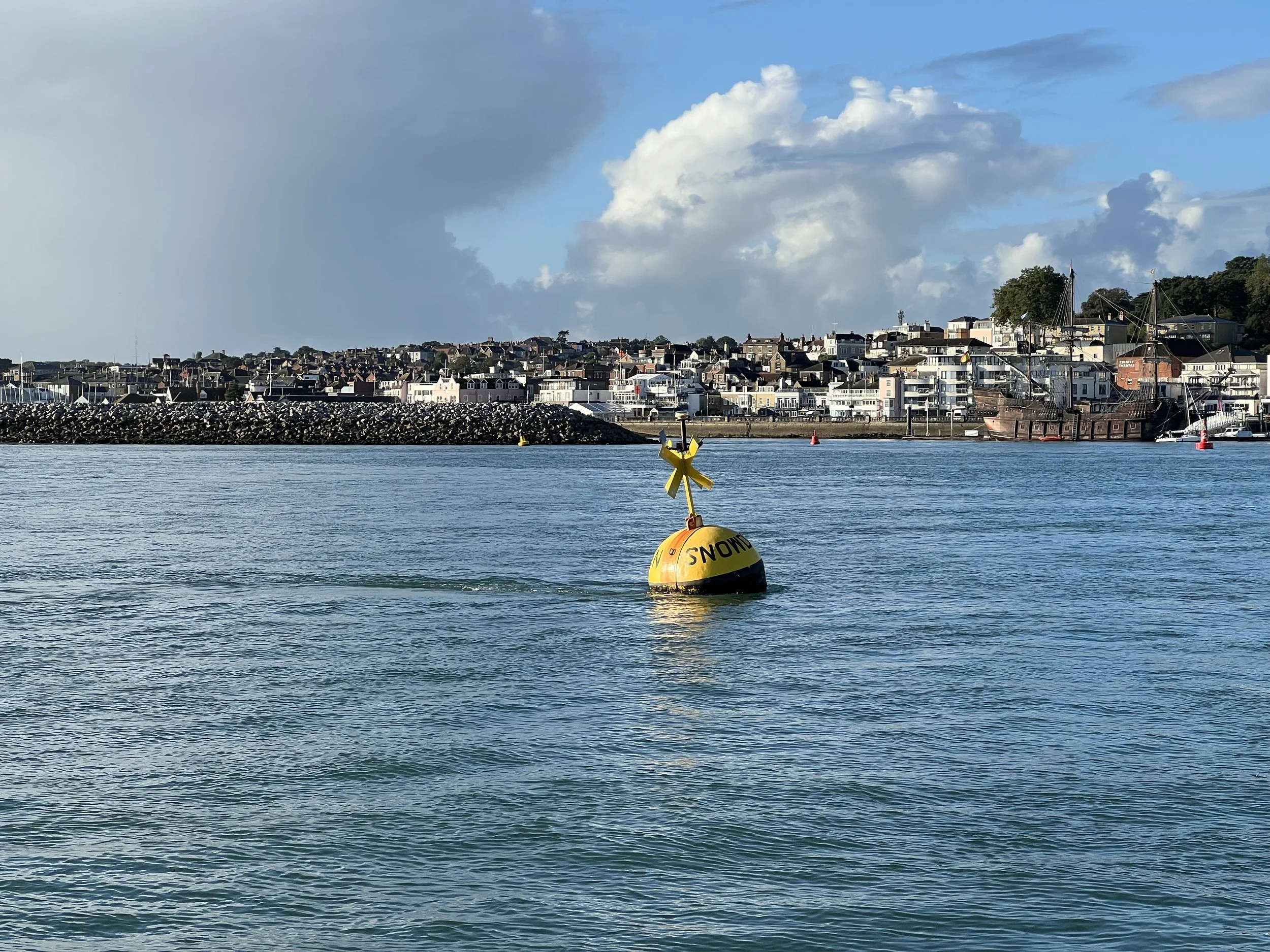
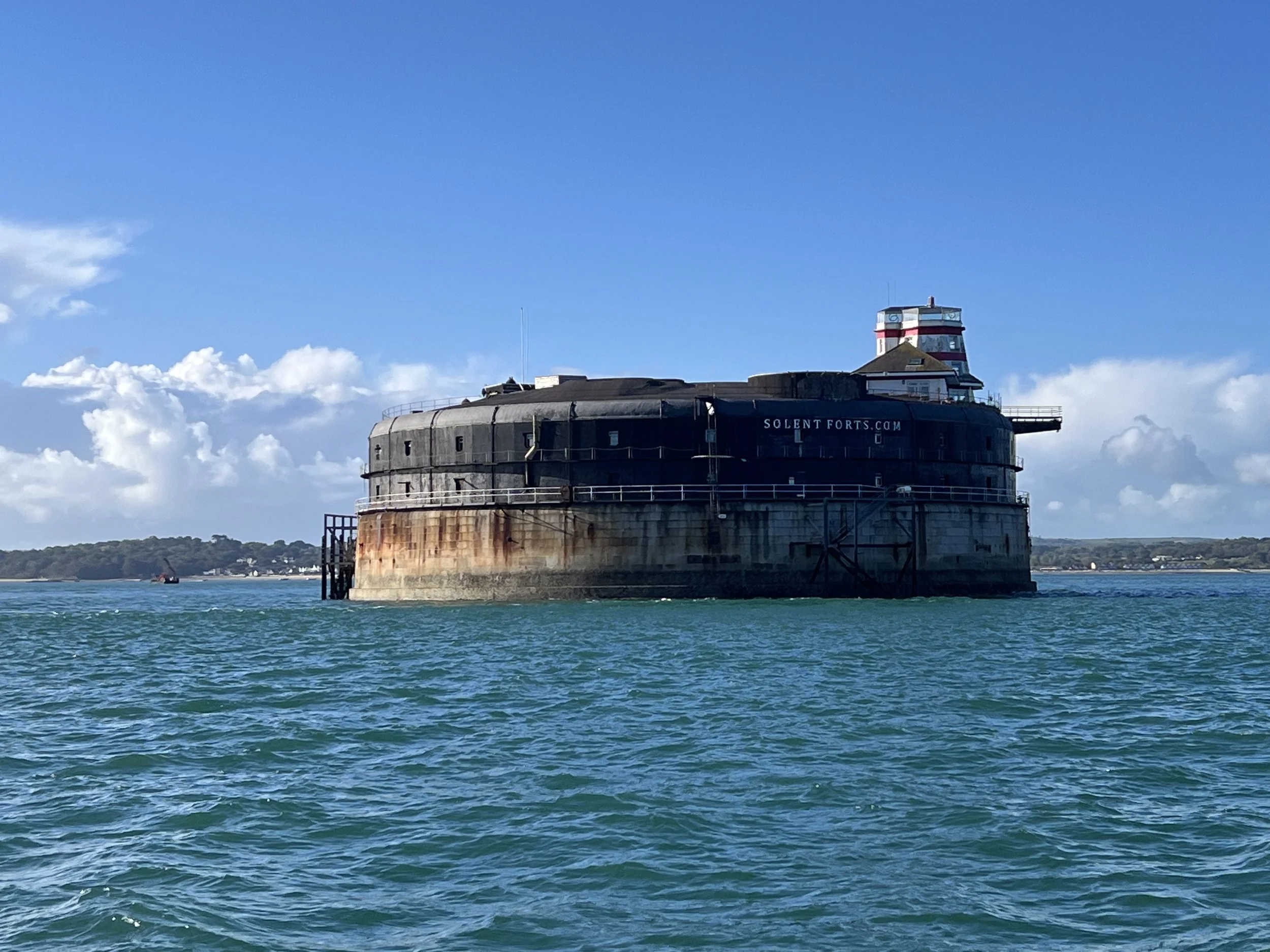
Unfortunately the wind never filled in, and we motored until mid afternoon when finally it caught up and we sailed in to Brighton marina just as the sun was setting, cutting our journey short by about 20nm. The next day we left at 6.30am to catch the favorable tide to jump on to Dover. The winds were steady, and the sea state calm. It turned out to be one of the best sails we have had in a long time. The coastline along here is lovely, passing Beachy Head, the sheer cliffs pure white and lit by the sun.
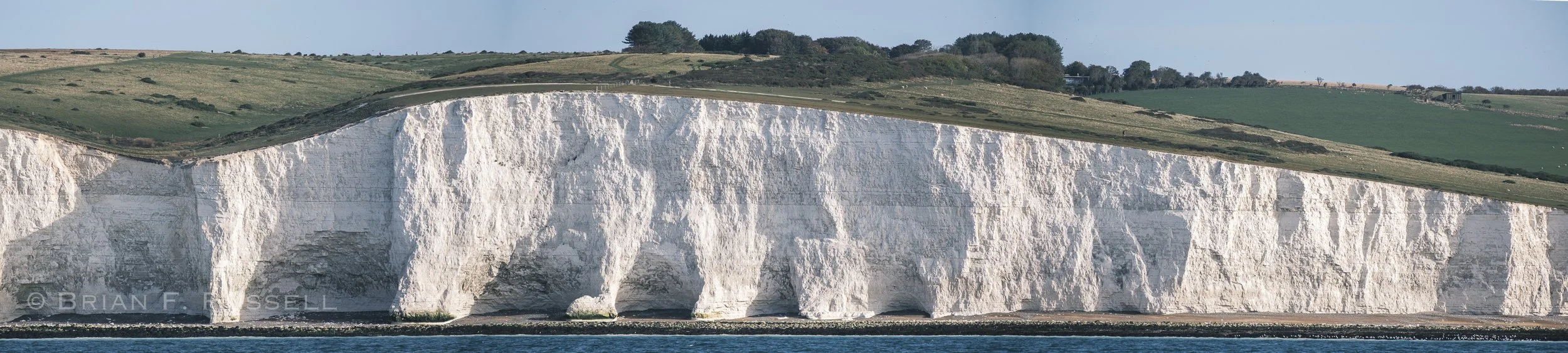
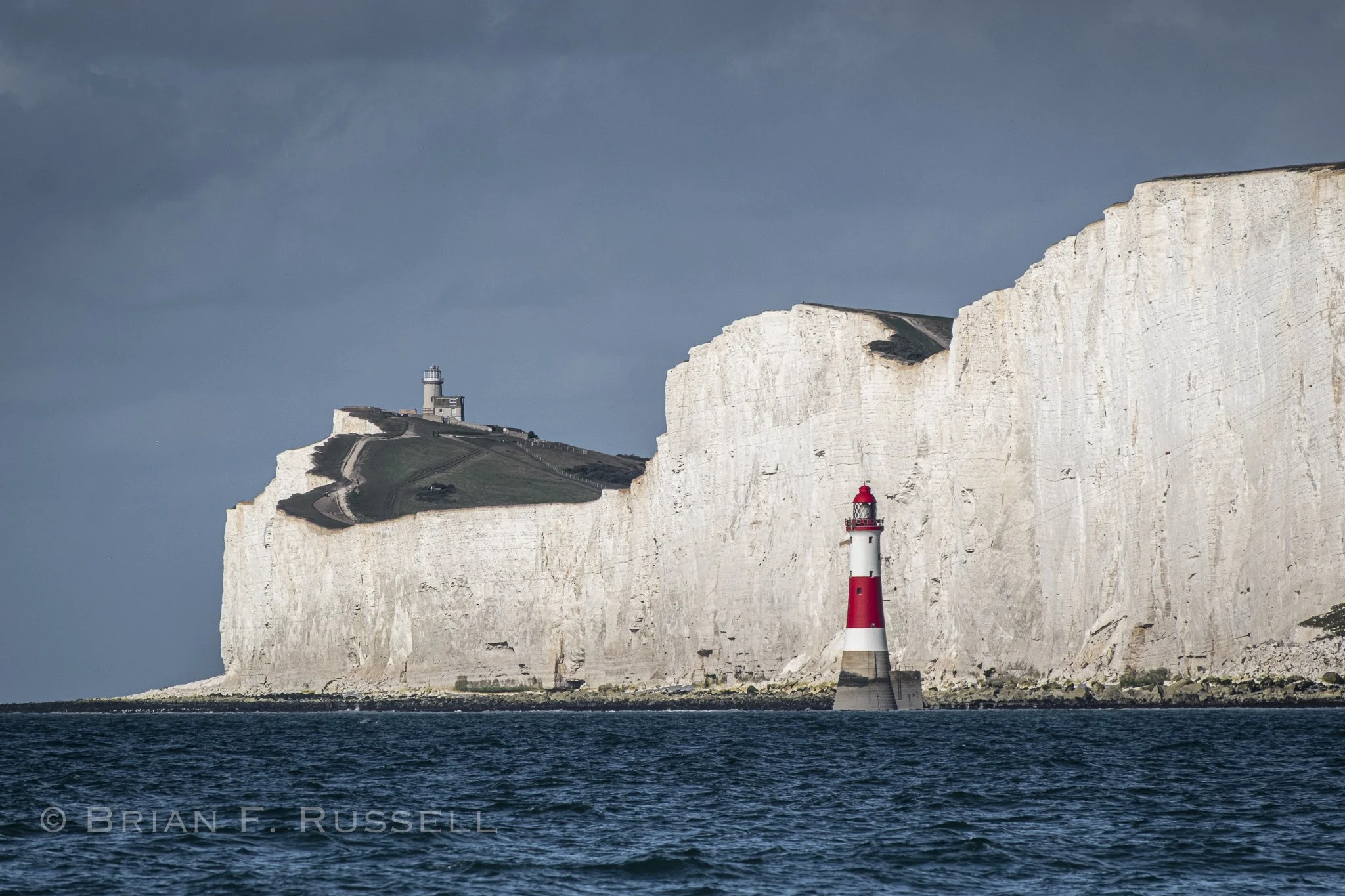
Beachy head cliffs and lighthouse.
There was no wind for a couple of days, so we stayed in Dover rather than motoring the final stretch. We were still ahead of our targeted arrival date in London of the middle of October, but that was not a bad thing. The weather for the following week looked particularly nasty, so we were quite content to arrive a little early and get settled into our winter home.
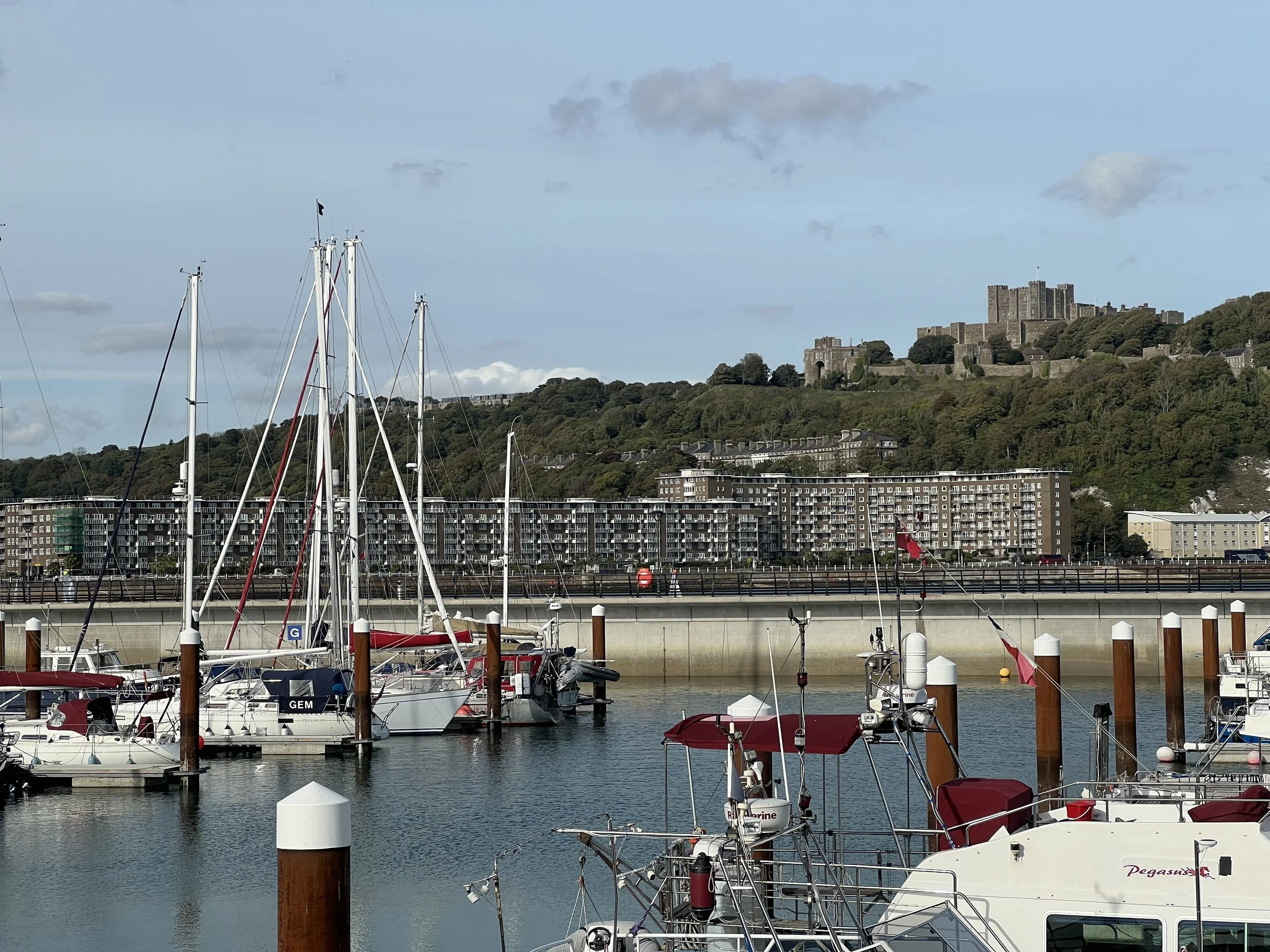
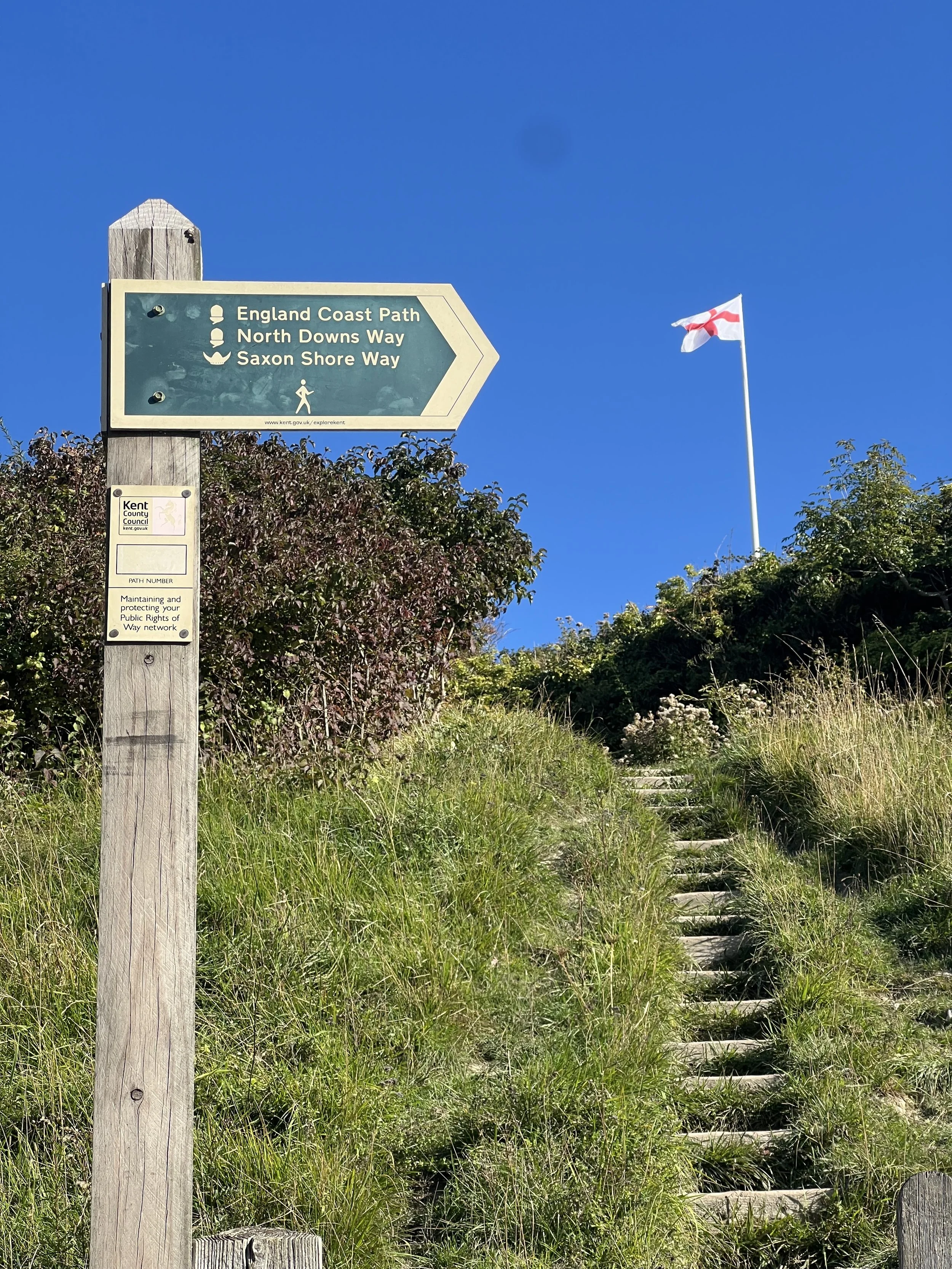
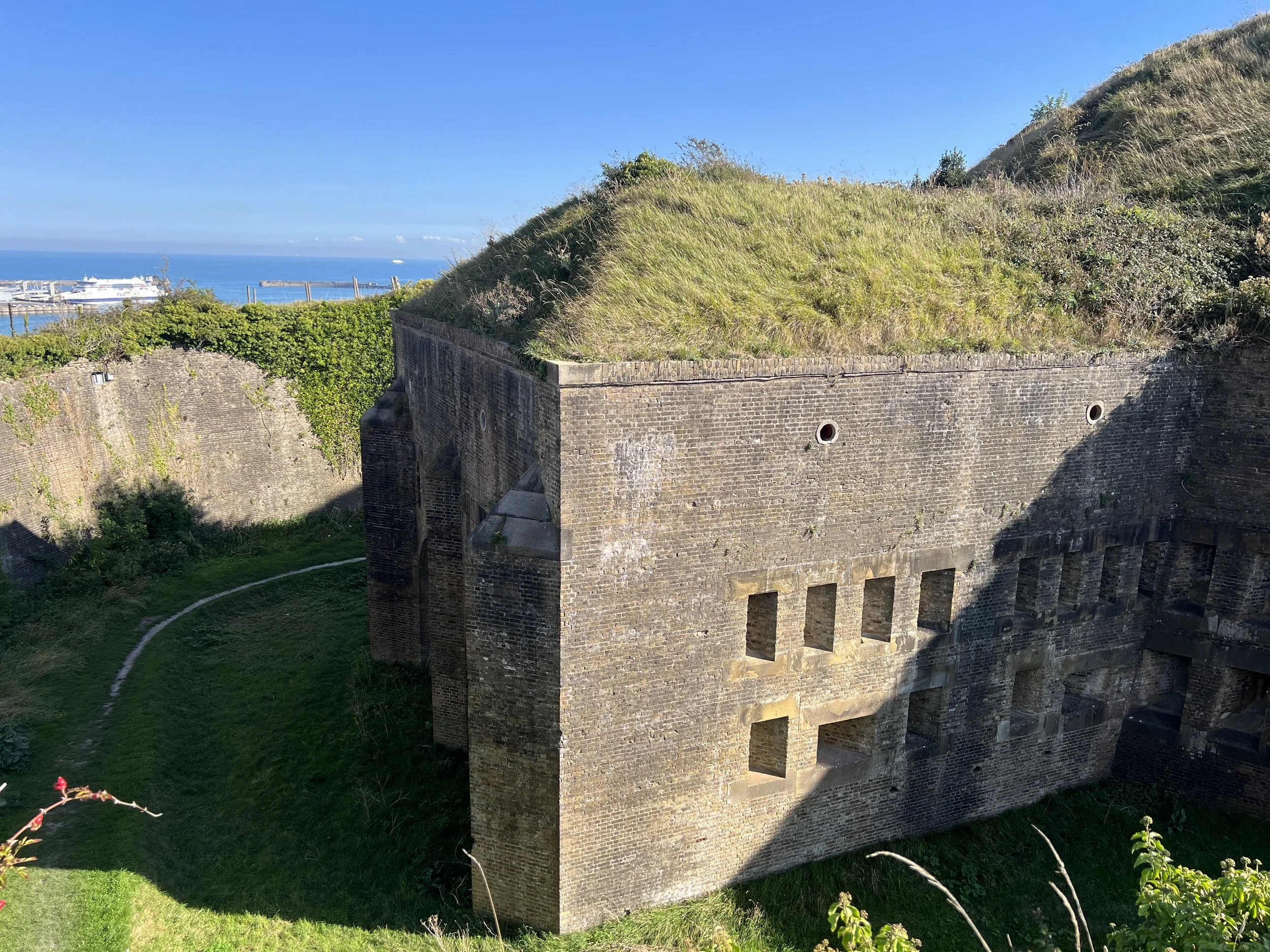
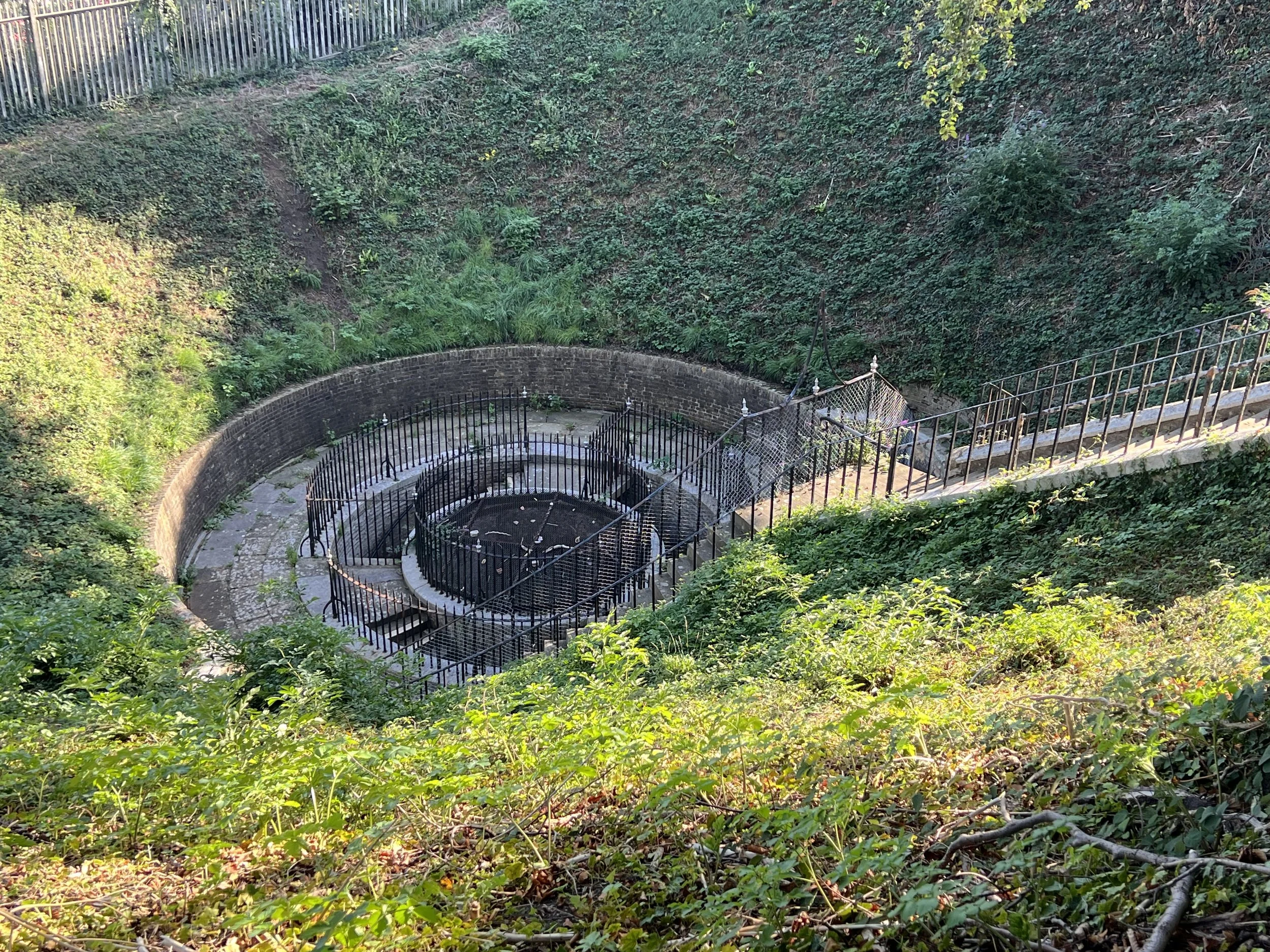
We walked on the hills overlooking the marina and got lost in the maze of paths around the old WW2 abandoned fortifications. An old stairwell to the bottom of the cliff looked like the entrance to the underworld.
From Dover it was a day sail around into the Thames estuary. As we had made use of the tides when leaving Dover, we now arrived in the Thames estuary at low tide. There are multiple very shallow sandbanks with deeper channels used by the shipping traffic. We chose to stay in those rather than squeezing through the sandbanks as we had done previously when we left the Thames at high tide in spring last year.
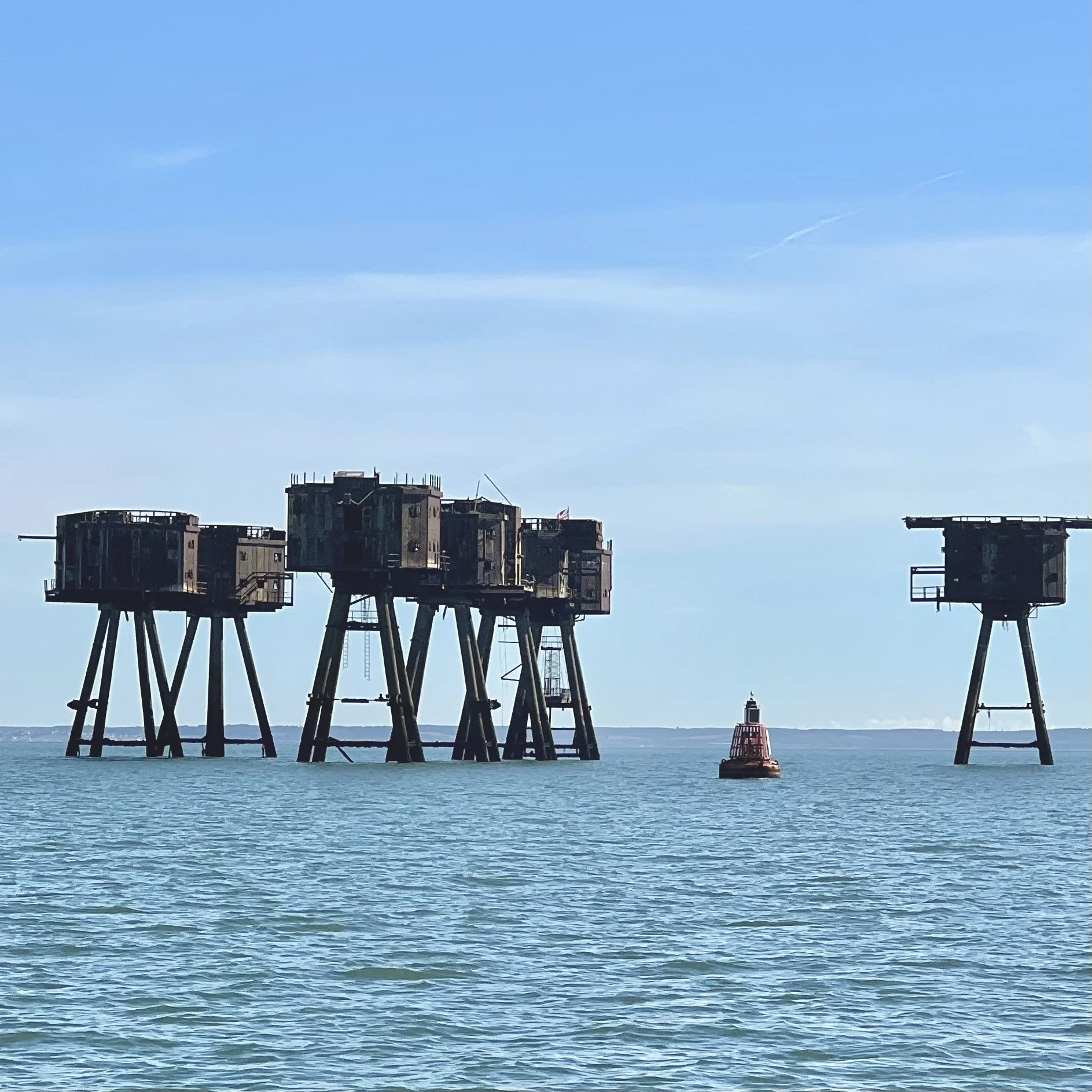
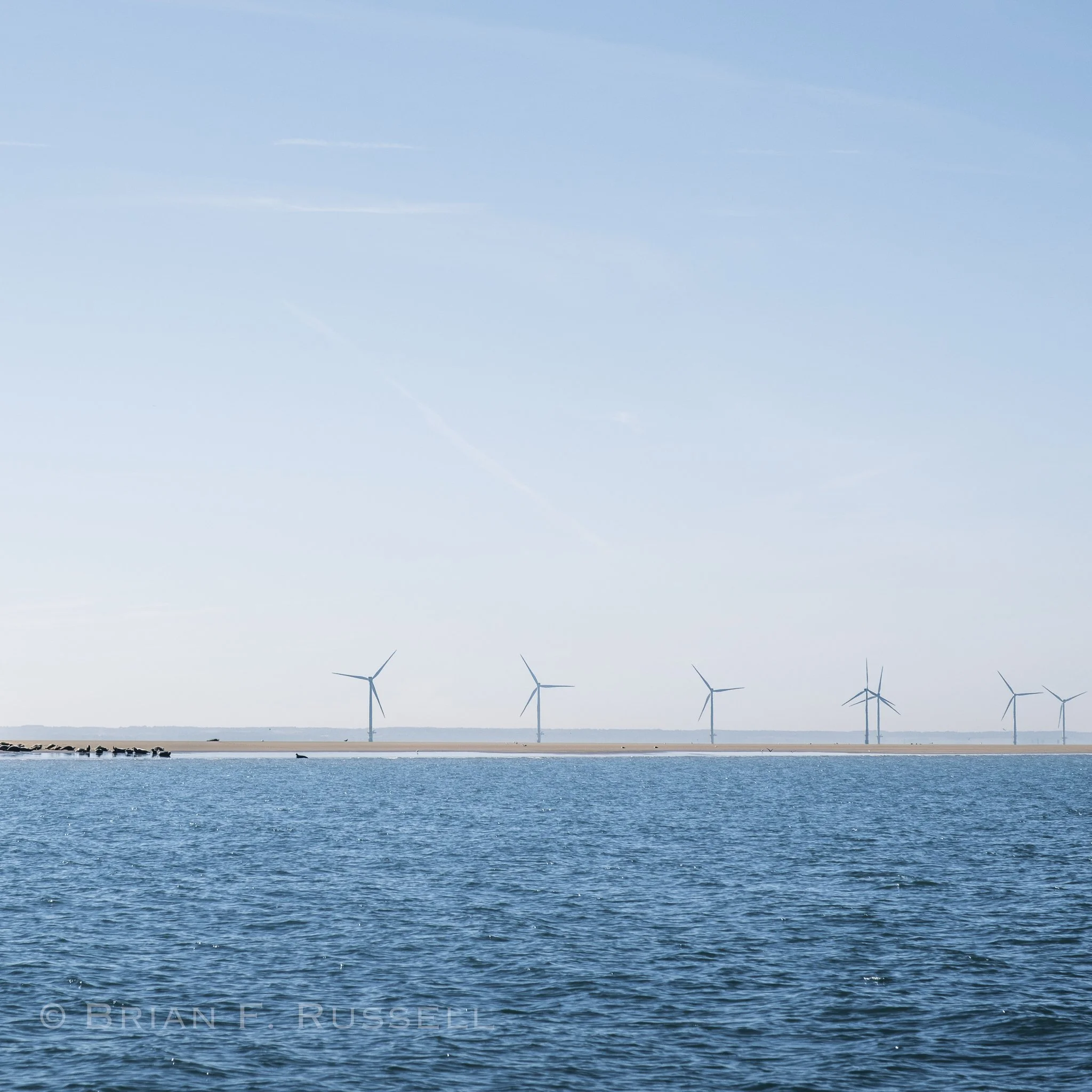
Passing by the Shivering Sands Army Fort and the wind farms on the exposed sandbanks (with large seal colony), we arrived in the Medway River in the late afternoon. Originally we planned to anchor a couple of days to have time to take our sails off and hand them off to a sail maker for a little TLC, but decided being tied to a pontoon would make this process a lot easier. We stayed at Queenborough marina to take care of business. It is not the most scenic, nor the fanciest facilities, but it got the job done. Our head sail and staysail were showing their age; not the sail itself, but the red sunbrella protective strip was worn in places from lines running across. We handed them off and will pick up when we leave London in the Spring.
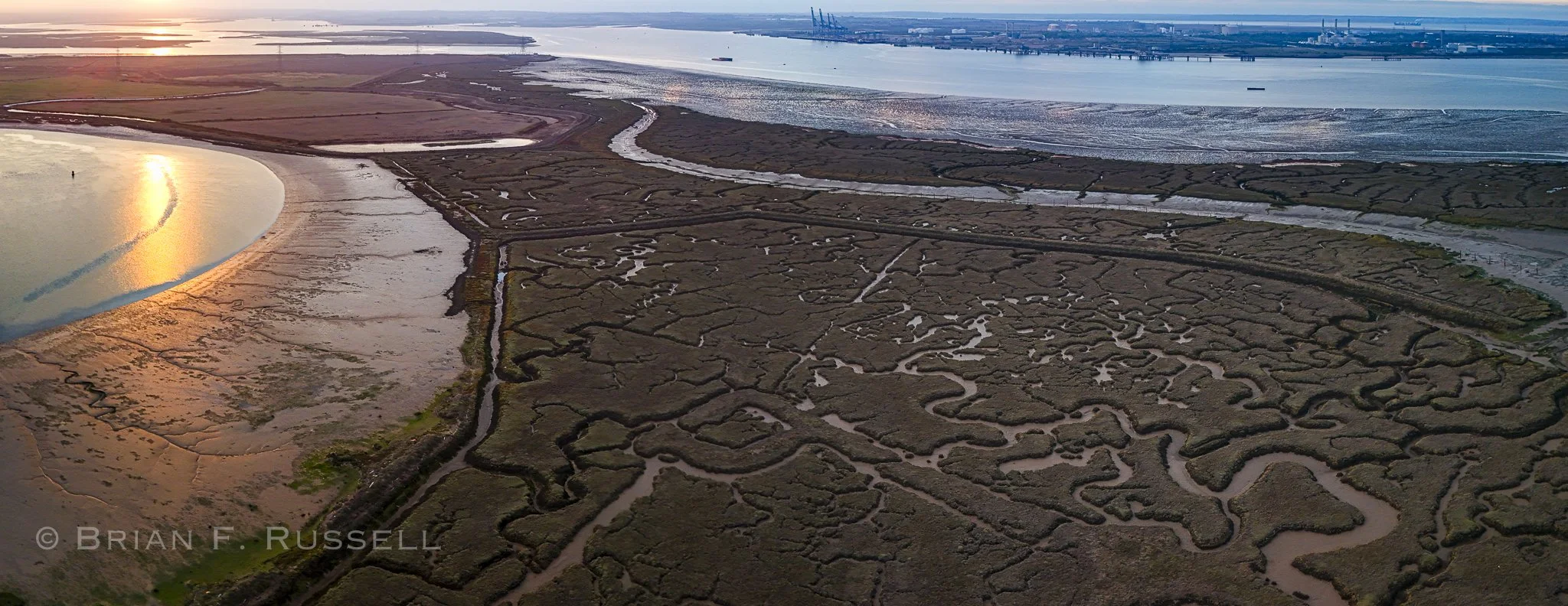
Low tide on the Medway river and marshes near Queenborough.
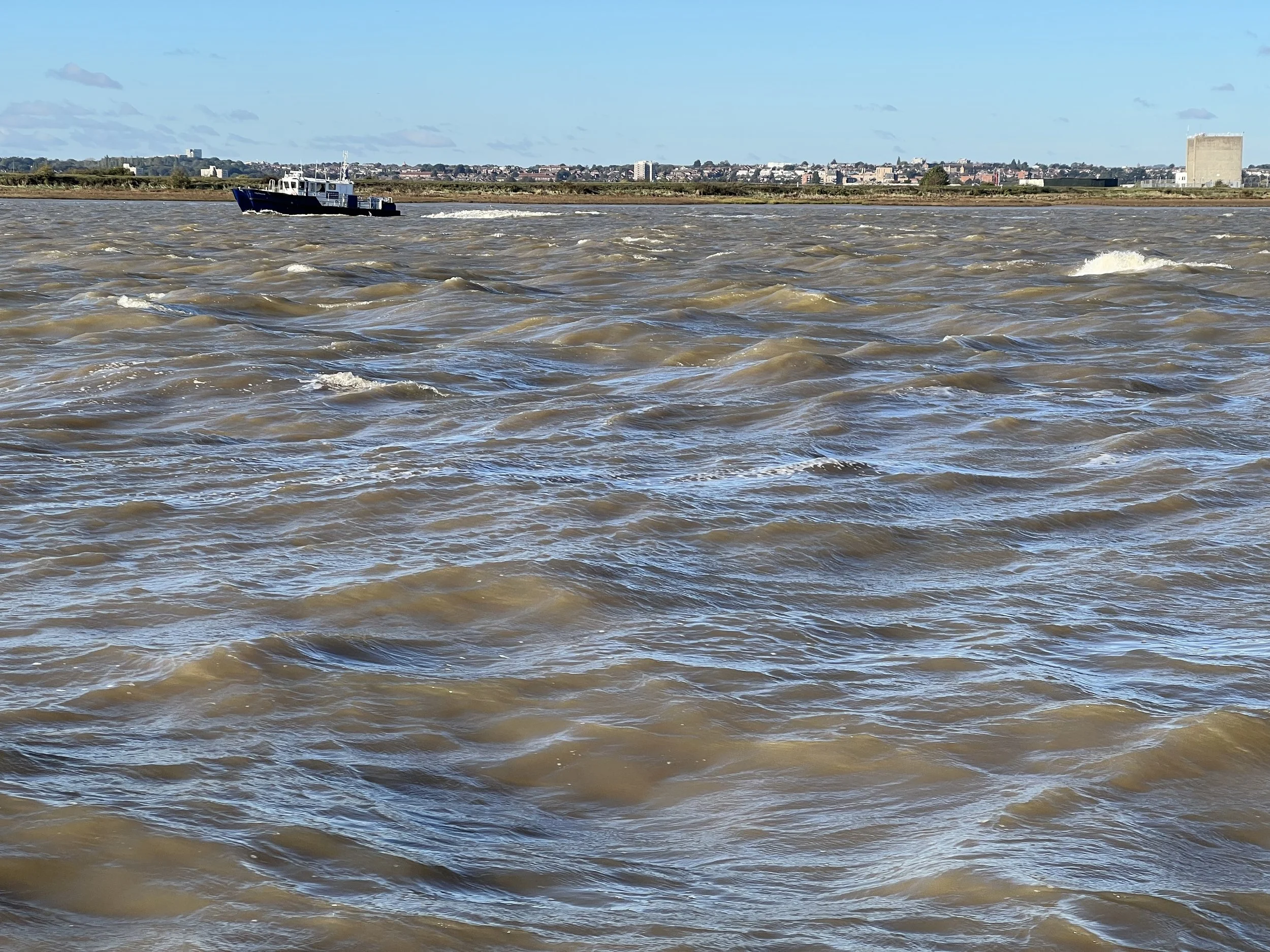
After a lovely evening out with our friend Hilary, we untied the lines predawn and retraced our track out of the Medway and into the Thames, using the radar to identify moored boats and buoys. Heading up the Thames the wind was quite brisk on our nose. The timing was such that the flood tide was just begining. A wind over tide situation, leading to choppy conditions and unbelievably, water over the deck.
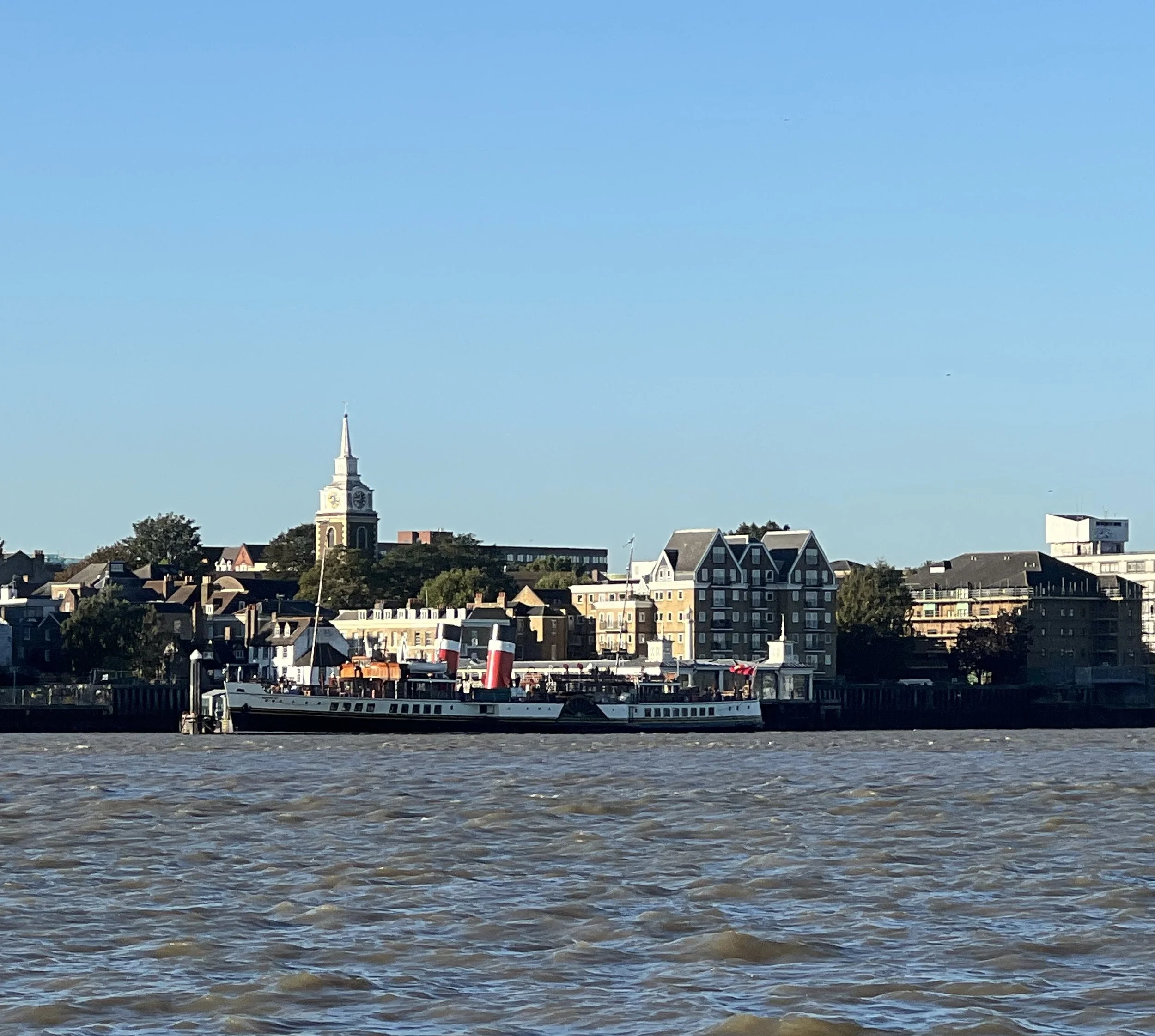
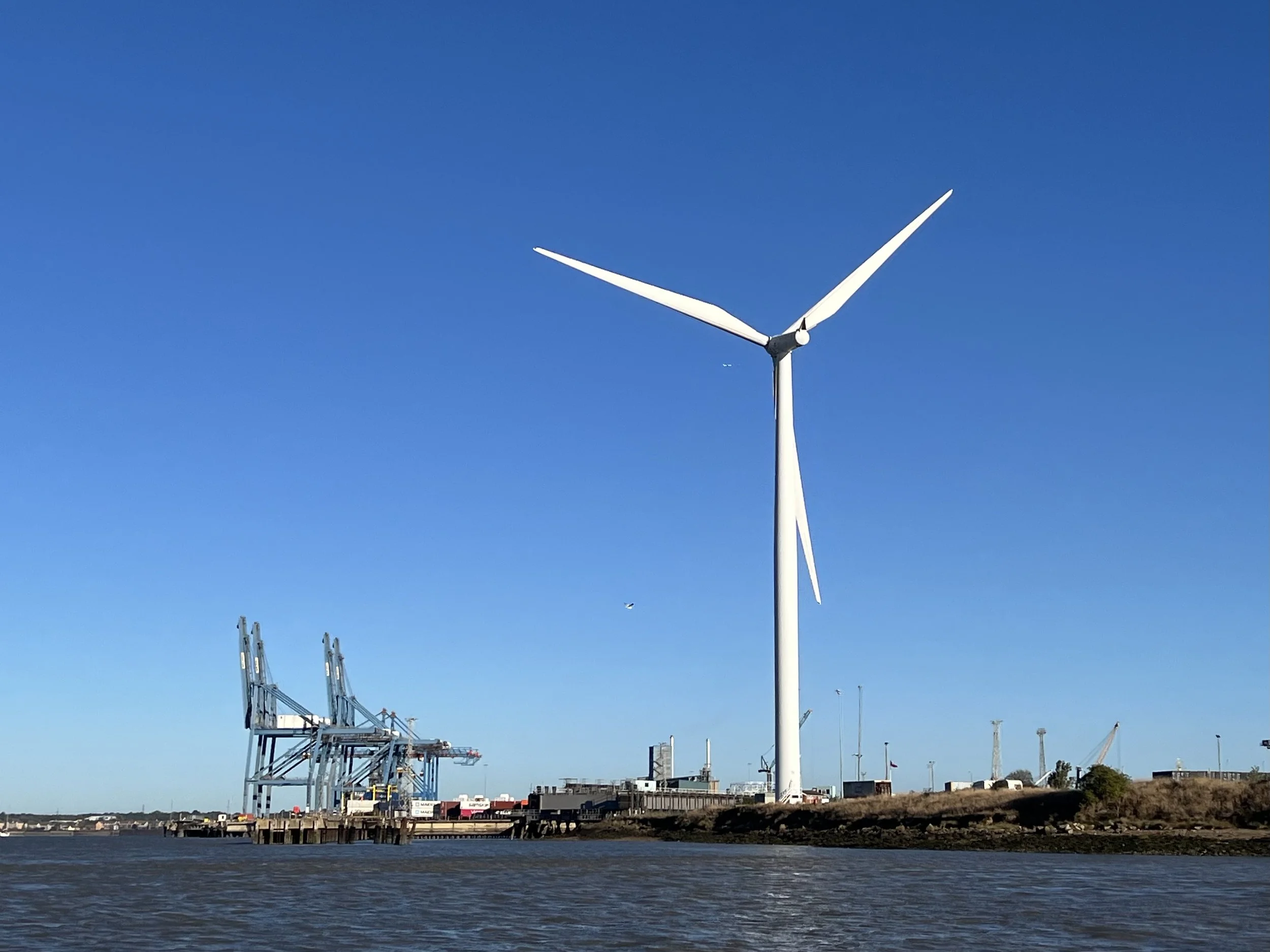
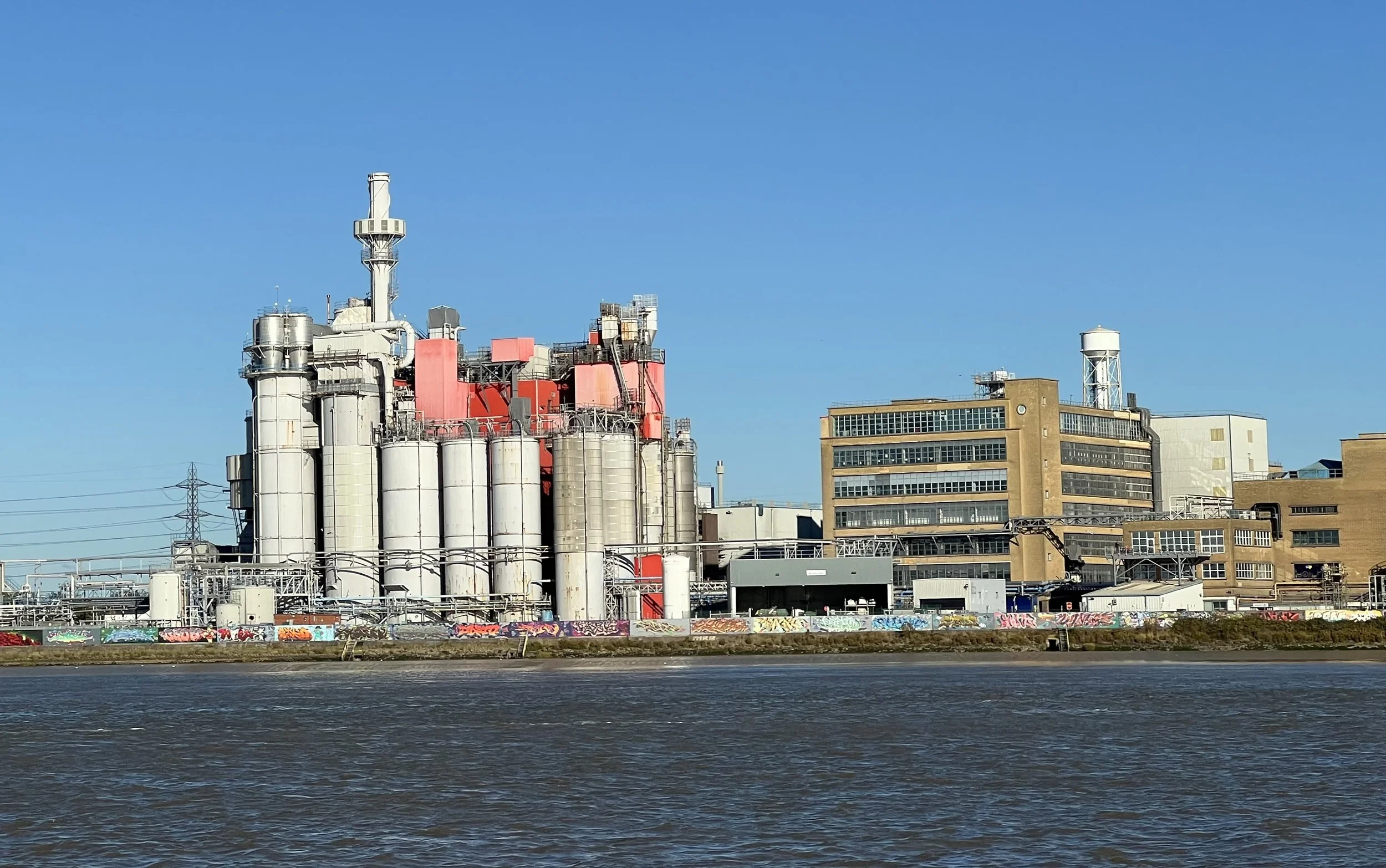
The sun rose and it was a clear crisp day, lovely to watch the marshes give way to the container terminals. Further upstream the cranes and specialized ports passed by. We reached the Thames Barrier and called to request permission to pass. Permission granted.
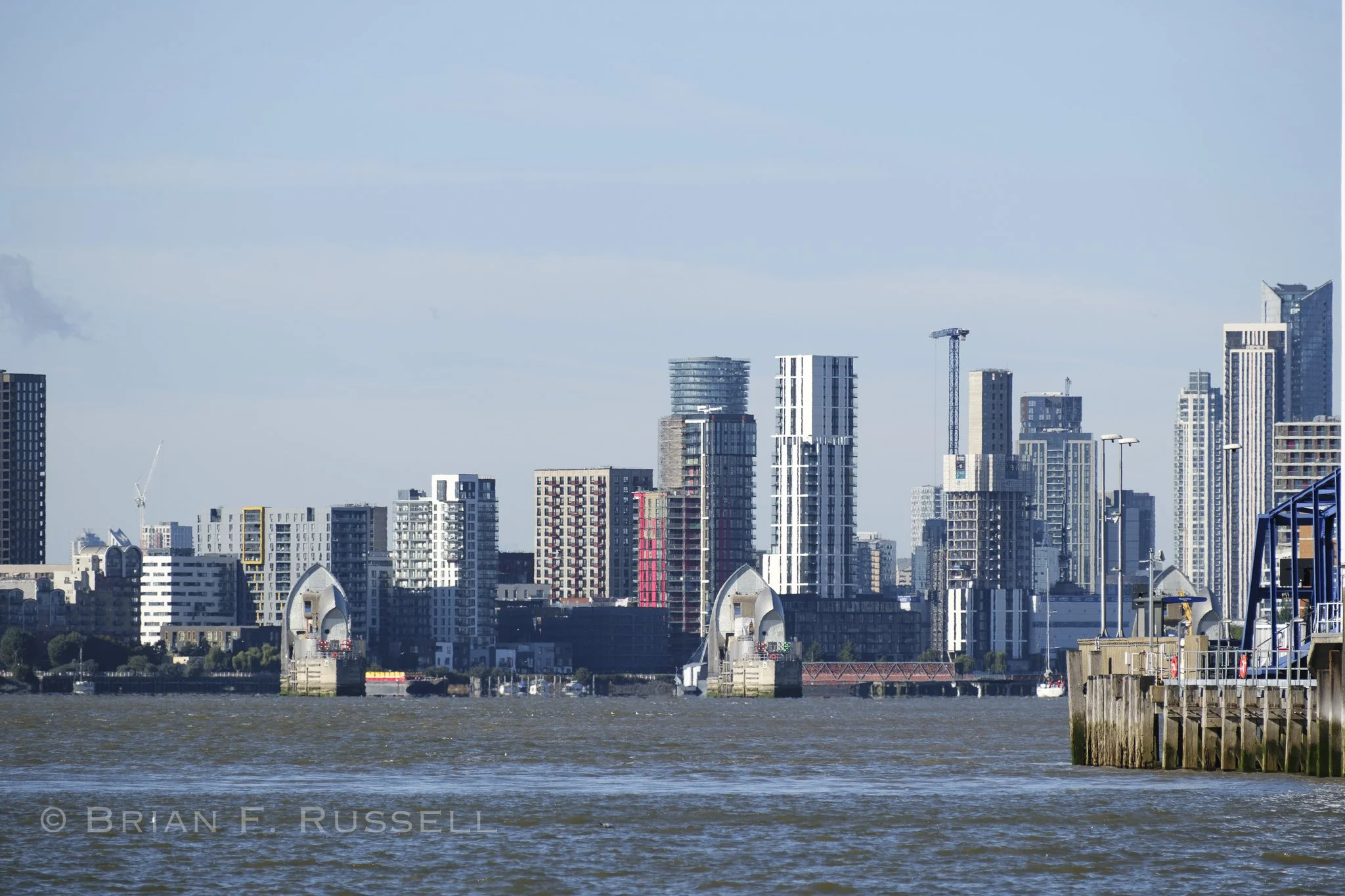
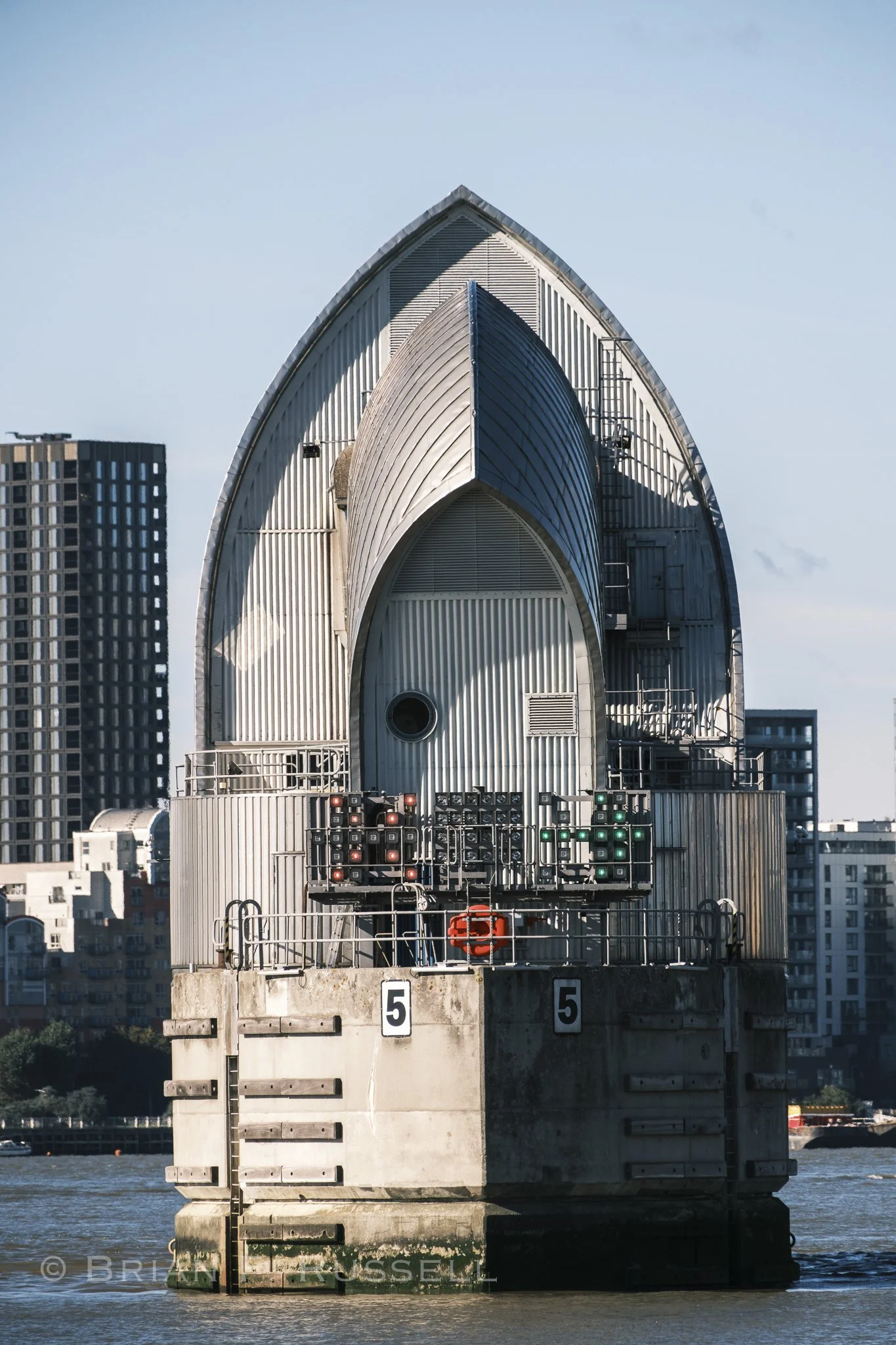
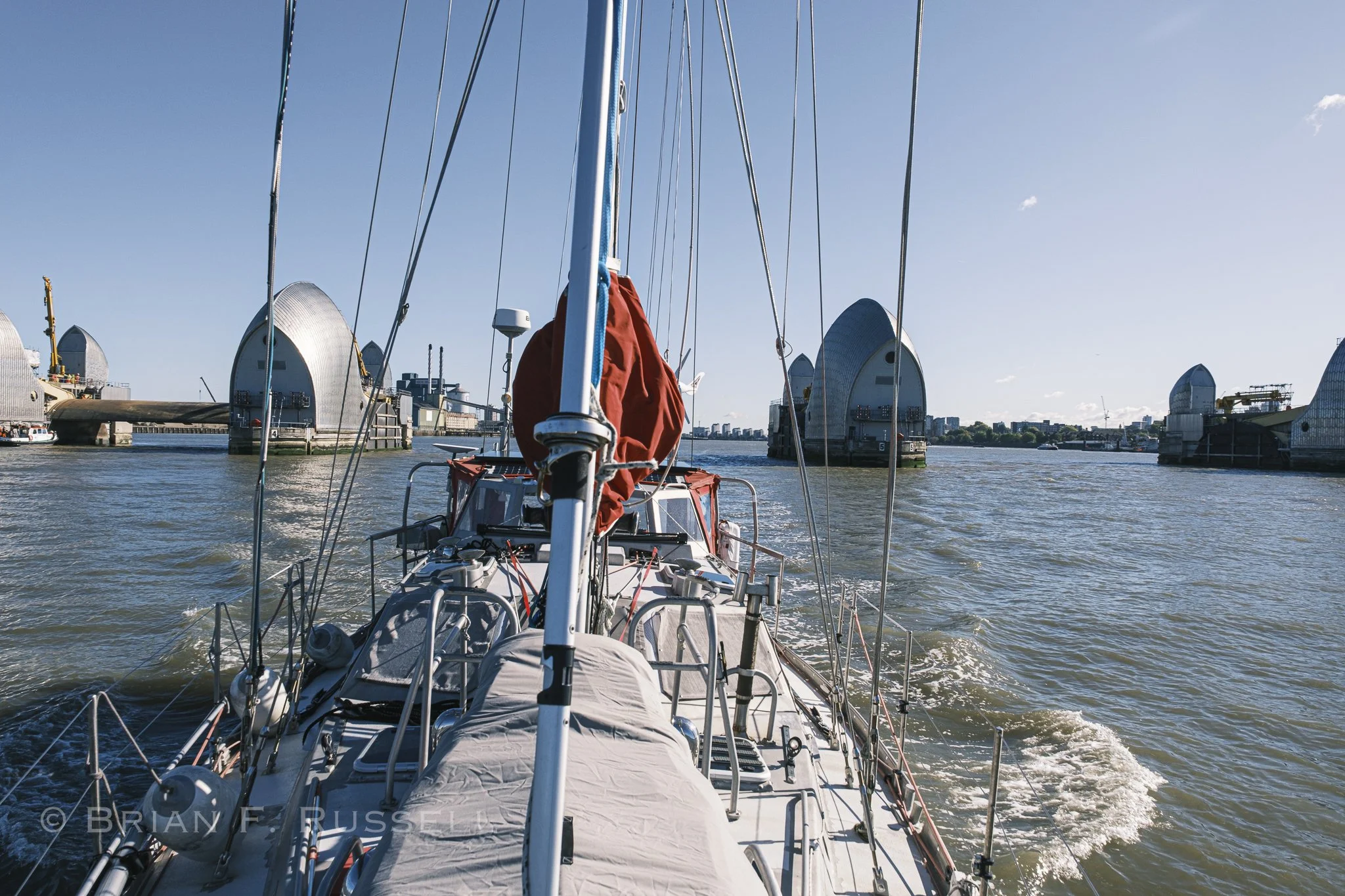
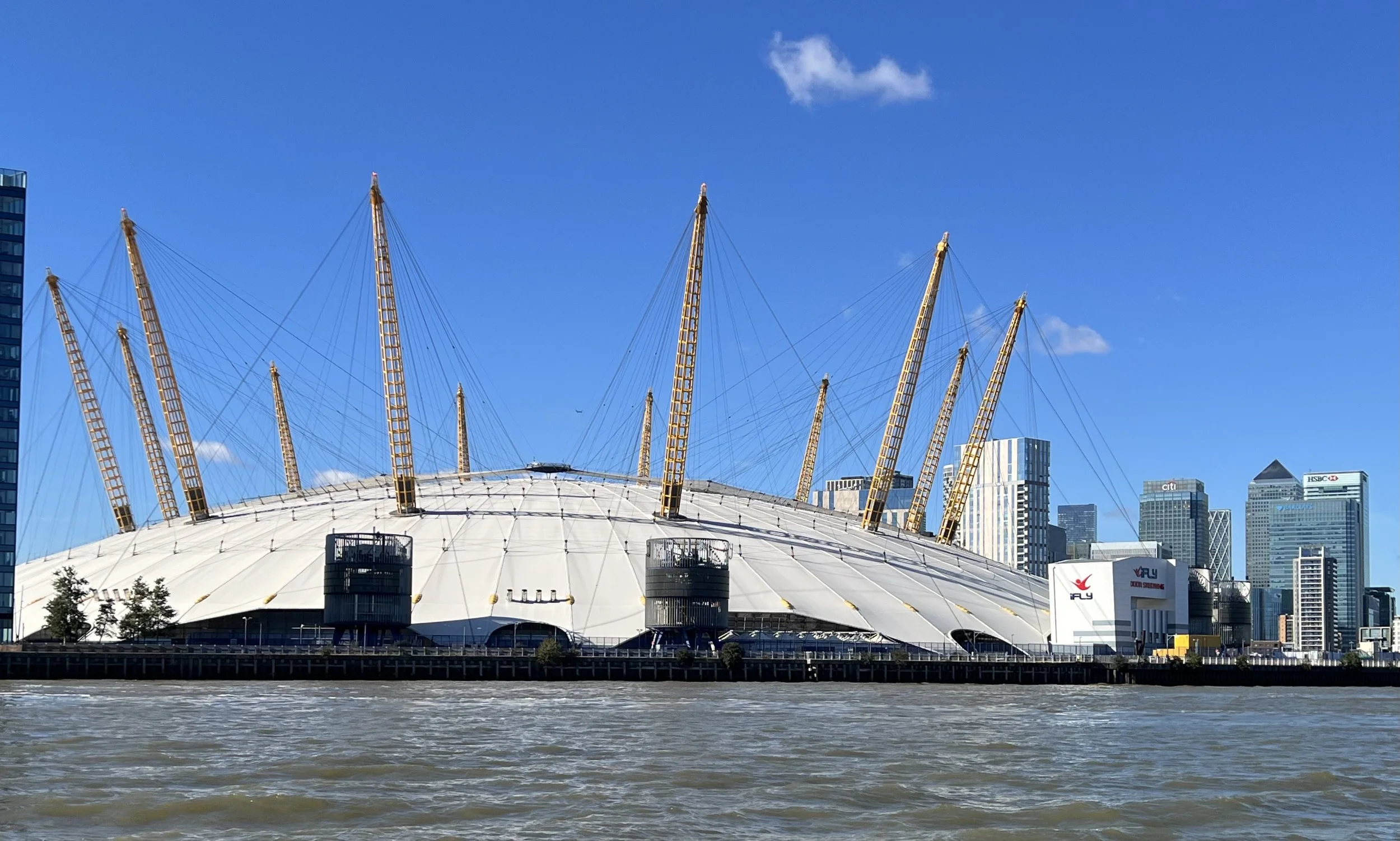
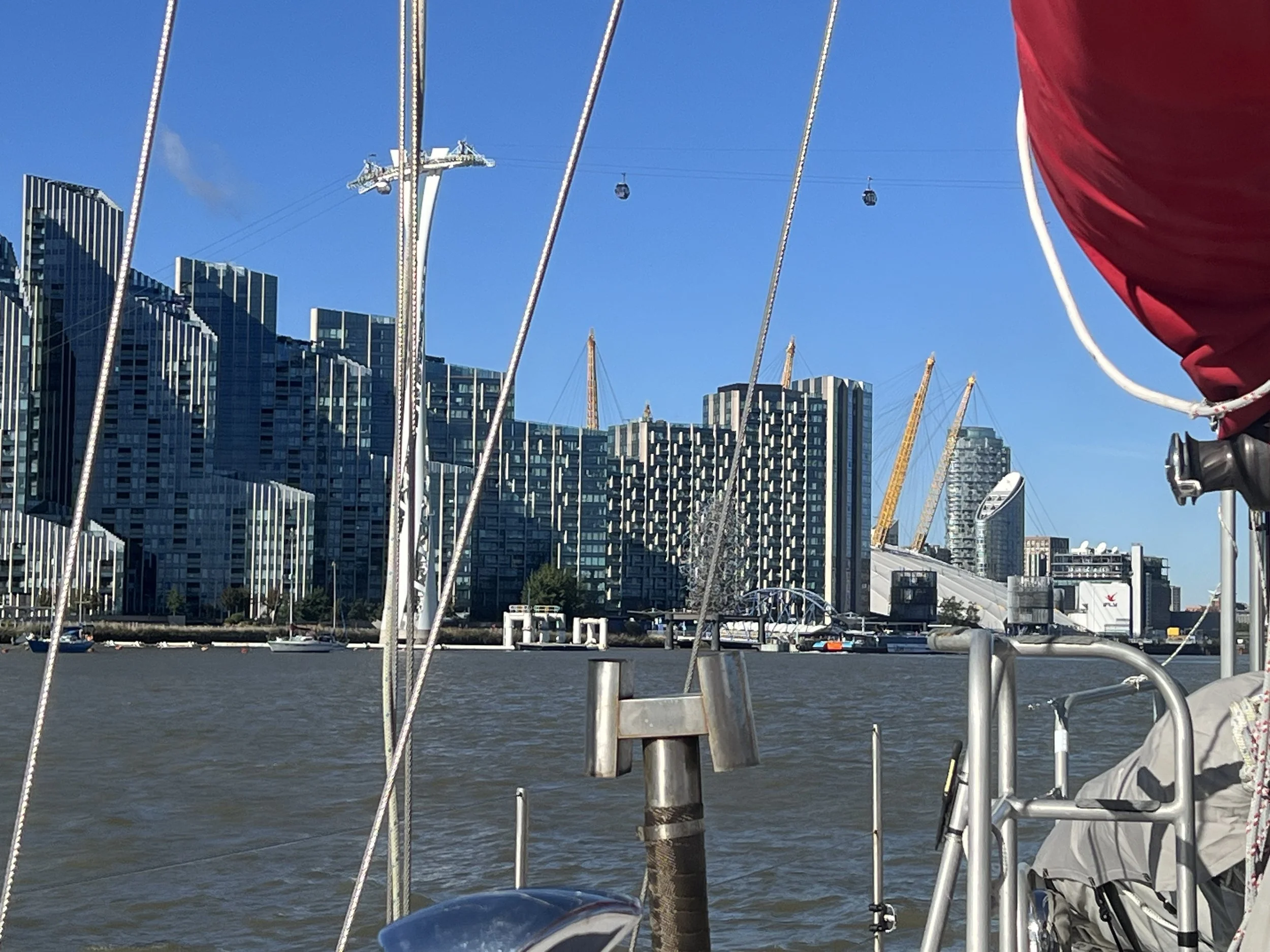
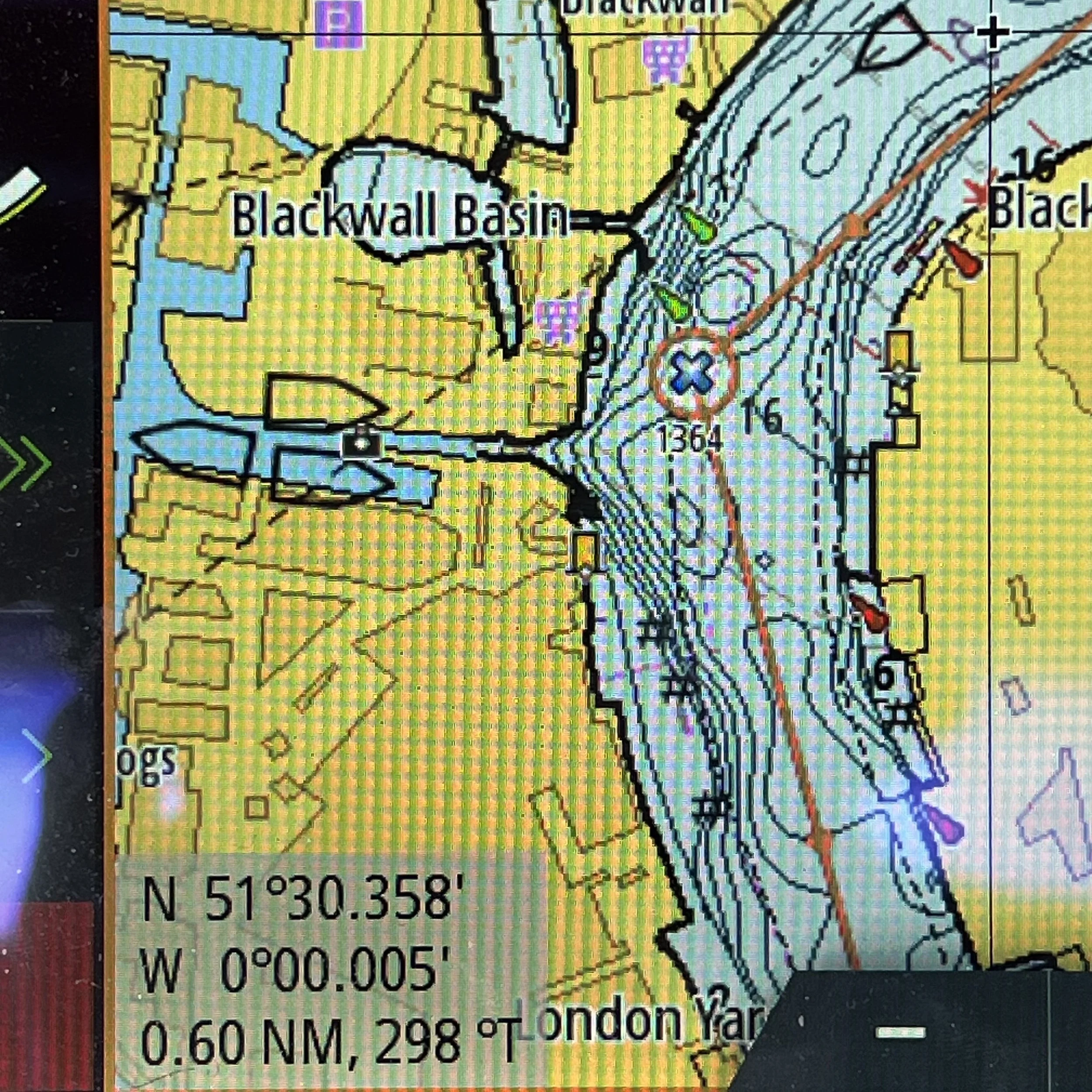
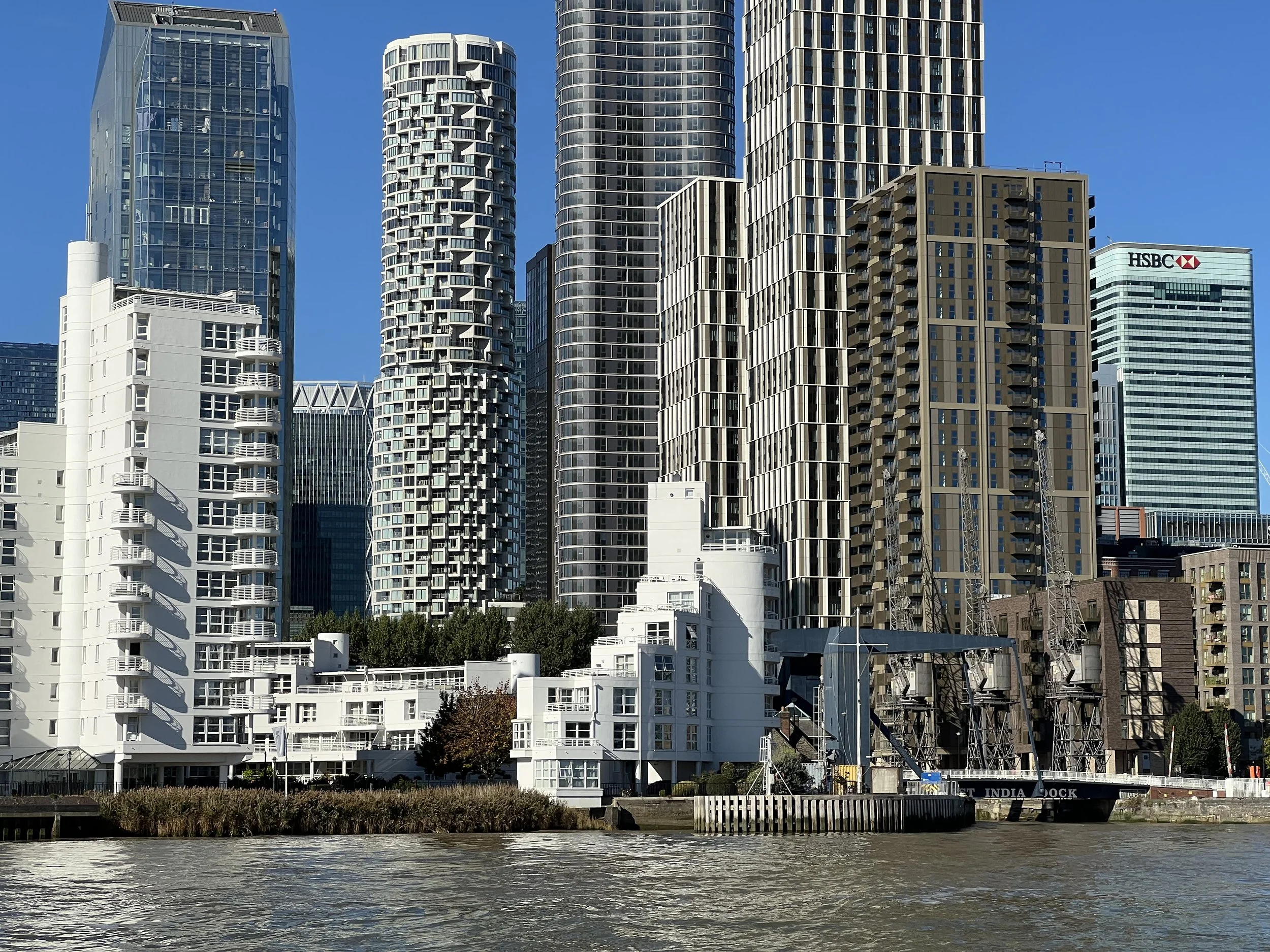
Now the City was coming into view, we passed the O2 Arena with cable cars swinging out over the river. Past Greenwich and back into the western hemisphere. Canary wharf, a wonderful mix of modern office and apartment dwellings.
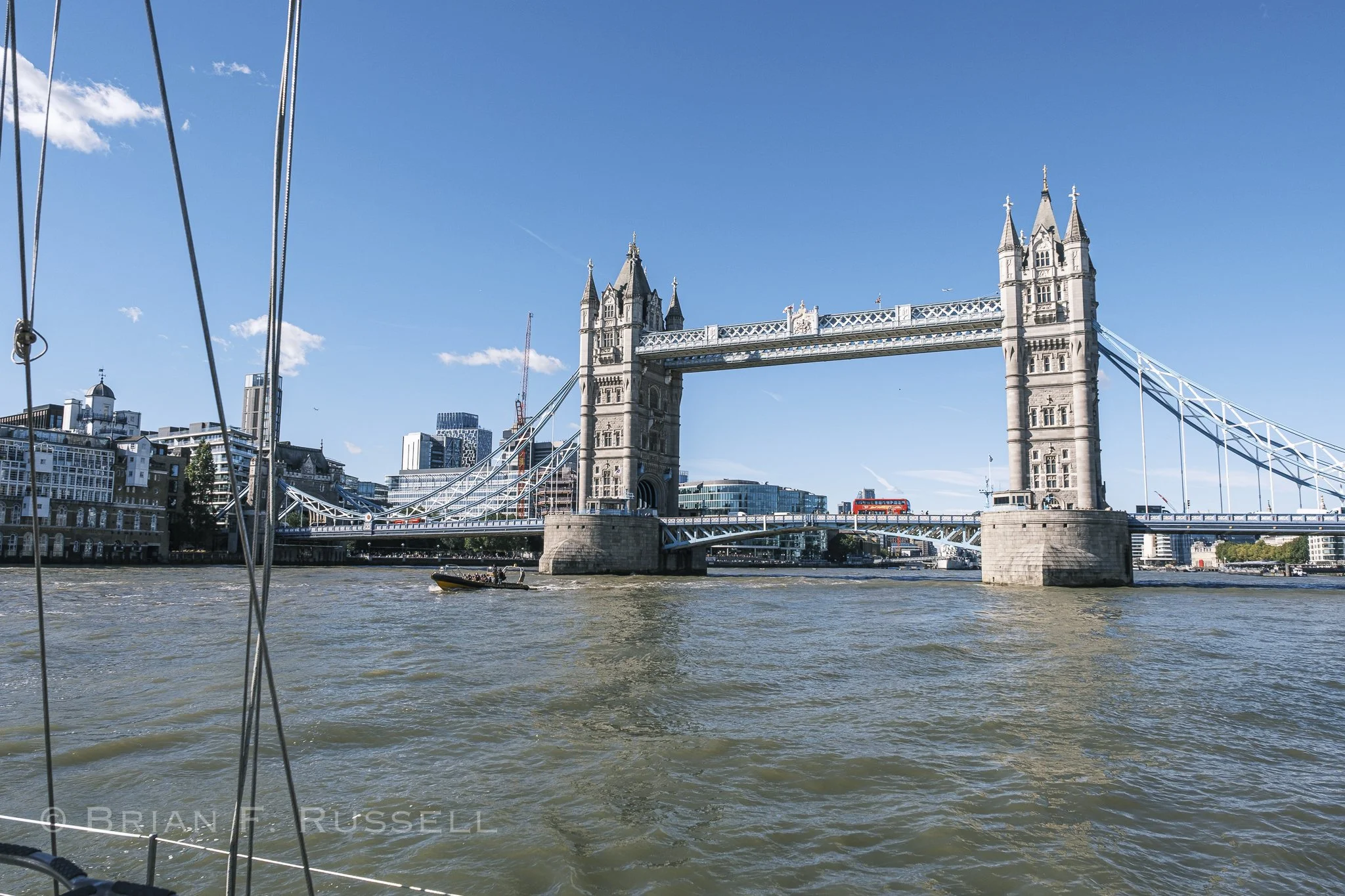
We approach Tower Bridge, the entrance to St Katharine’s Dock marina is just on the northern shore. We lock in with a couple of Dutch boats. Timing the entrance to the marina is critical, the bridge and lock gates only open a couple of hours either side of high tide. We had timed it well in more ways than one. It turned out our lock-in was the last for about a month. The bridge, which needs to be raised to allow our masts to pass through, had been having issues all summer, now decided it had had enough. There was no arriving or leaving until it got fixed. We were fine, but those Dutch boats had only planned on a brief visit. C’est la vie.
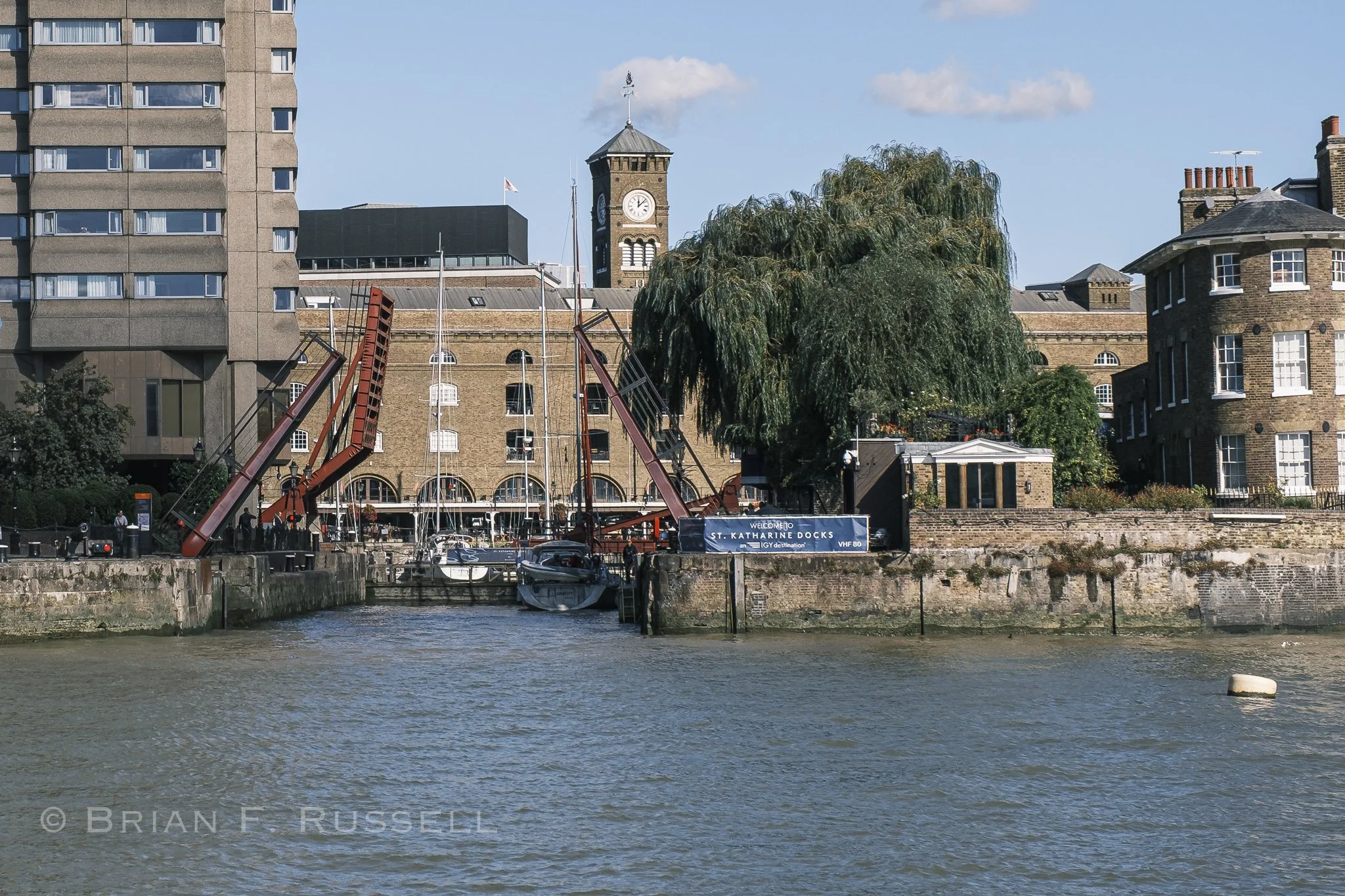
For now St Katharines dock will be our home for the winter. We are excited to be back and explore this wonderful city, revisiting old favorites and discovering new treasures.